Solar panels were installed at archaeological sites in Pompeii Park and the Portuguese city of Évora,
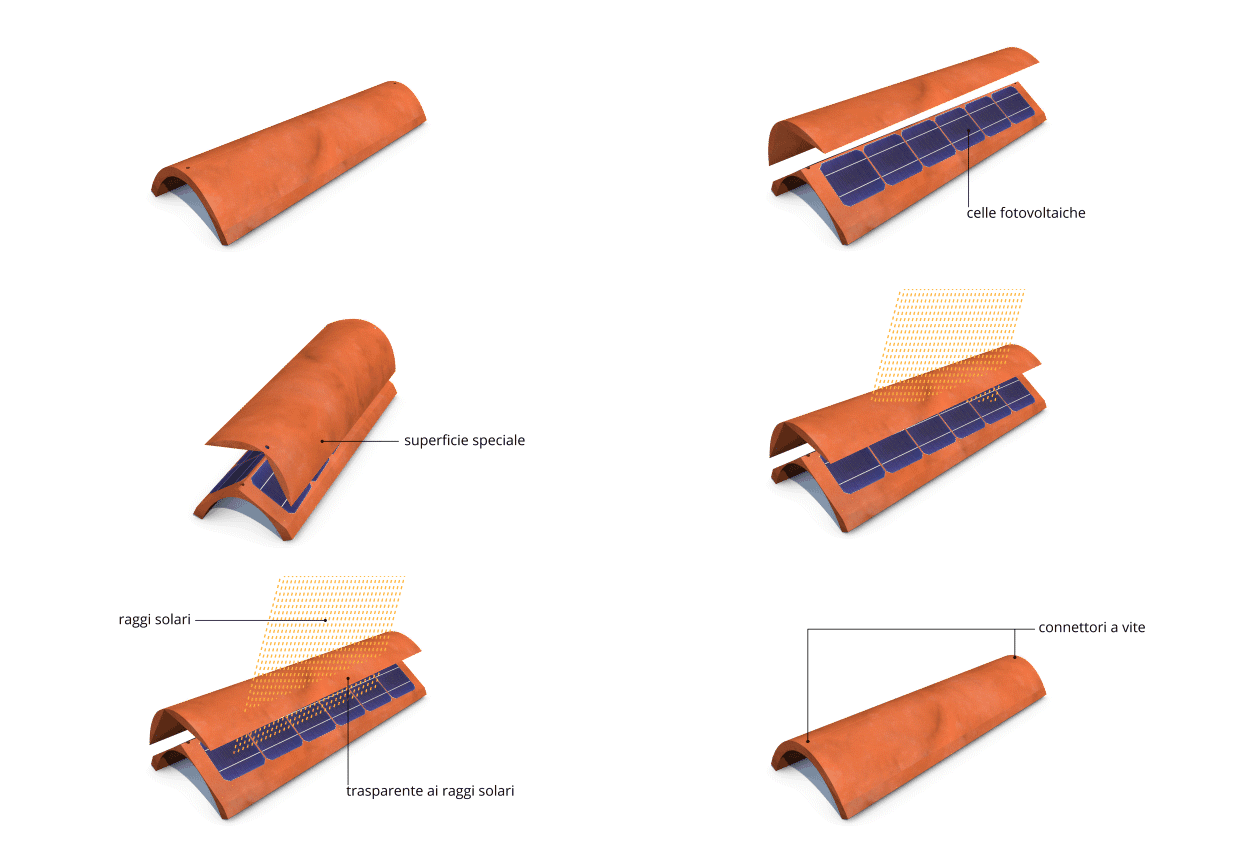
Tegosolar photovoltaic cells manufacturedmade of thin film amorphous silicon with a ternary compound: each layer absorbs blue, green and red light from the solar spectrum, respectively. The created design is flexible and can easily be adapted to the desired design without loss of efficiency, the developers note.
 Installation of Coppo Invisible Solar panels. Image: dyaqua
To give the effect of antiquity, developersuse the new Coppo Invisible Solar technology. These batteries consist of a single, highly resistant, indivisible housing that hides the photovoltaic cells built into it. The operation of the module is based on coating the photocell with a non-toxic and dispersed polymer compound, specially designed to stimulate the absorption of photons.
They look exactly like the terracotta tiles used by the Romans, but they produce the electricity we need to illuminate the frescoes.
Gabriel Zuchtrigel, director of the Pompeii Archaeological Park
The developers note that using InvisibleSolar solar cells can be given the appearance of stone, wood, concrete and brick. This allows the devices to be used in a variety of locations. It is reported that hidden solar panels will soon be installed on architectural monuments in Croatia and Portugal.
Read more:
The "Christmas Comet" flies to the Earth. Last seen by Neanderthals
The tomb of the “midwife of Jesus” was unearthed: scientists told what they found there
Two genes found in humans that are unlike any known
On the cover: panels covering the roof in the park of Pompeii. Image: dyaqua