</ img>
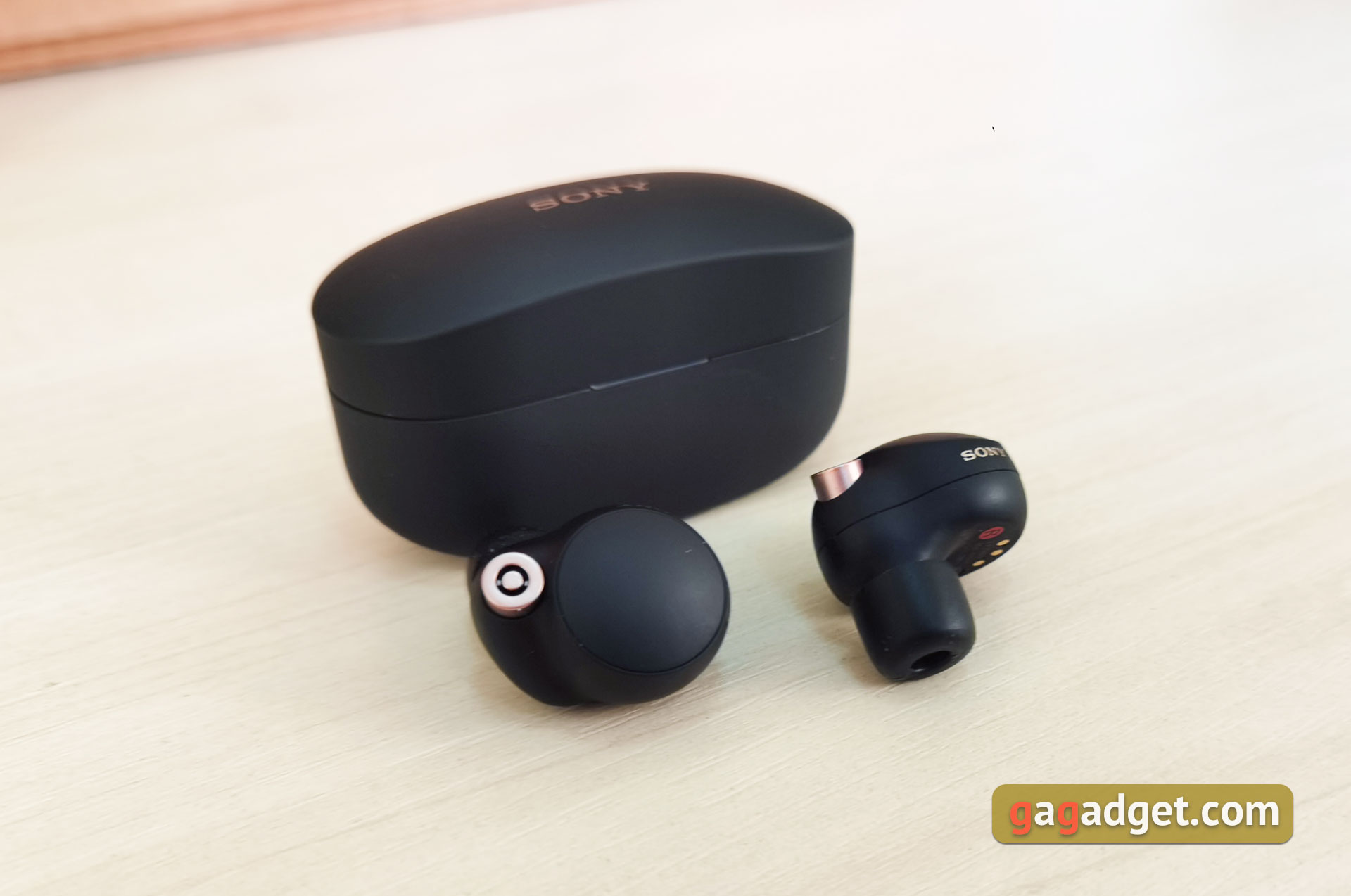
The Sony WF-1000XM4 is one of the best top-end TWS headphones you can buy right now. First of all, it's worth
Sony WF-1000XM4
Best Noise Canceling TWS Earbuds
Flagship in-ear wireless headphoneswith active noise cancellation system. They are connected via Bluetooth 5.0 and support SBC, AAC and LDAC codecs, operate on a single battery charge up to 24 hours. There is splash protection according to the IPX4 standard.
Buy

</ img>
6 reasons to buy Sony WF-1000XM4:
- Excellent noise cancellation system;
- long battery life and support for wireless charging;
- a large number of useful additional functions;
- pleasant appearance and comfortable design;
- protection according to the IPX4 standard;
- good sound quality.
3 reasons not to buy the Sony WF-1000XM4:
- high price;
- no Multipoint support;
- You are an audiophile and are looking for headphones with better sound quality.
Fast passage:
- What is in the box?
- What does the Sony WF-1000XM4 look like?
- How convenient is the Sony WF-1000XM4 to use?
- What about sound quality, microphone and noise cancellation?
- What about autonomy?
- In the dry residue
What is in the box?

</ img>
</ img>

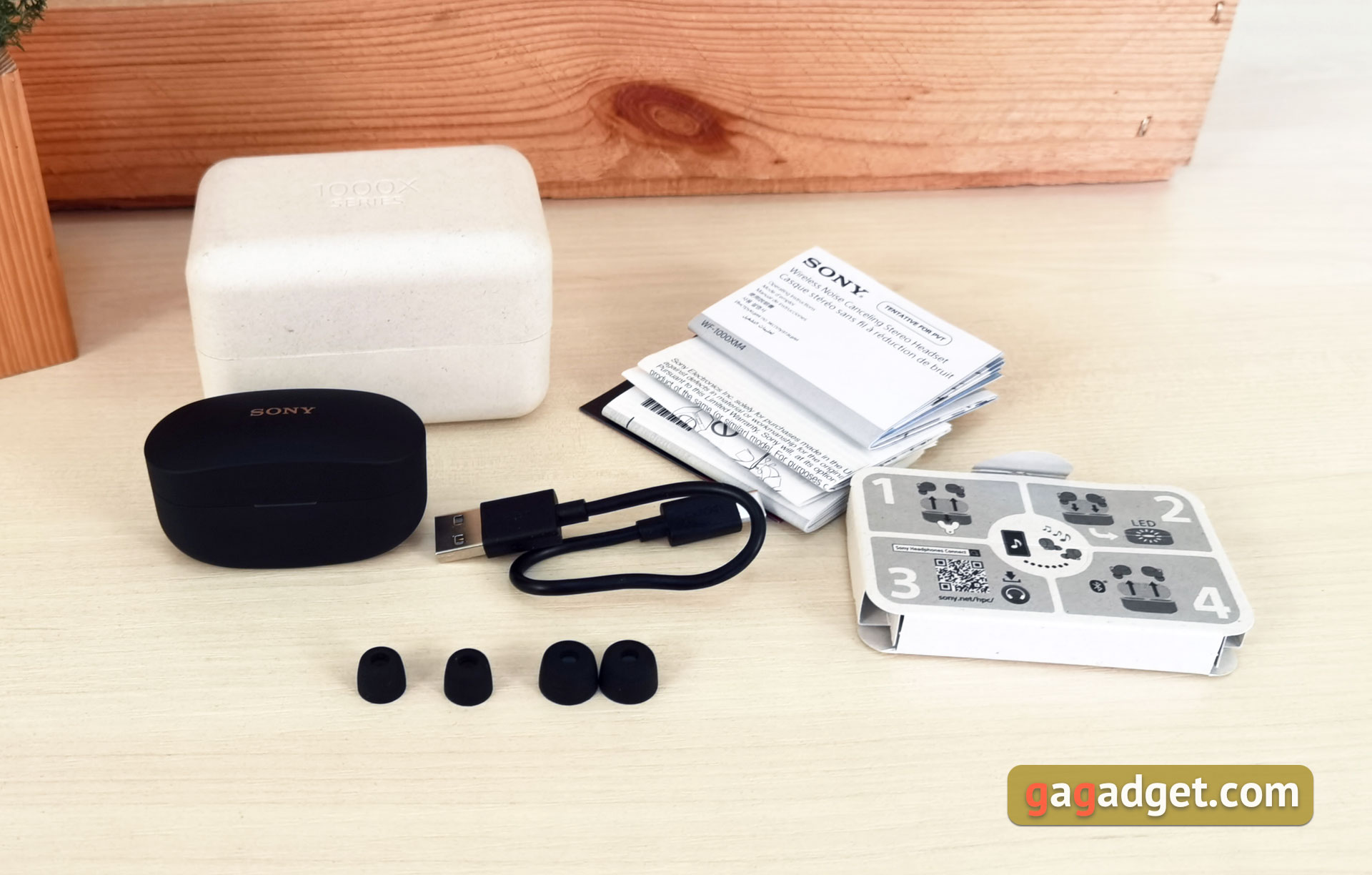
The Sony WF-1000XM4 is not packed as usual.The box is made from recycled paper. It is small in size with rounded edges. Inside, the set is standard: headphones in a charging case, a short 20-cm Type-C cable for charging, replaceable ear pads and a set of all sorts of pieces of paper. Included with the Sony WF-1000XM4 there are exclusively foam tips, but you can use third-party ones.
</ p>What does the Sony WF-1000XM4 look like?
</ img>
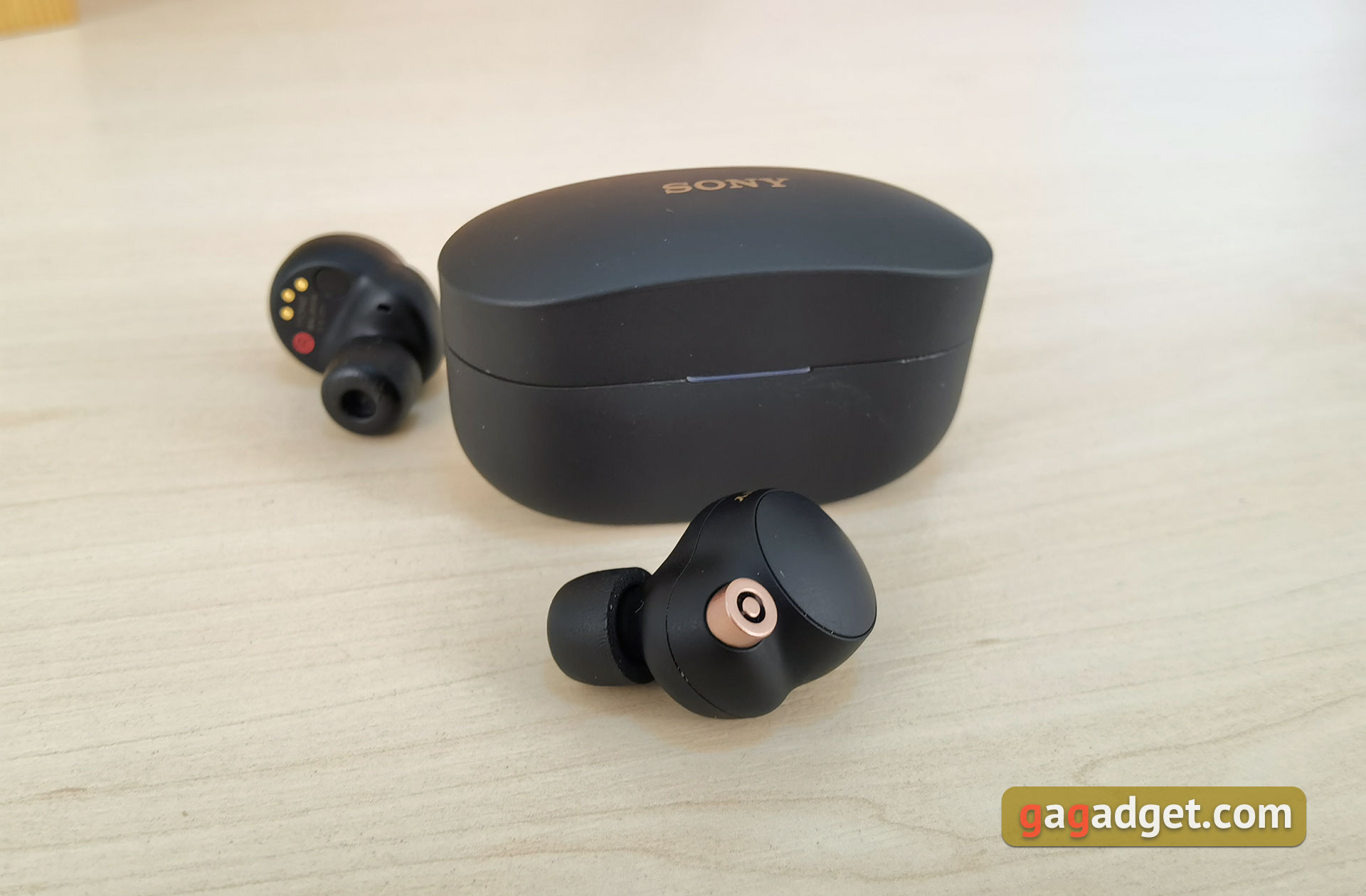
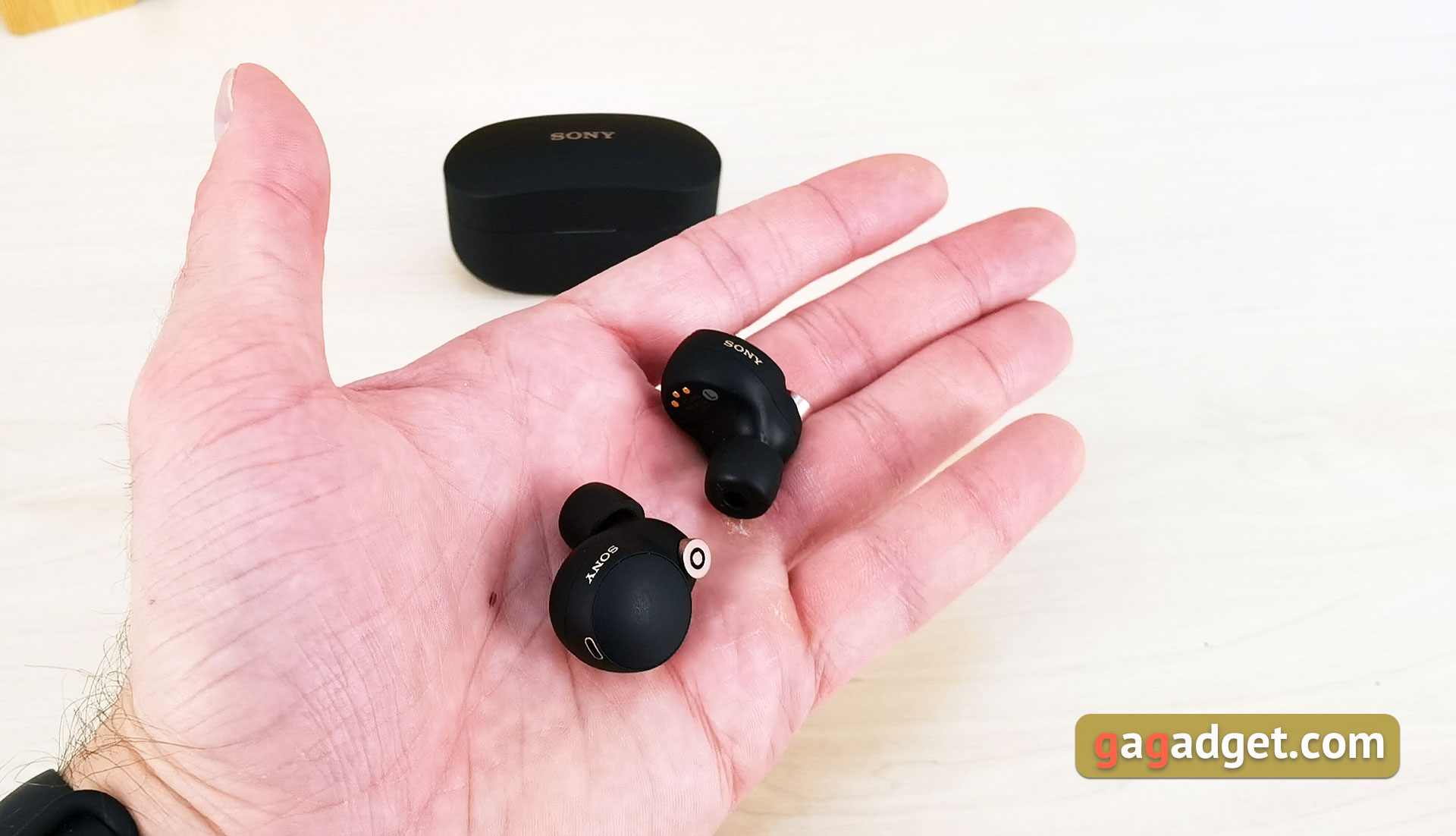
The Sony WF-1000XM4 is verysignificantly different from their predecessors, the WF-1000XM3. Previous headphones were massive and protruded significantly beyond the ear. The new Sony WF-1000XM4 are, albeit quite large, but familiar modern TWS. We got a black version with golden accents. The headphones, like the case, are made of matte plastic with a coating very reminiscent of Soft-Touch. Looks good and feels good, but fingerprints are slightly visible.
</ img>
On the outside of the earbuds, there is a large roundarea. It is touch sensitive and is responsible for controlling the headphones. Bluetooth antennas are hidden under this platform. The small, golden round design is not only decorative. These are microphones.

</ img>
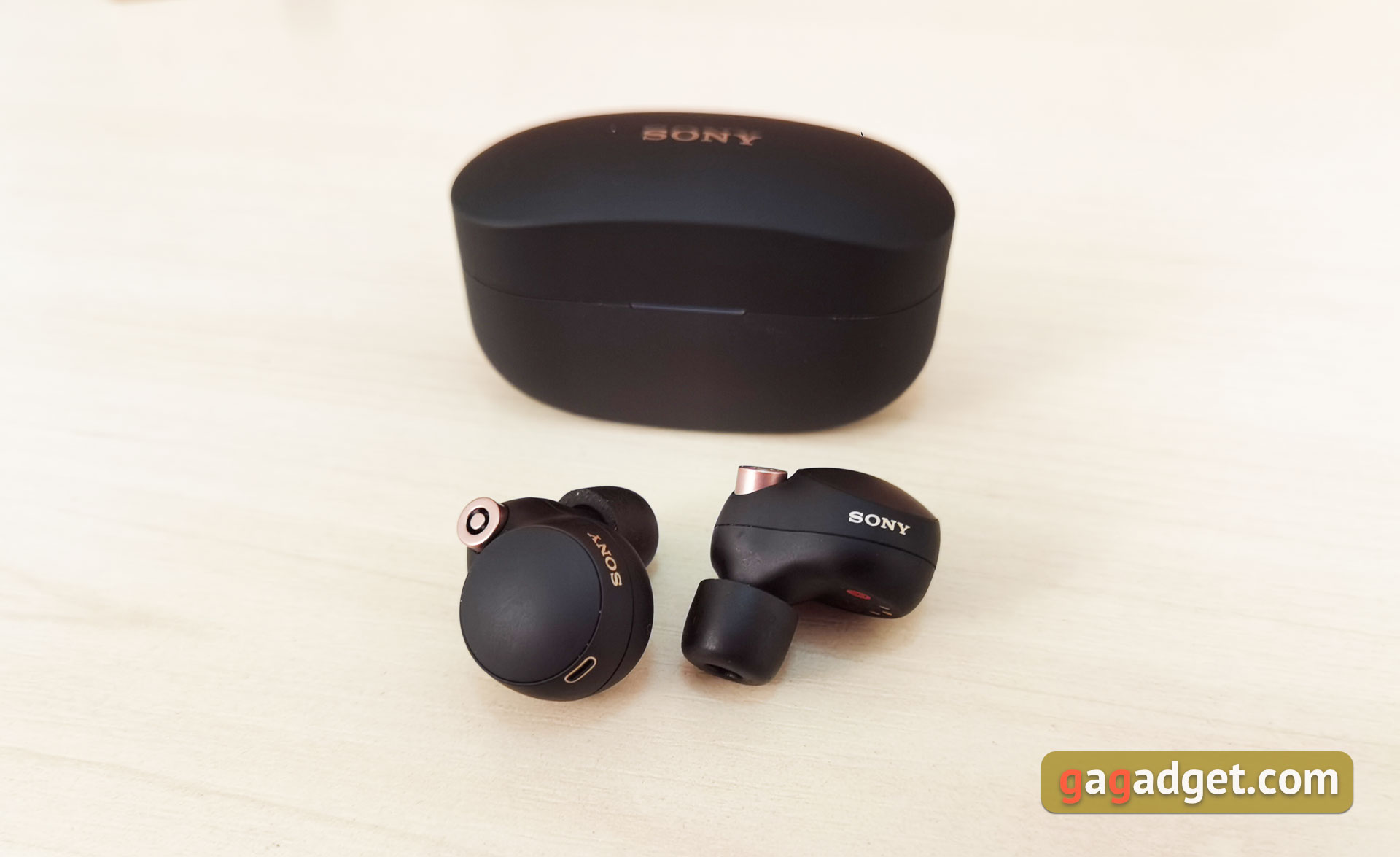
The earbuds are in two halves with a seam betweenthey can be seen well. Although there are no problems with this: they fit together perfectly. On the top of the earbuds there are Sony logos. And at the bottom, in a golden edging, there are a couple of microphones for noise cancellation and transparency mode.
</ img>
The inside of each of the earbuds has acontacts for charging, designations of left-right and infrared sensors, which are responsible for automatic pause or continuation of playback if you pull out and insert back the headphones.

</ img>
Sound guides Sony WF-1000XM4 medium length andabsolutely standard diameter with protection from dirt inside. There is a edging, thanks to which the attachments are well fixed and do not fly off. The kit includes only foam attachments, which some may not like. This is not a problem: most standard third-party attachments will work too.

</ img>
The Sony WF-1000XM4 are IPX4 splash and sweat resistant. So they are suitable for playing sports, and you can run in the rain in them without fear of performance.
</ img>
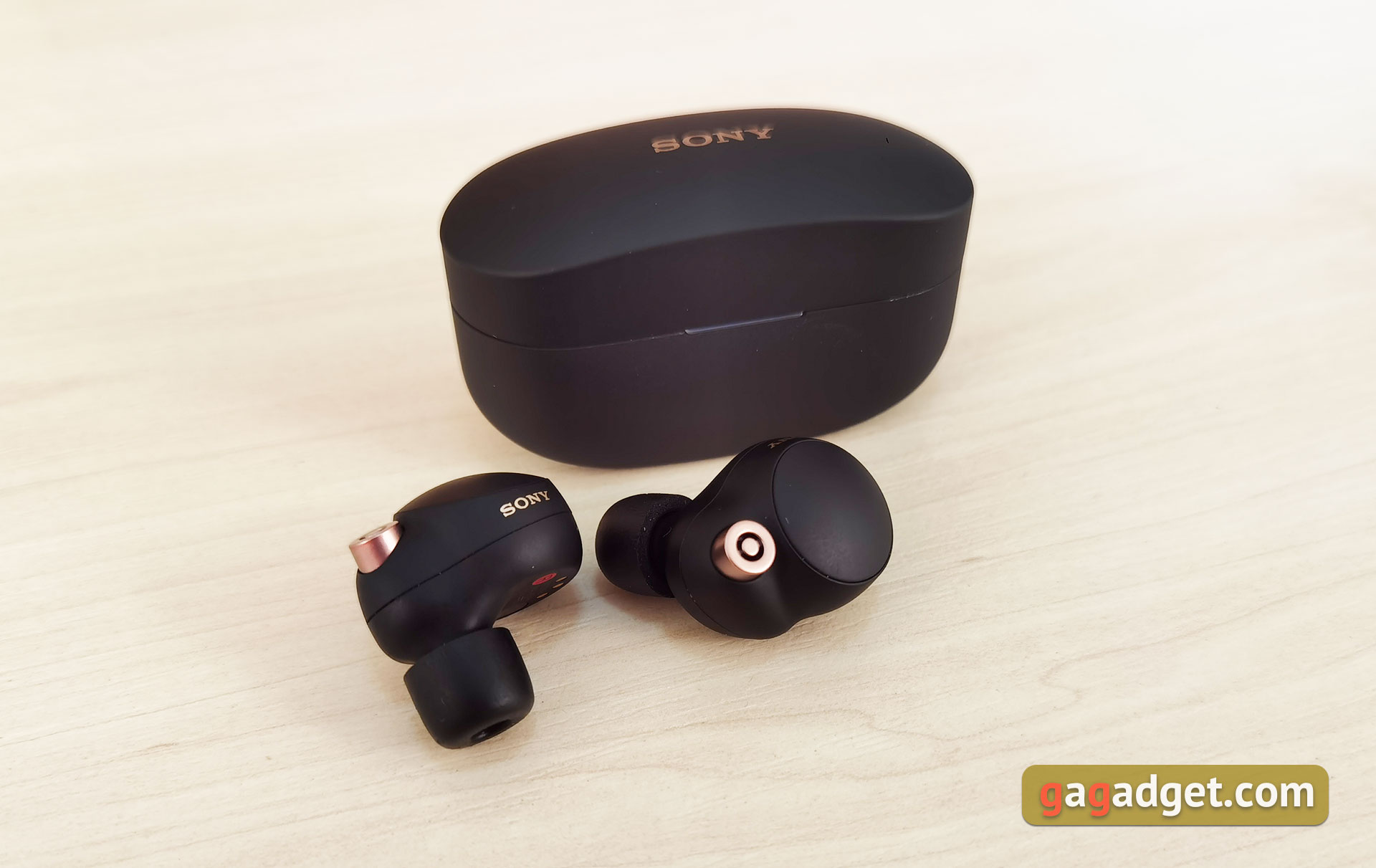
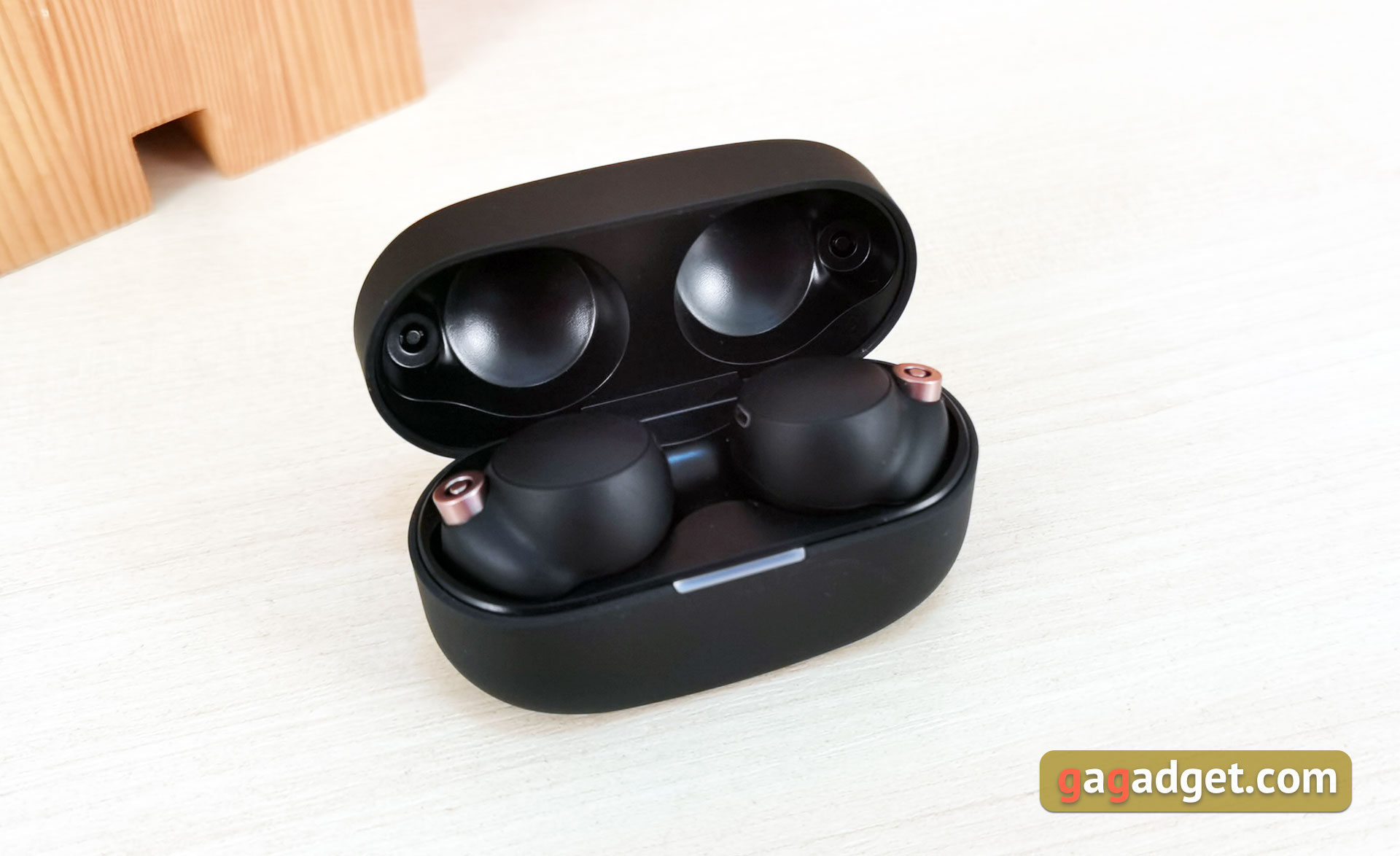
The charging case is quite large and has the usual hinged lid design. There is a Sony logo on the top of the lid and an LED charging indicator on the front.

</ img>
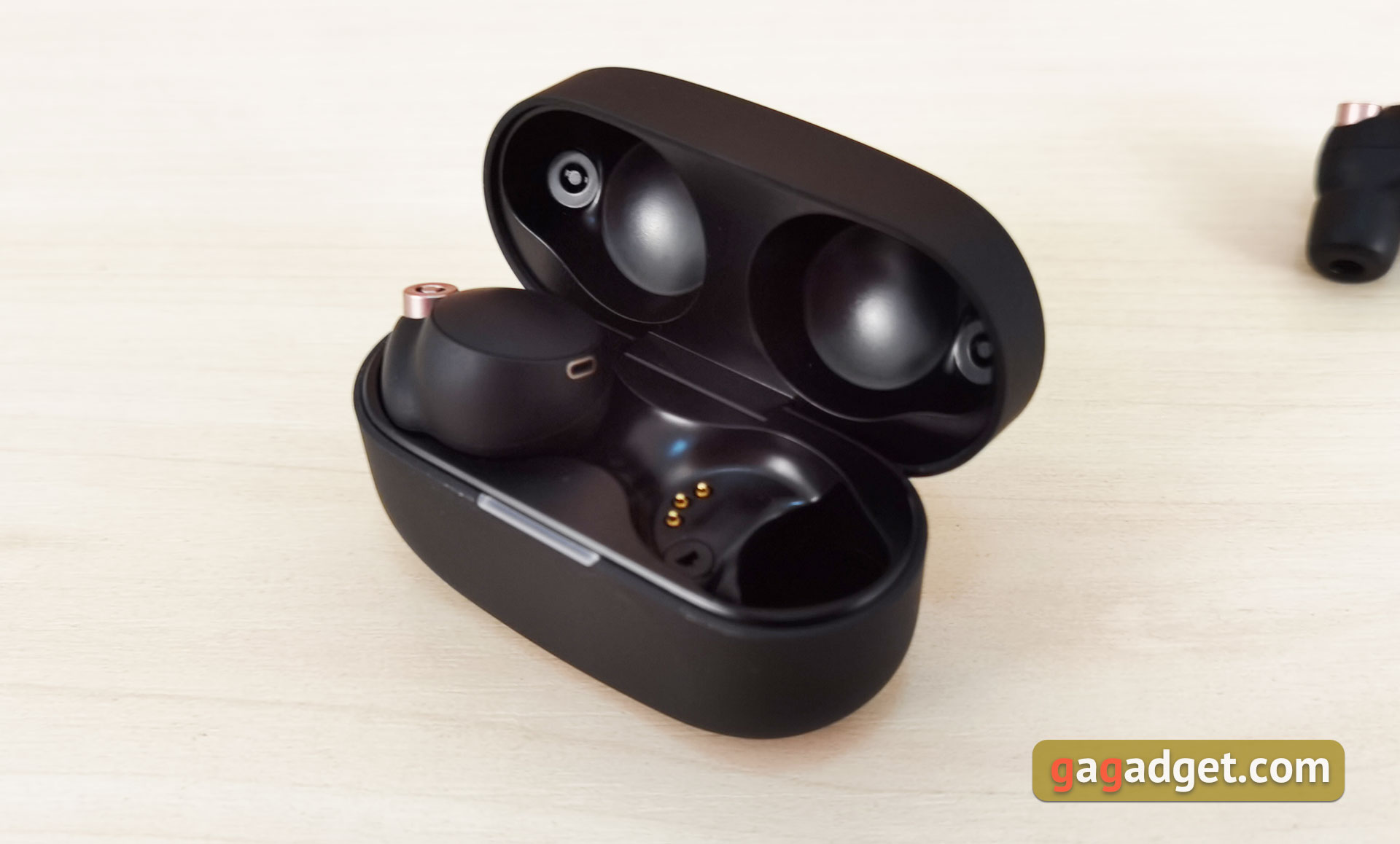
The lid has an auto-finish when opening and holdsmagnetically closed. The cover will not open accidentally. But the lid itself has minimal backlash. Inside, everything is standard: places for headphones with contacts for charging.
</ img>
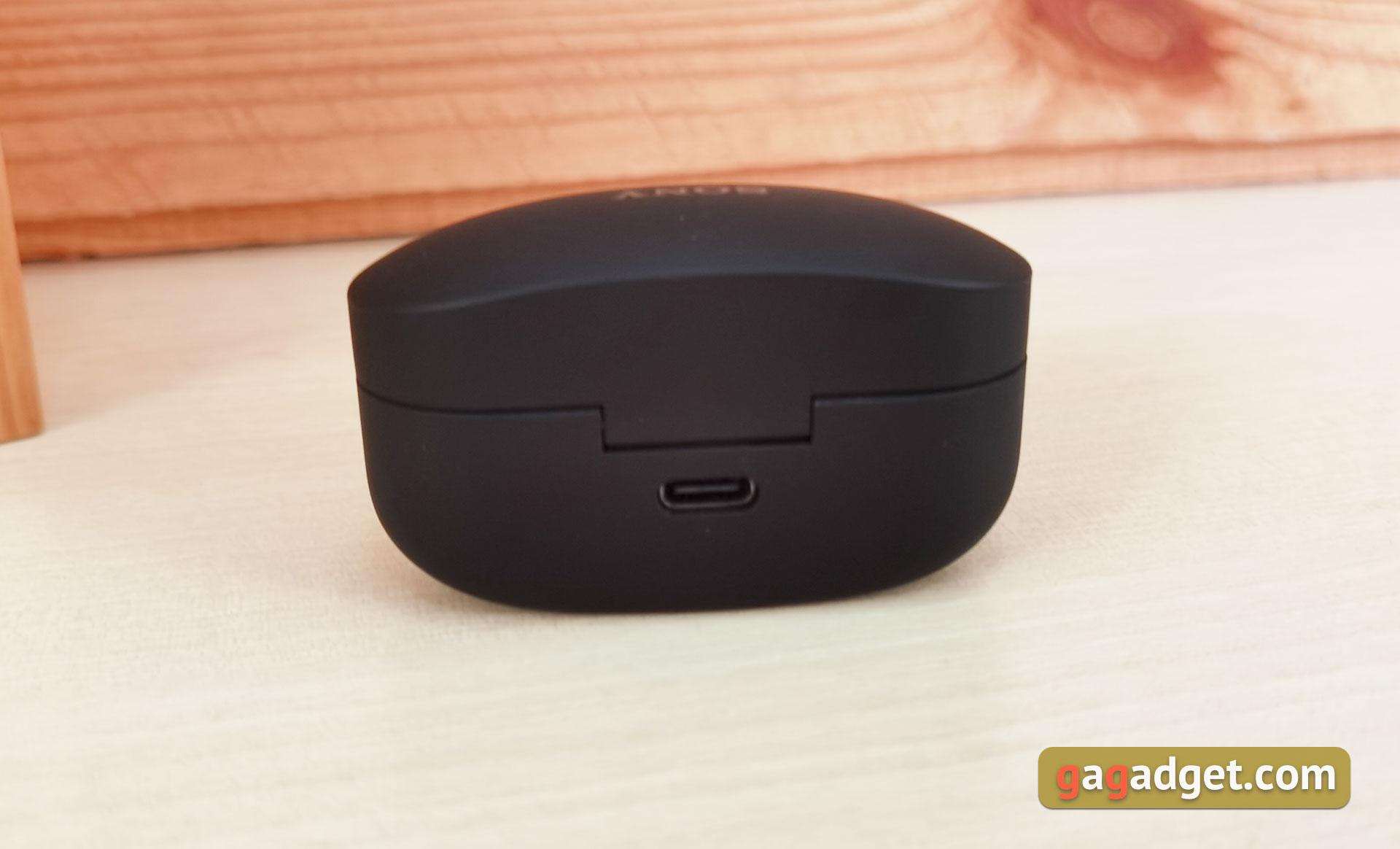
A Type-C connector is provided for charging.
</ img>
How convenient is the Sony WF-1000XM4 to use?
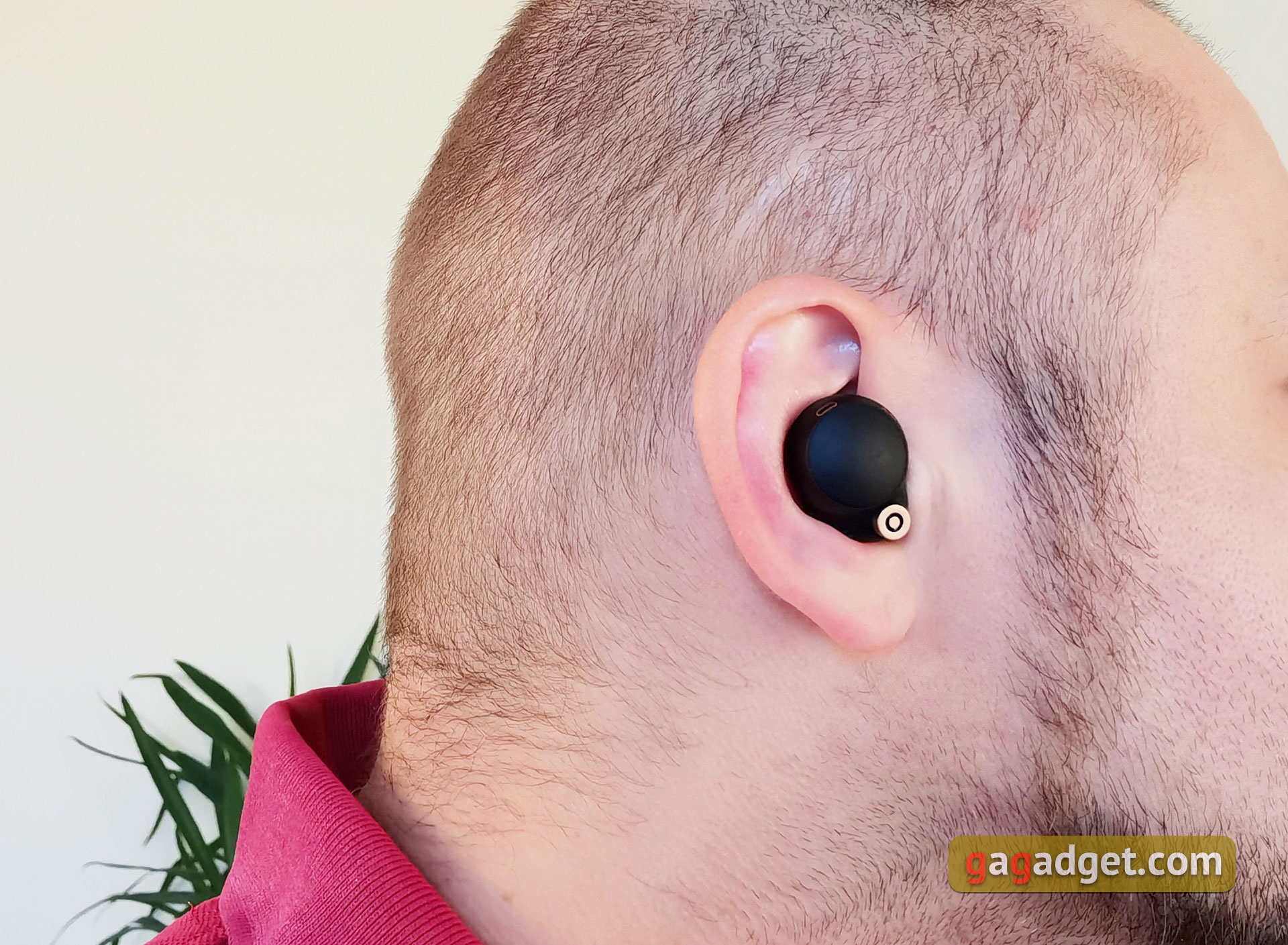
Sony WF-1000XM4 is quite successful and well thought outshape: they fit perfectly in the ears, do not fall out, do not interfere and do not put pressure anywhere. But before buying, you should try it on: with small ears it may not be so good. The only point worth mentioning is the foam tips. You will have to get used to them a little if you have no previous experience of using them. But they provide very good passive sound insulation. On the other hand, you can use third-party attachments if you wish. The headphones practically do not protrude from the ears, which gives hope for comfortable use in winter with a hat. The fit in the ear canal is average in depth, quite comfortable.
</ img>
The headphones are built on the new proprietary SoC V1,which, among other things, includes all the developments of the QN1e from the previous model. Bluetooth 5.2 is used for connection, there is support for SBC, AAC and LDAC codecs, the latter allows you to provide up to 990 Kbps, which makes sense when listening to FLAC or streaming services with appropriate support. Ours is Deezer Hi-Fi, which offers quality up to 1411 Kbps. On the one hand, it is strange that there is no support for any aptX options. On the other hand: Apple has AAC, and LDAC is supported by all Android smartphones starting from version 8. So the lack of aptX cannot be called critical. Sony WF-1000XM4 supports Google Fast Pair for pairing with Android devices. When you turn it on for the first time, the headphones automatically go into pairing mode as soon as we take them out of the case. To connect to a new device, you need to manually put them into pairing mode, which is launched by a long touch on two headphones at the same time. In general, there are no problems with connection stability, even in quality priority mode with the LDAC codec. The exception is Huawei P40 Pro: regular breaks were observed with it. But it seems that this is a problem with the smartphone itself: no such problems were observed with other models. The only little thing that might upset you is the lack of Multipoint support. That is, you won’t be able to connect to a smartphone and a laptop at the same time, but this would be very convenient.

</ img>
Controlled by Sony WF-1000XM4 using touchpads on the outside of the headphones. They are large enough and easy to hit. The default control settings are as follows. One touch on the right earphone – pause/play. Double and triple tap - next and previous track, respectively. Long press - launch the voice assistant. Touching the left earphone — switching noise reduction modes: active, transparent, off. Long touch - "quick attention" function: pause and maximum transparency mode are activated. In the proprietary application, you can reconfigure some functions.

</ img>
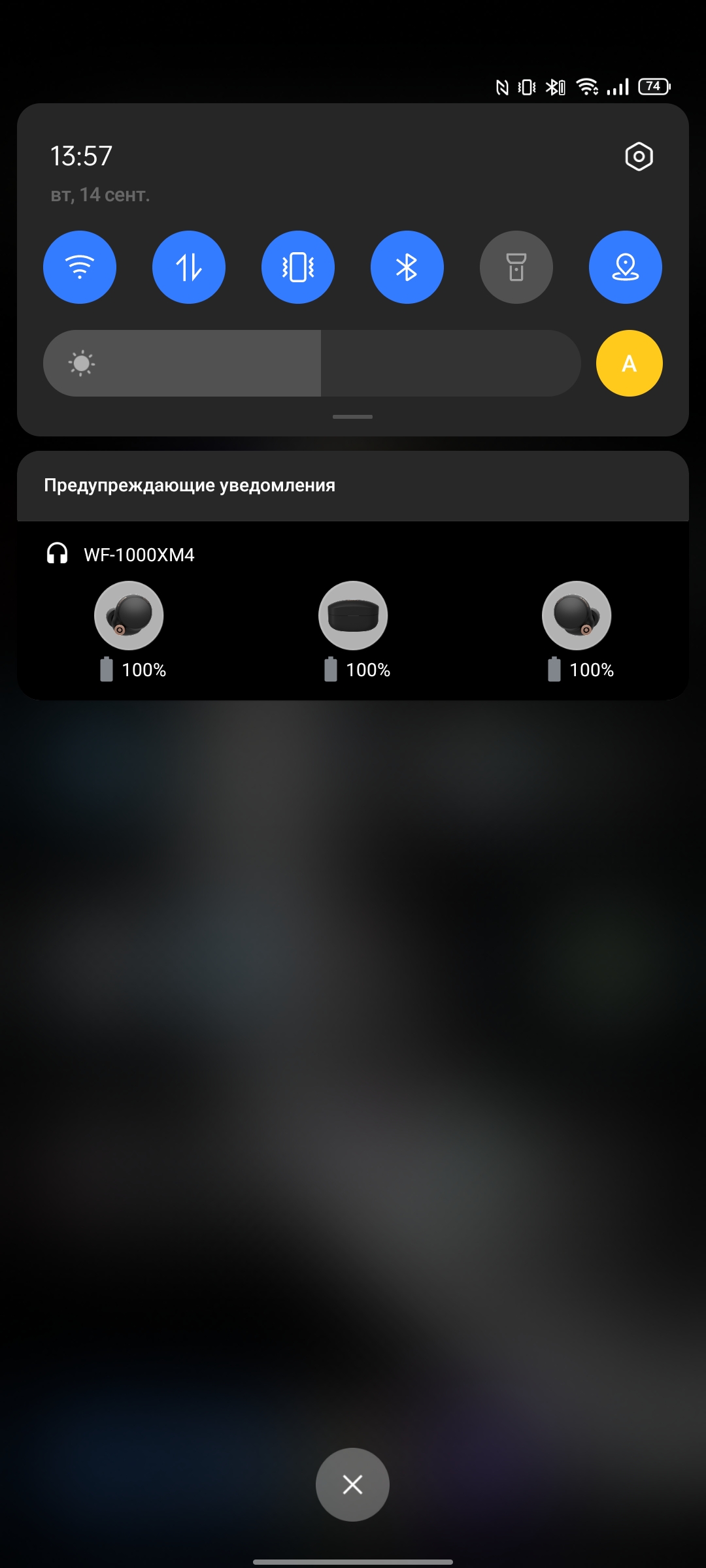
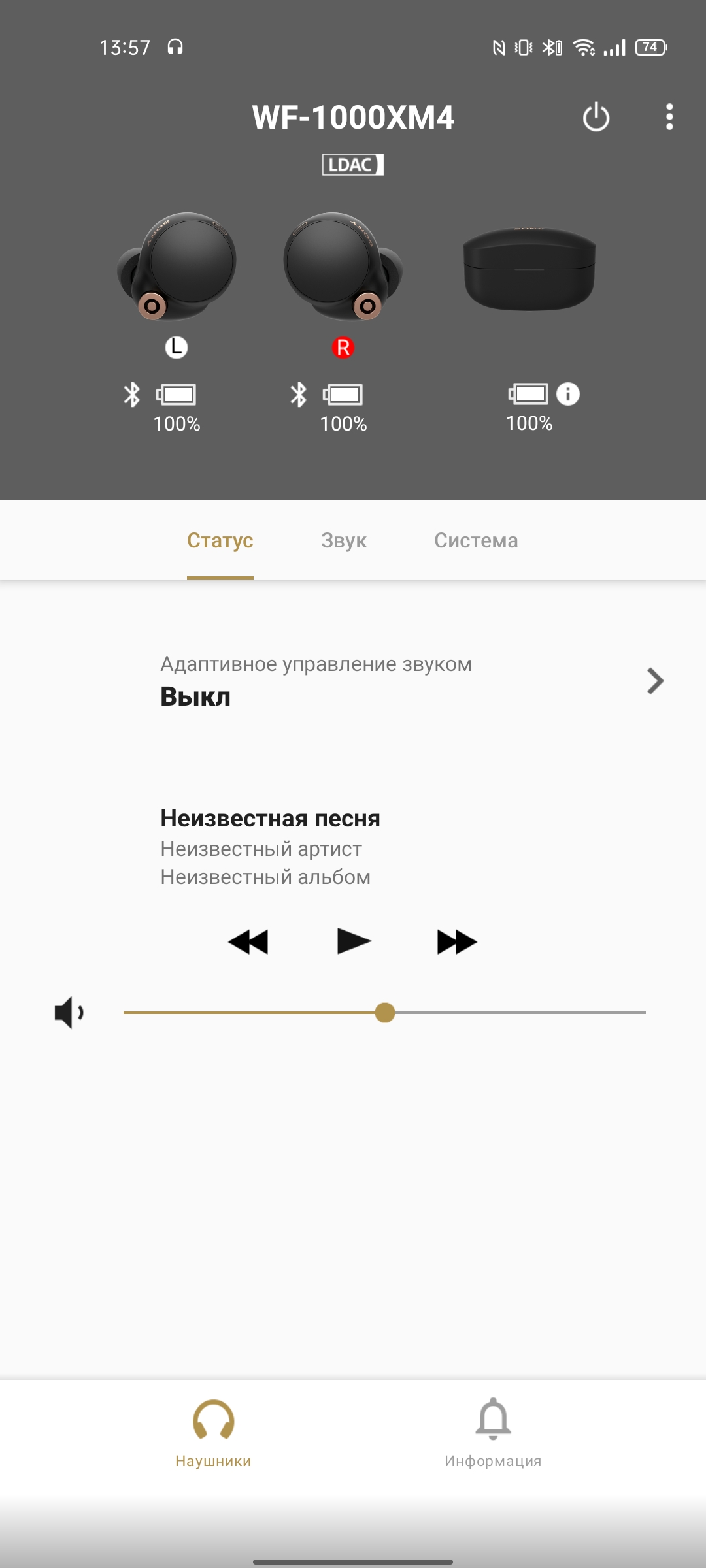
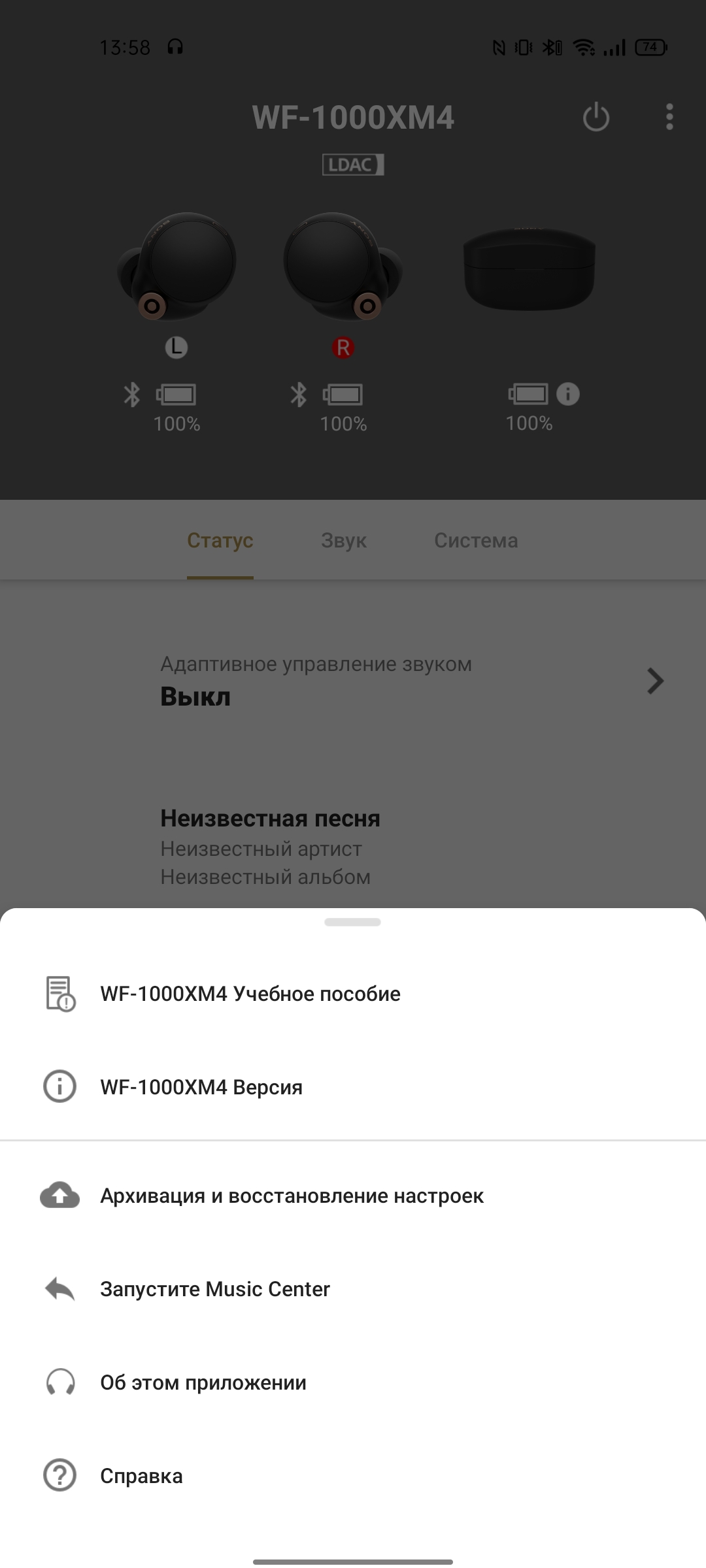
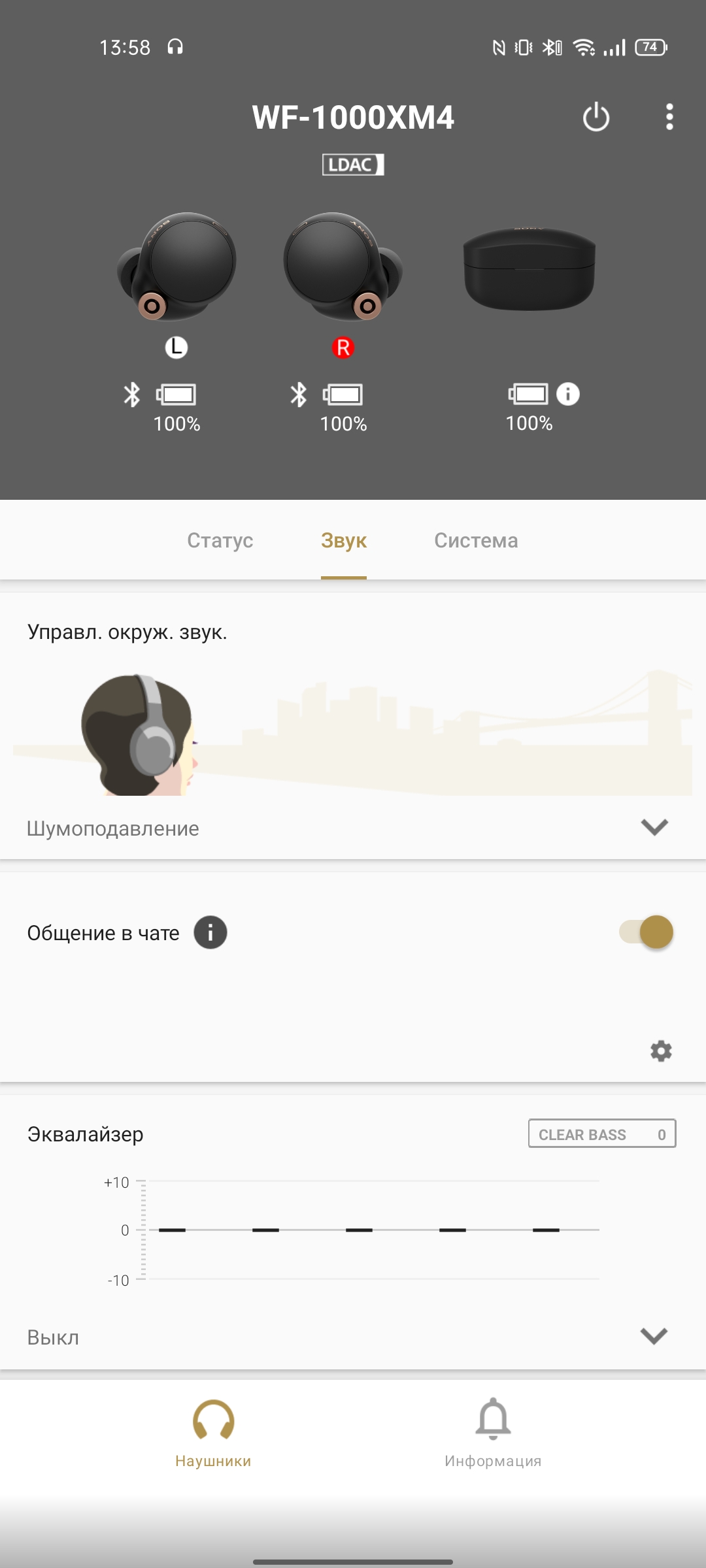
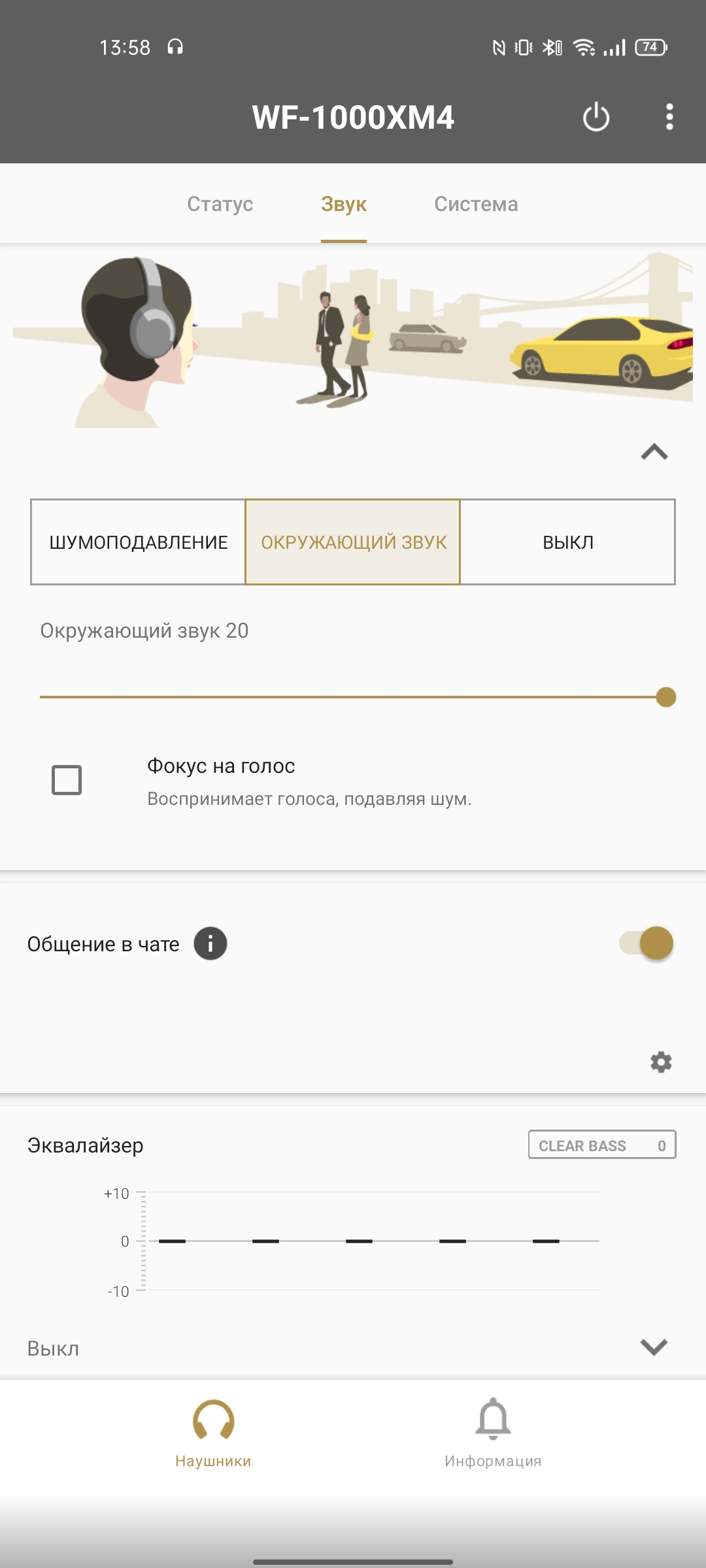
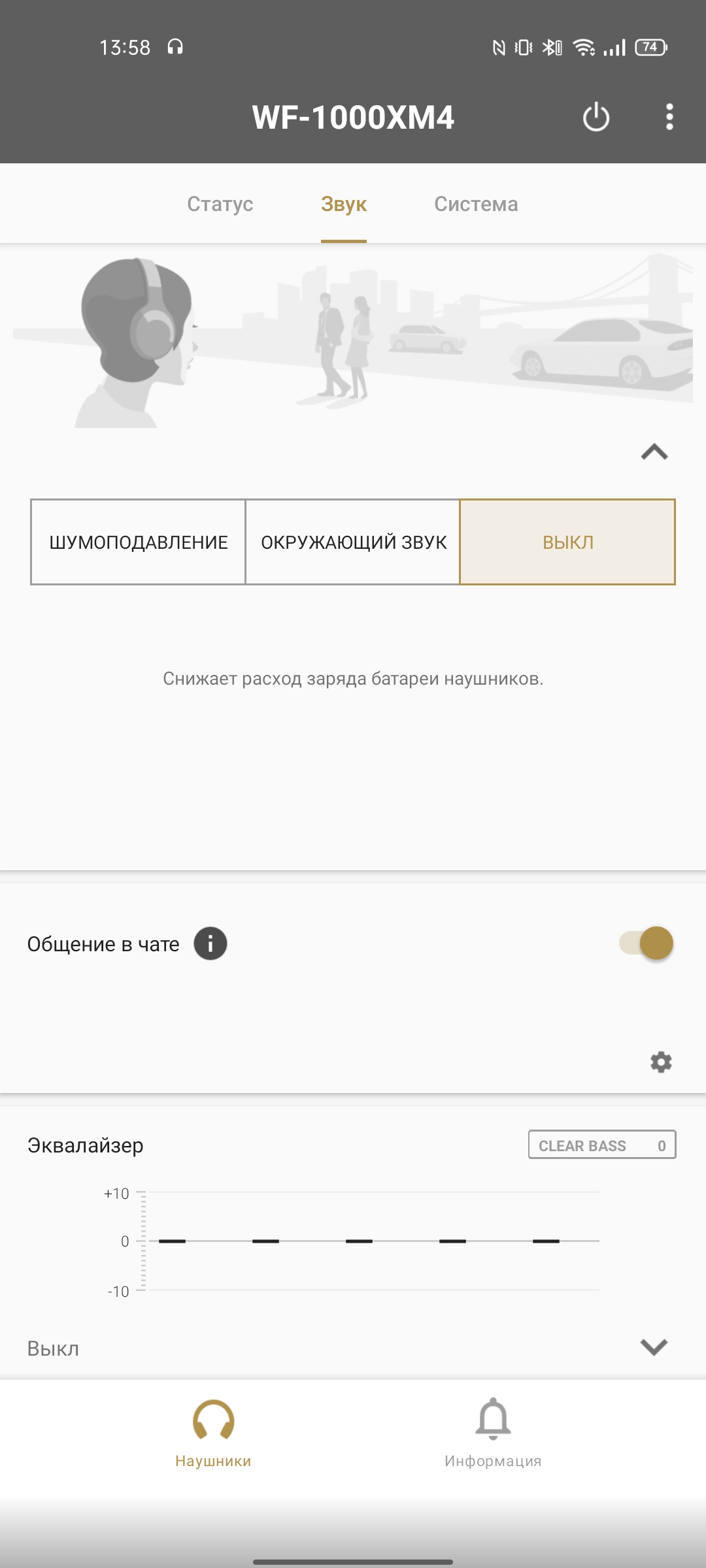
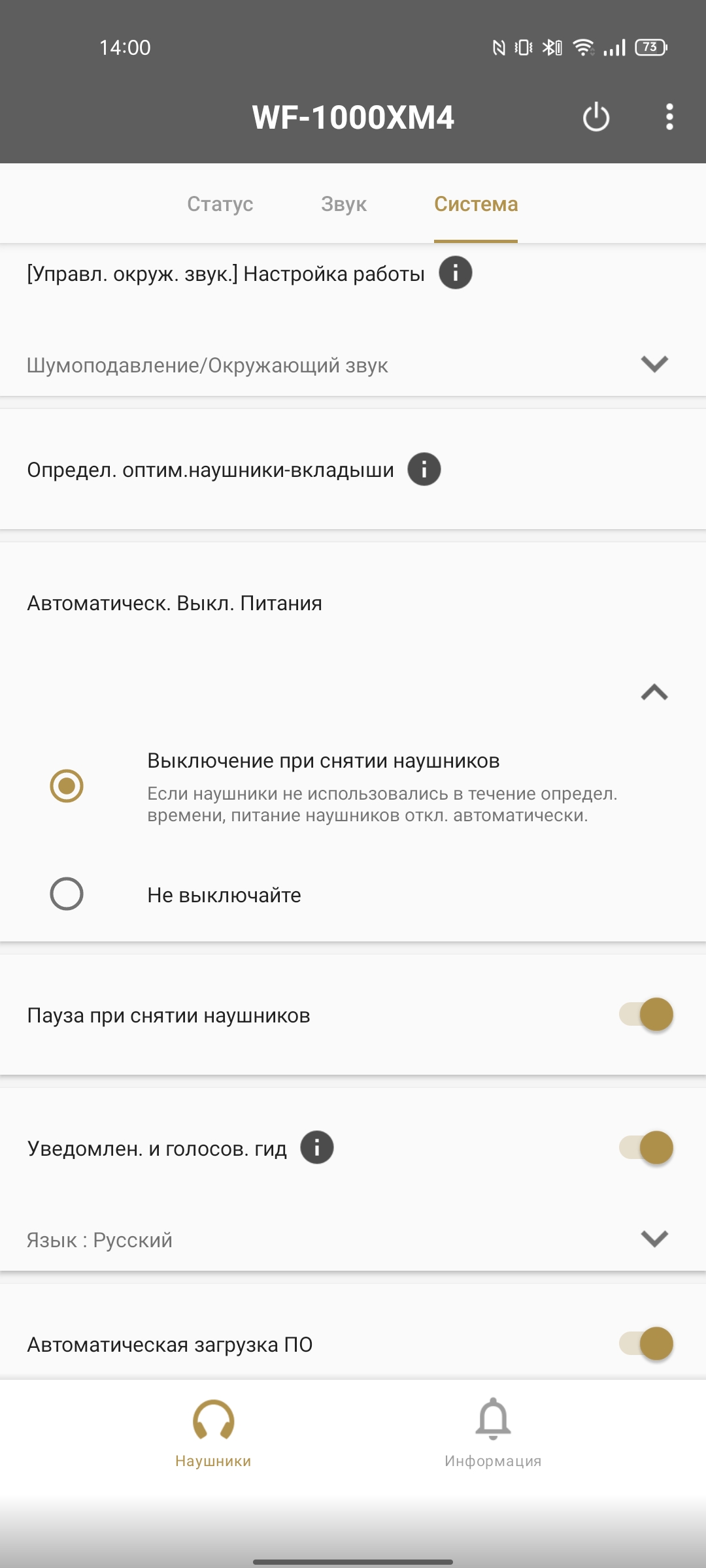
All headphone settings are done usingHeadphones Connect apps. At the top of the application, the current charge of the headphones and charging case is displayed, as well as the codec used. The Sony WF-1000XM4 has more than enough additional features and capabilities. There is an interesting thing called “Adaptive Sound Control”: the headphones automatically change settings depending on the current activity or location, including GPS tracking. Of course, there is a noise reduction and transparency mode setting with level adjustment and the ability to focus on the voice. One of the most useful features is “chat”. The headphones recognize that the owner has started a conversation and automatically turn on the pause and transparency mode. After the call ends, playback resumes and noise reduction is turned on (if it was initially turned on). An extremely convenient thing: in stores there is no need to remove the headphones from your ears or do any additional manipulations at all. Of course, there are equalizers, a proprietary sound enhancer DSEE Extreme, support for virtual 360° surround sound (we also have it available in the Deezer service). At the same time, for the best effect from 360 Reality Audio, the application offers to analyze the shape of the owner’s ears. To do this you need to take a photo of your ears. Of course, the headphone firmware is also updated through the same application.
</ img>
</ img>

</ img>

</ img>

</ img>
</ img>
</ img>

</ img>
</ img>
</ img>

</ img>

</ img>
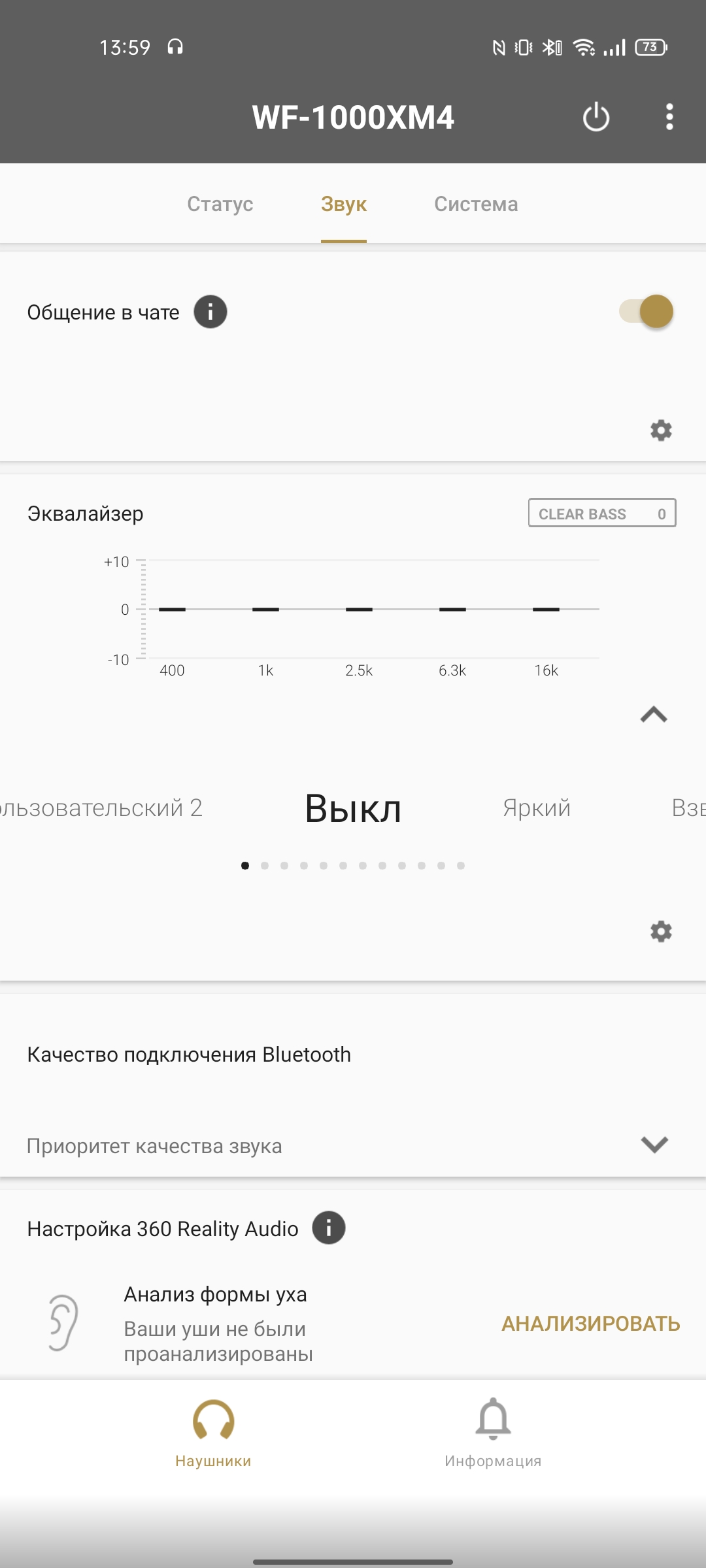
</ img>
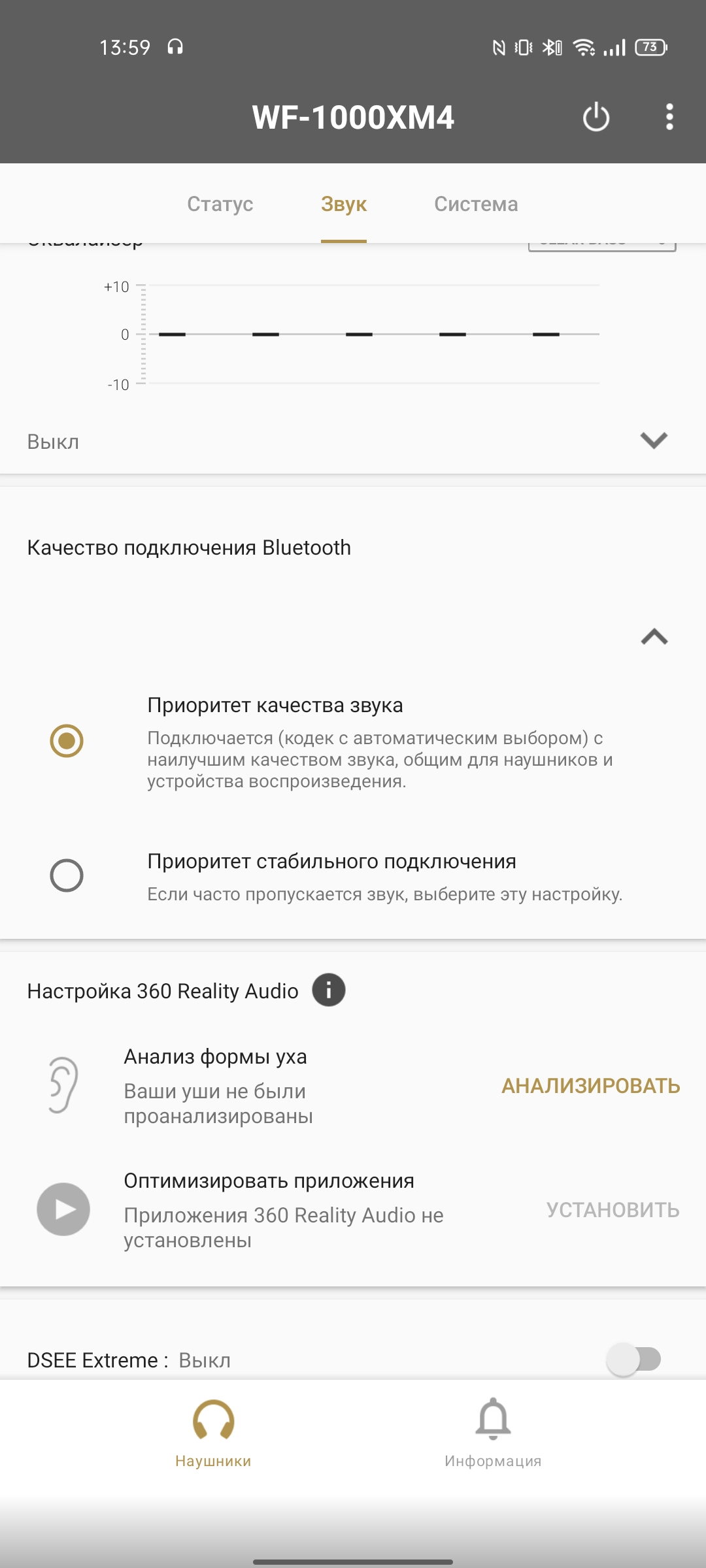
</ img>
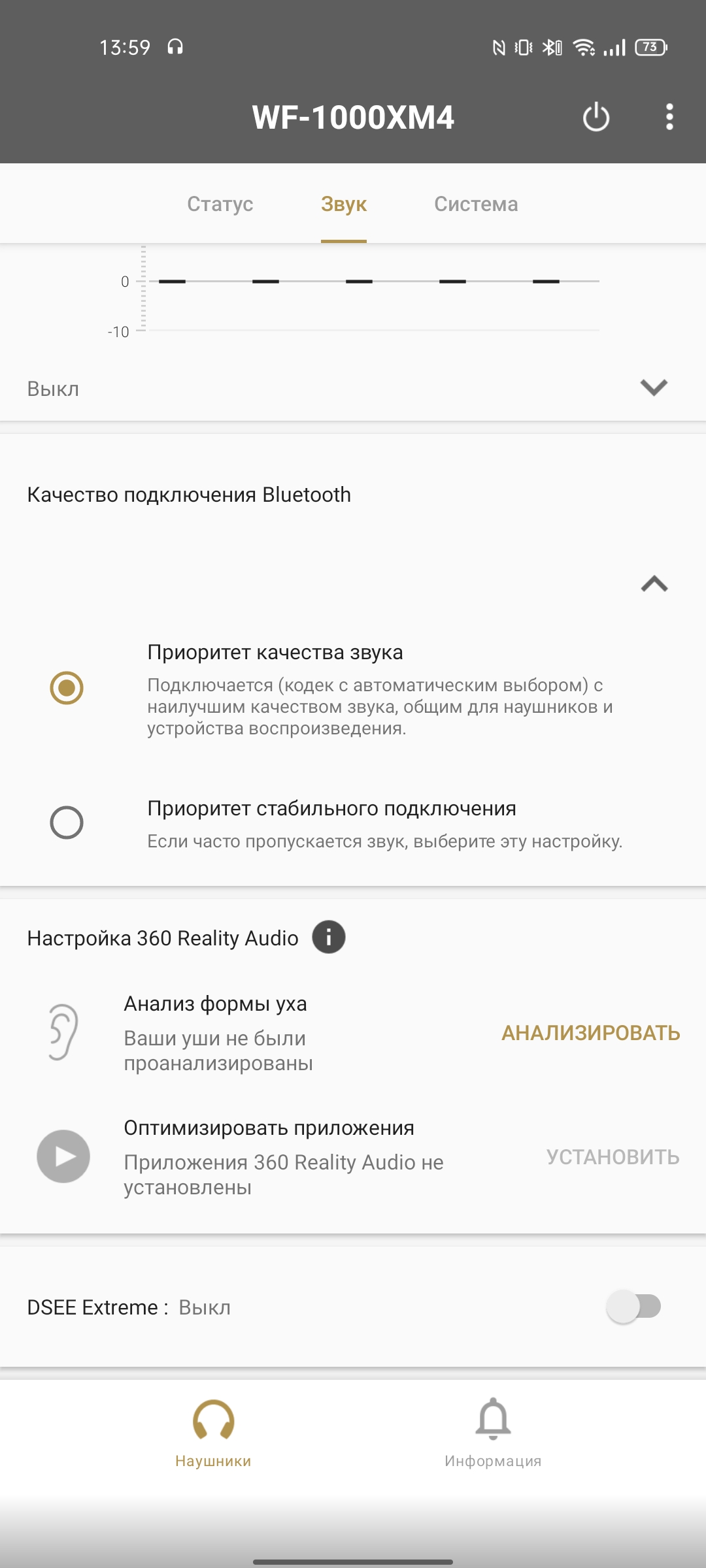
</ img>
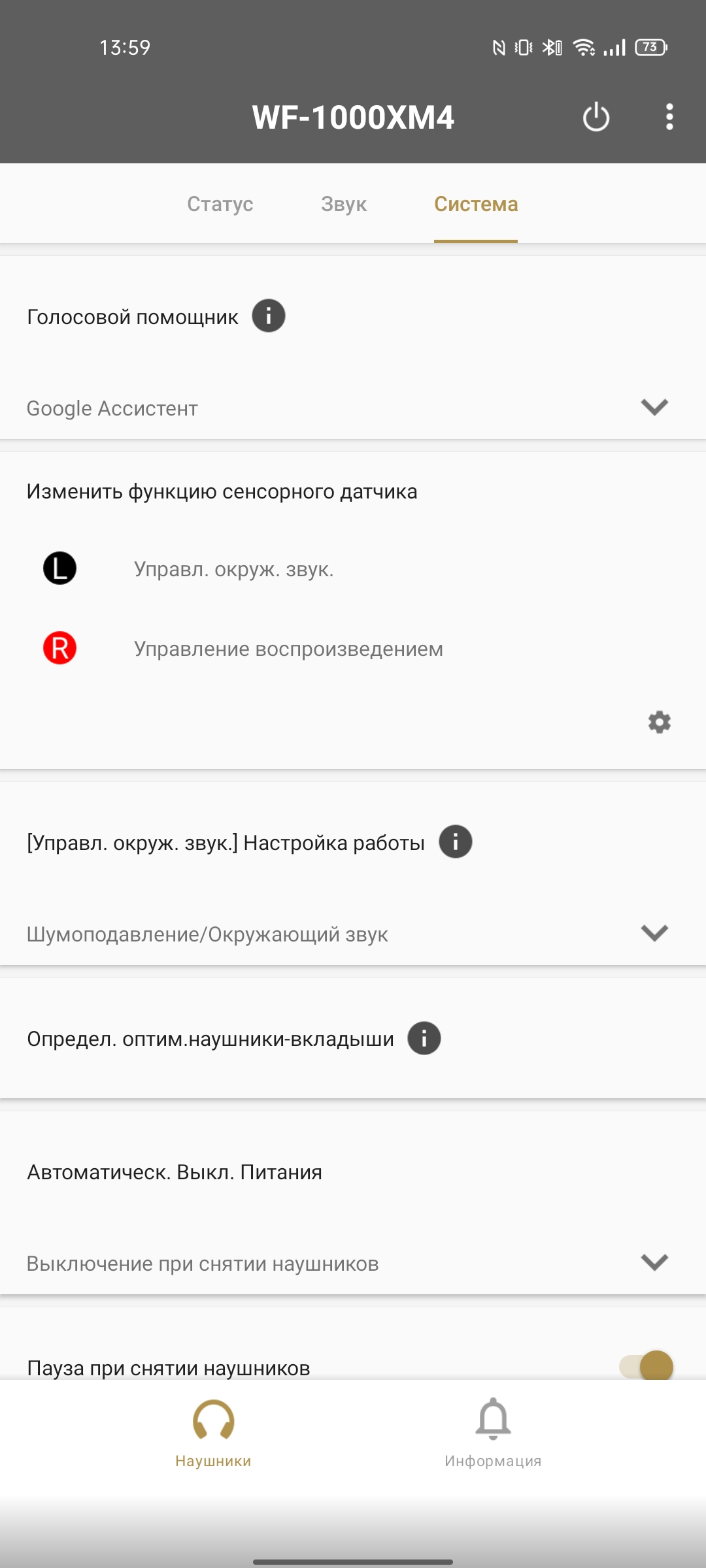
</ img>

</ img>

</ img>

</ img>
</ img>

</ img>



















What about sound quality, microphone and noise cancellation?
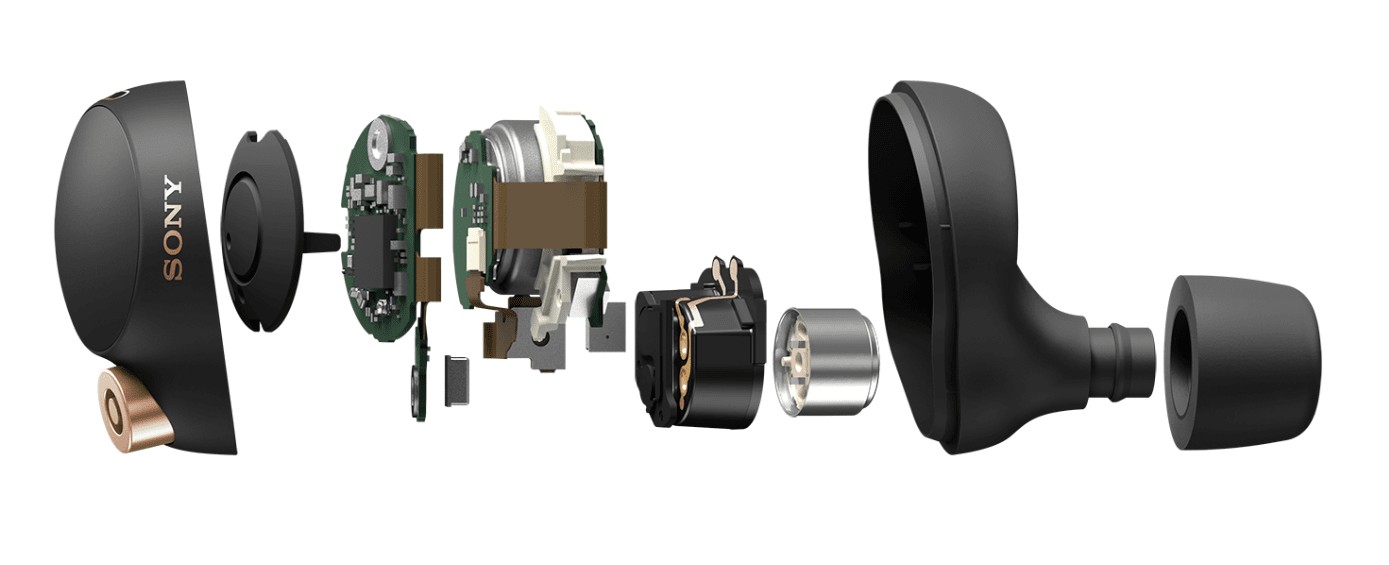
The sound in the headphones is provided by 6mm dynamic drivers.emitters with a 20% larger neodymium magnet and a very elastic diffuser. This is said to allow the headphones to sound great and reproduce deep low frequencies. Additionally, it is worth noting the DSEE Extreme system, which improves the sound of compressed music files in real time. At least that's what the promotional materials say. In reality, the sound quality is very good. But it is still clearly noticeable that the headphones are aimed exclusively at a mass audience: all kinds of electronics, pop music, hip-hop and other light styles of music sound best in them. There are no significant dips throughout the entire frequency range, just like there are no low frequencies that shout over everything else. The bass in the headphones is really good: dense, deep, massive and driving. Not the fastest or most detailed, but at a good level. High frequencies are also good, present in sufficient quantities and allow the headphones to not slip into a completely dark sound. The high frequencies are smoothed out just a little, so high frequency-phobes have nothing to fear. There are some complaints about the middle part of the frequency range. Midranges are present in good quantities, they are not particularly recessed. But they sound "dirty" and lack detail and precision. As a result, many live instruments sound flat. The imaginary scene is not amazing, but it is very good considering the form factor.
</ img>
One of the main features of top wirelessSony headphones are an active noise reduction system. And in this regard, the Sony WF-1000XM4 is at its best. Although you wouldn’t expect anything else from Sony’s flagships. Noise reduction perfectly cuts off monotonous hum on the street or in transport. You can listen to music absolutely comfortably with headphones on the subway, without the need to turn the volume up to the limit. At the same time, when using noise reduction there is no “vacuum” effect. and pressure on the ears, the Sony WF-1000XM4 are very comfortable. Overall, we can say that these are one of the best (if not the best) TWS headphones in terms of noise cancellation performance on the market.

</ img>
The microphones in the headphones are of very good quality:Even on the street or in transport, the interlocutor never had to ask me again. Yes, the frequency range is a little compressed, but this applies to all TWS models. And the main thing is that you can convey information without any problems.
</ p>What about autonomy?
</ img>
The manufacturer promises that from one chargeThe headphones can work up to 8 hours with noise cancellation and up to 12 hours without it. But it all depends on the number of conversations and the codec used for the connection. Of course, when using LDAC, the consumption will be significantly higher than with SBC. The headphones were used exclusively with the active LDAC codec in quality priority mode. Noise cancellation is always active. In this mode, the headphones last about 5 hours, which is pleasantly surprising. The case allows you to charge the headphones 2 more times. So the Sony WF-1000XM4 is doing great with autonomy. As for charging, the process takes about an hour and a half via cable. There is also support for wireless charging using the Qi standard. So the headphones can be charged from most standard wireless chargers, or from smartphones with reverse wireless charging.
</ p>The bottom line: three things you need to know about the Sony WF-1000XM4:
- Sony WF-1000XM4 - TWS earbuds with one of the best noise canceling implementations on the market.
- Long battery life and wireless charging.
- They are protected against dust and moisture according to the IPX4 standard.
Sony WF-1000XM4
Emitters
6mm dynamic
Frequency range
20 Hz - 40,000 Hz (sampling rate - 96 kHz using LDAC technology, 990 kbps)
Form factor
intracanal
Connection
Bluetooth 5.2, SBC, AAC, LDAC
Radius of action
10 m
Wired connection
USB Type-C
Battery
headphones: up to 8 hours (noise cancelling), up to 12 hours (no noise cancelling), case for 2 charges. Cable charging: 1.5 hours, Qi wireless charging
Additionally
IPX4 protection

For those that want to know more:
- Noble Audio Falcon Pro review: warm tube wireless sound
- Sony WH-1000XM4 review: still the best over-ear noise canceling headphones
- OPPO Enco W31 review: true wireless waterproof earbuds with touch control
- Samsung Galaxy Buds + review: miniature TWS headphones with wireless charging
- Mixcder T2 sports TWS earbuds review: a day of work is not for all the money in the world
- Sony WF-1000XM3 review: true wireless noise canceling headphones
- Huawei FreeBuds 3 Review: Active Noise Canceling TWS Headphones
- MPOW T5 review: TWS cordless headphones with long half-price
- Overview of vivo TWS 1: true wireless headphones with the flagship Qualcomm QCC5126 processor
- Kinera SEED Review: Universal Hybrid Headphones With A Delicious Price Tag