World destruction and contingency plan
The fact that humanity is gradually destroying the planet is an indisputable fact.
Environmentalists often say that humans need to reduce their footprint on the planet. A recent study has shown just how huge this footprint is, literally.
While the mass of life forms on Earthis about 1.1 trillion tons and has not changed much in recent years, the so-called “anthropogenic mass” of artificial materials is growing exponentially. The mass of everything humans have built and produced, from concrete sidewalks and glass and metal skyscrapers to plastic bottles, clothing and computers, is now roughly equal to the mass of living things on Earth and could surpass it this year, according to a study published inNature magazine.
This finding may support the argument thatThe Earth has entered the Anthropocene, a proposed geological epoch in which humans are the dominant force shaping the planet. Although this understanding is more symbolic than scientifically significant, the material scale of the human enterprise helps explain how we have been able to transform global nutrient cycles, change the climate and bring many species to the brink of extinction.
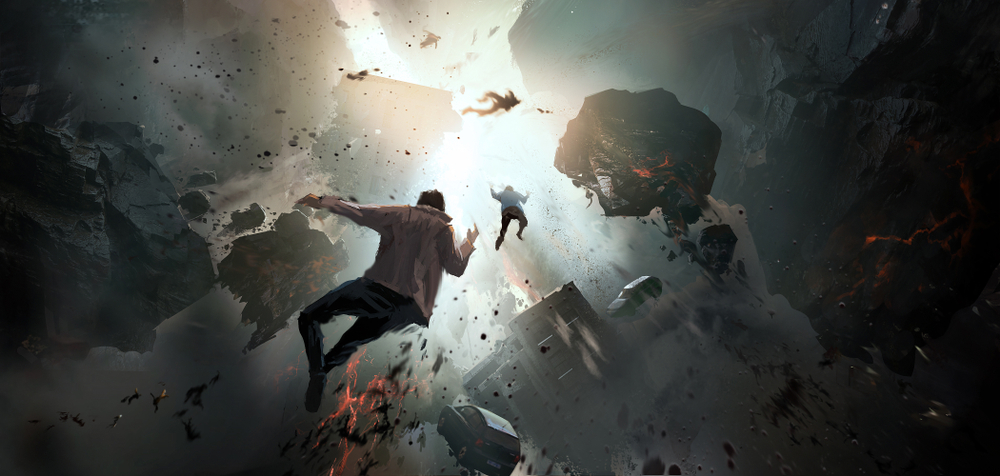
In addition, the reproduction of people themselves threatens the planet with overpopulation, lack of resources and hunger.
“The problem is not only the quantitypeople living on the planet, and in the number of consumers and in the scale and nature of consumption,” says David Satterthwaite, senior fellow at the London-based International Institute for Environment and Development in an interview with the “Bi- BBC".
In support of his thesis he citesConsonant with the statement of the Indian leader Mahatma Gandhi, who believed that “there are enough [resources] in the world to satisfy the needs of every person, but not universal greed.”
Until recently, the number of people living on EarthThere were relatively few representatives of the modern human species (Homo sapiens). Total 10 thousand. years ago, no more than several million people lived on our planet. It wasn't until the early 1800s that the human population reached a billion. And two billion —only in the 20s of the twentieth century.
The world's population is now over 7.5 billion people. According to UN forecasts, by 2050 it could reach 9.7 billion, and by 2100 it is expected to exceed 11 billion.
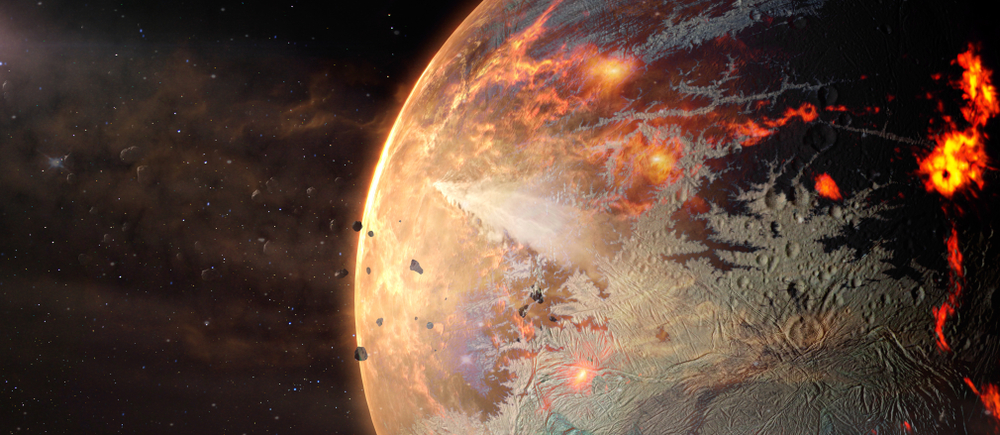
The population began to grow rapidly onlyin the last few decades, so we do not yet have historical examples on which we could make predictions about the likely consequences of this growth in the future.
In other words, if it is true that on ourThere will be more than 11 billion people living on the planet by the end of the century, our current level of knowledge does not allow us to say whether sustainable development is possible with such a population - simply because there have been no precedents in history.
Isn't it time to consider a contingency plan?
What should the new Earth be like?
If humans are going to live in an extraterrestrial environmenthabitat, then it must have the same conditions in which modern man evolved to depend on them here on Earth. What conditions are we talking about? We need the right temperature range, breathable air, gravity, day-night cycles, and more.
Of course, there is a TESS mission that deals withsearching for exoplanets. She has already found thousands of worlds, but “moving” there is problematic. First, we don't have enough technology to travel such long distances in an acceptable amount of time. In addition, the conditions on these exoplanets are far from ideal.
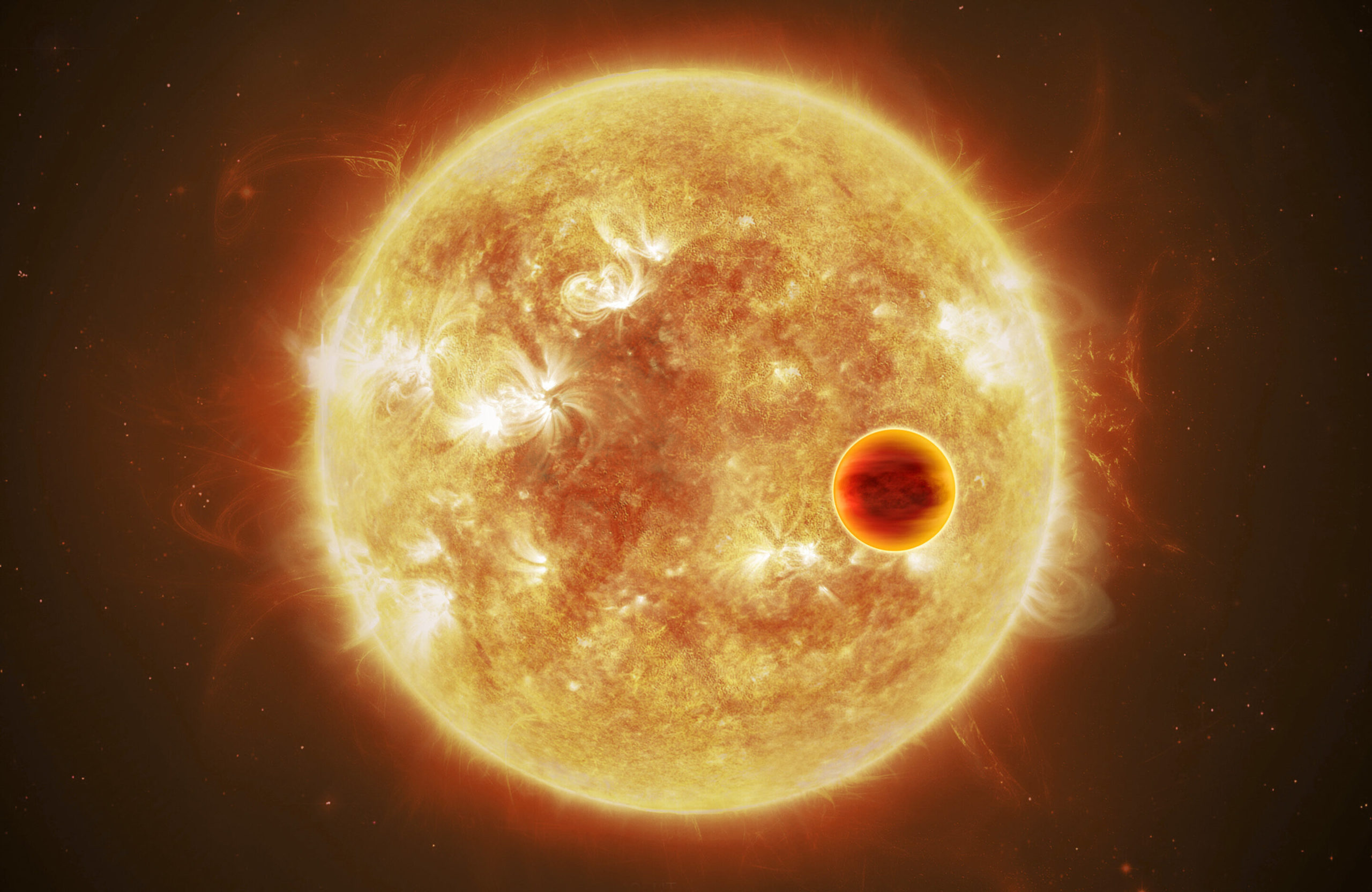
Is it possible to recreate our planet by building an artificial world?
- Gravity
Earth's gravity is absolutely necessary for longlife. Astronauts aboard the International Space Station have to deal with bone loss and low blood pressure, among other things, due to prolonged exposure to microgravity. Studies examining the physiological effects of space on astronauts after months on the International Space Station (ISS) have found significant changes in white and gray matter. These changes can cause blurred vision or even affect an astronaut's ability to walk correctly. But perhaps of greatest concern is how these neurophysiological changes may influence cognition and behavior.
In the absence of Earth's gravity, the fluid in the bodytends to rise upward. This can lead to harmless facial swelling, but other cognitive problems such as disorientation and slow reaction times can also occur.
Alas, artificial gravity generators are abandoneda challenge to known physics. Instead, the artificial lunar megastructure would have to rotate to generate gravity through centrifugal force directed outward along its equator. Instead of stacked floors, the habitat levels on an artificial moon could resemble layers of an onion. In contrast to the earthly calculation, the heads of the inhabitants, and not the feet, will be turned “down” towards the center of the megastructure. Gravity would also be reversed.
- Rotation
The rotation of the planet is necessary not only for the gravity of the centrifugal force, but also for the even distribution of sunlight on the planet.
Getting the rotation itself would be easy.Angled rockets can rotate and maintain the speed required for Earth's gravity. Rockets also don't need to run continuously. “Since the structure rotates in space, there is nothing to slow it down.
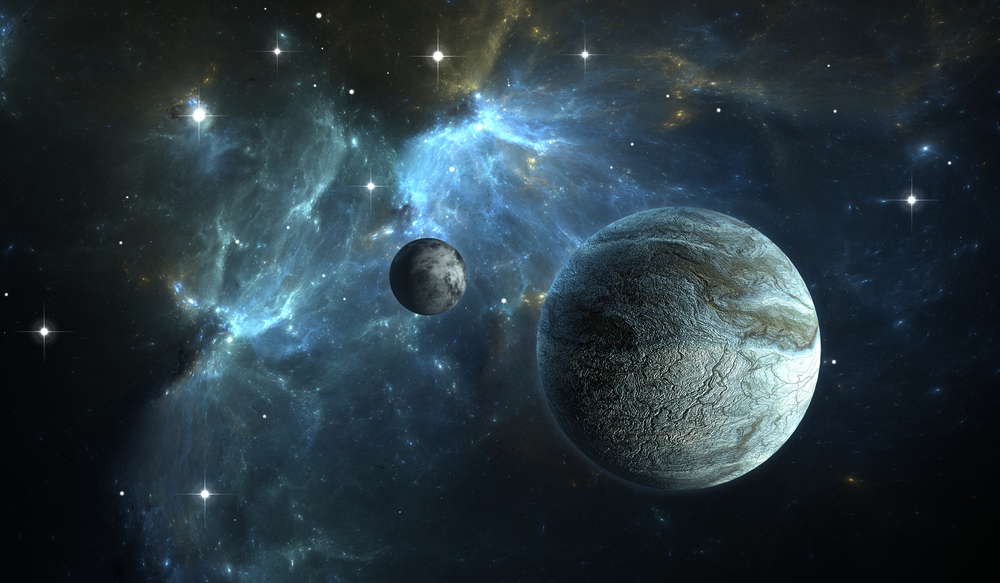
However, the rotation of the artificial moon creates newProblems. Sections of the structure subject to one or more of Earth's gravity must have a high enough strength-to-weight ratio to avoid tearing apart. For example, steel may not be suitable for a structure with a diameter of 120 km, writes Popular Mechanics. However, the synthetic fiber Zylon, with the best known strength-to-weight ratio, is seven times stronger than steel and about twice as strong as Kevlar. It is organic, meaning it contains carbon. Thus, carbon-rich asteroids would be good mining targets for this material.
- Stability
Despite all the engineering problems, buildour Death Star-inspired space habitat would be much easier than building a replica of Earth. But it could never match the second Earth in one thing: stability.
All these structures or ideas for colonies sufferfrom one kind of significant flaws that can be summed up in one term: instability. Active maintenance is essential to maintain the environment, such as accurate, correct orbit parameters. They are much less stable than our planet.
What will it take to build a new planet?
What technologies will we need to create a new planet? Where can we find enough raw materials for our future world? How long will it take us to complete this planetary building?
Rocky planets like Earth are born fromremnants of a newly formed star. They start out as specks of dust smaller than a human hair. Then these grains merge into larger pieces, which continue to collide with each other until, after a few million years, they turn into a new earthly world. In theory, we understand how planets are formed in the universe. But how can we go about making artificial?
If we humans built a planetary replica andpopulated it, we would have to create a rock with an atmosphere of breathable air, the right temperature, Earth's gravity, and a stable orbit around the sun. And that's just for the beginning.
Let's start construction in the Sun's habitat. This will help us maintain the temperature on our artificial planet, like on Earth. But where to get all the materials for its construction?
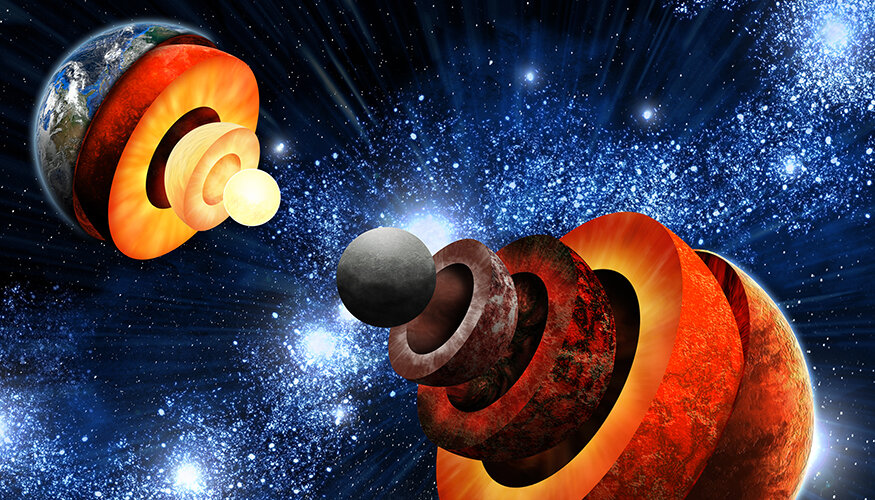
Asteroids might seem like a good source.The problem is that the Earth has a mass of over 2,000 asteroid belts. The solar system simply doesn't have enough asteroids to build a new world the size of Earth.
But in the Oort cloud there may be enoughmaterial—a swarm of icy debris that hypothetically exists in the most distant corners of the solar system. But this cloud is so far away that even Voyager 1, which has been traveling at 17 km/s (11 m/s) for the past 41 years, will not reach it for another 300 years. And he won't get to the other side of the Oort cloud for about 30,000 years.
You need to build a fast spaceshipto collect all this dust and direct it in the right direction. In addition, moons from other planets can be used. For example, all of Jupiter's moons will provide enough material to create a planet about 7% the size of Earth. A good start, if, of course, they manage to get them out of the orbit of the gas giant.
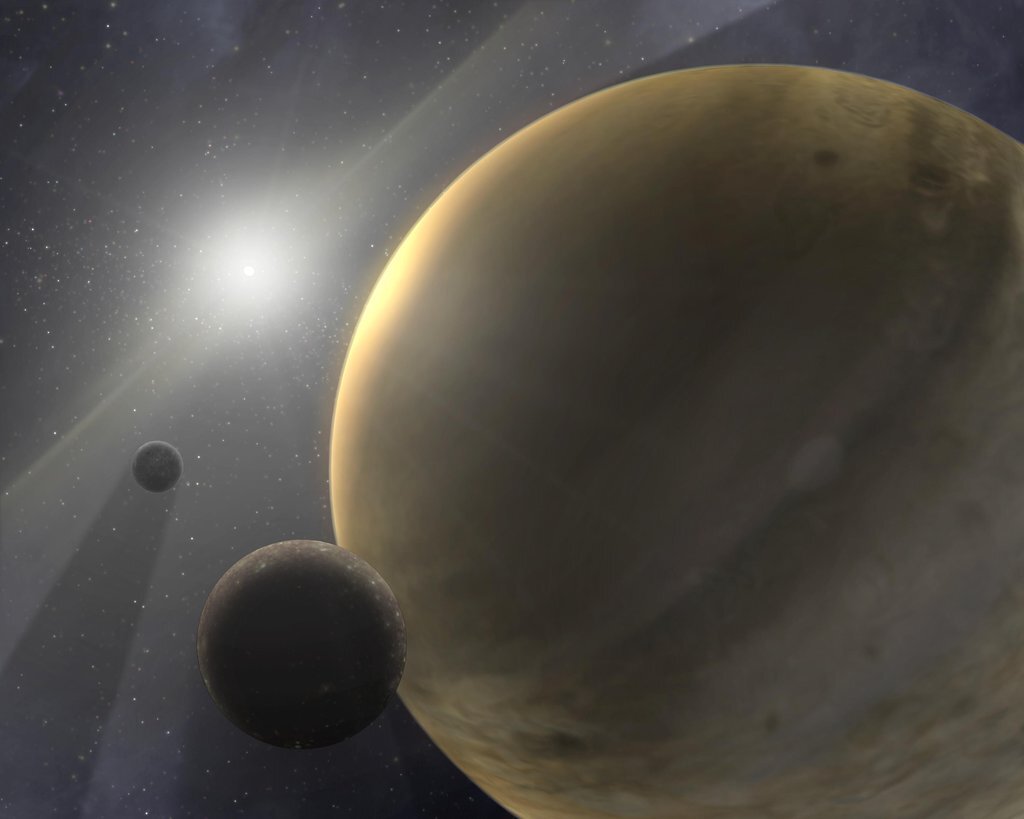
However, there is no need to build our new worldthe size of the Earth to reproduce the same force of gravity that we feel now. One-tenth of a planet can be squeezed into a sphere the size of the moon. Yet it will take at least several hundred years to complete the construction.
Once all engineering issues have been resolved, andour newly formed artificial planet will be in orbit around the sun, the Earth needs to be submerged in water. After its evaporation, an atmosphere will appear on the Earth. Some of the carbon dioxide emitted by polluting plants on Earth can be introduced. Carbon dioxide is a necessary part of the atmosphere to which we are accustomed, but in certain quantities!
Then on a new planet it is necessary to plantplants. They will slowly accumulate oxygen in the atmosphere through photosynthesis. Finally, after millennia of planetary construction, the first human colonies will set foot on the new Earth, created by human hands.
What's the bottom line?
Despite the fact that it will be smaller in size, the copy of the Earth will not differ much from the original: temperature and gravity, similar to those of the Earth, will allow people to quickly get used to it.
Yet there is one important difference.Our artificial world will require active maintenance - from the planetary environment to the parameters of our orbit. There is currently a lot we don't know about the Universe. And we can only guess how a new planet will form in it. At this point, it may be easier to maintain the existing world than to build a completely new one.
Read more
Physicists have created an analogue of a black hole and confirmed Hawking's theory. Where it leads?
Uranus has received the status of the strangest planet in the solar system. Why?
SuperCam scientific instrument from Perseverance rover sends first results to Earth
Death Star (eng.Death Star) is a fictional combat space station - an astro-structure from the Star Wars universe. Equipped with super powerful energy laser weapons of extremely destructive power, capable of destroying entire planets.
Zilon is a trademark for a number ofthermosetting liquid crystal polyoxazoles. This synthetic resin material was invented and developed by SRI International in the 1980s and is manufactured by the Toyobo Corporation. In general, the fiber is called PBO. Zylon has a high tensile strength, 1.6 times that of Kevlar. Plus, Zylon is tougher than steel.