Why you need to look for minerals in space
In order to understand why the British are so interested
The most effective way to extract metals is from asteroids, and their extraction even allows you to make good money from it. For example, asteroid 2011 UW158 is worth about $5 trillion.
For "mining" in space, you need to do it right awaymultiple tasks. First, of course, you need to choose a suitable object. Then - to get to it and extract the necessary resources. And finally, return them to Earth or another point where it is planned to process the extracted materials. This is an extremely simplified scheme, but even it sounds like something grandiose and complex.
We make robotic solutions thatallow you to get close to an asteroid, identify resources and extract them. The celestial body itself will not move anywhere: we, like buffalo starlings, will sit on the “hippopotamus”, take what we need, and fly away. Yes, asteroid mining is a difficult task, but it is not impossible. There is still a lot of work ahead, but, according to my estimates, this could become a reality in 10–15 years.
Mitch Hunter-Scullion, founder of the British company Asteroid Mining Corporation
The company focuses on metal miningplatinum group. These are ruthenium, rhodium, palladium, osmium, iridium and, in fact, platinum itself. According to the plan, it is planned to use the extracted resources on the Earth - there are no plans to participate in any promising industries outside the Earth yet.
The main problem of using resources withasteroids - where they are used. Bringing it down to Earth, even in a processed form, is too difficult and expensive, so it is advisable to use such resources directly in space, for example, in a lunar factory or a plant in orbit of our planet. But there are no such things yet, and, unfortunately, there are no prospects for their creation. At least until the assembly of spacecraft similar to the nuclear orbital tug begins. As soon as such production is launched, the question of raw materials will immediately arise, and this is where metals from asteroids will be needed. In the meantime, he’s gone, alas.
Mikhail Kotov, science journalist
By the way, when asked why exactly asteroids,and not, for example, the same resources of the Moon are at the center of the company's interests, Hunter-Scullion said that “people worry too much about it, there are a lot of emotions in the spirit of“ our Moon ”. On the contrary, the head of the Asteroid Mining Corporation noted, “no one cares about asteroids: crush them, tear them apart, no one will shed a tear.”
Speaking about the timing of the start of industrial"Mining", the head of the company did not specify the reasons for his optimism, but his words about the reality of the implementation of such a project are justified. One has only to look at what we have now. Even if you look at the positive episodes only with the manipulation of asteroids, humanity has something to boast about. For example, back in 2010, the Japanese Hayabusa spacecraft successfully delivered samples from the asteroid (25143) Itokawa to Earth, and in early December 2020, the Hayabusa-2 spacecraft returned with samples from the asteroid (162173) Ryugu. In 2023, the American OSIRIS-REx will deliver samples from the asteroid Bennu, and a year earlier NASA's mission to fly and take samples from the celestial "cobblestone" (16) Psyche will begin.
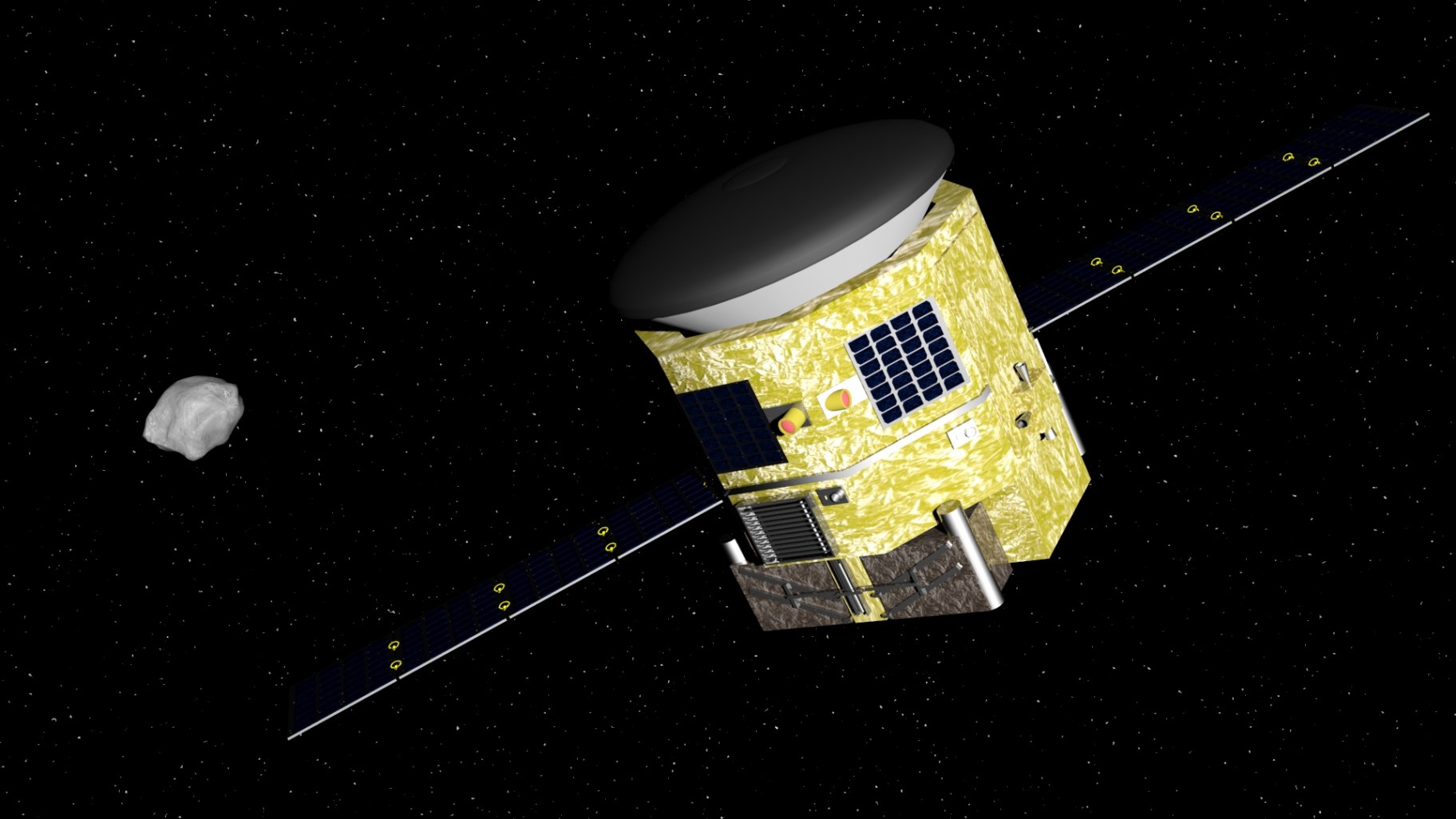
In fact, humanity is already capable ofdeliver anything to or from the asteroid. The question now is how quickly it will be possible to develop a solution that allows not to "scrape" samples from the surface, but to develop a celestial body from an industrial point of view.
I believe that commercial production will not beginlater than 30 years. Perhaps due to various factors (including the ambitions of states or companies), even earlier. But here we need an integrated approach, an emphasis on transport technologies and mandatory monetization of intermediate steps. Otherwise, it won't help much.
Alexander Ilyin, General Director of the Russian company "Lin Industrial", which develops missiles
In fact, humanity is already capable ofdeliver anything to or from the asteroid. The question now is how quickly it will be possible to develop a solution that allows not to "scrape" samples from the surface, but to develop a celestial body from an industrial point of view.
But the willingness of the British to get down to business is a separate conversation, because there is something to fear in mining on asteroids.
Is mining in space so profitable?
Asteroid mining is fresh, but not onlythat the idea that appeared, the main hype from which has already passed and even took the first victims with it. Consider only Planetary Resources and Deep Space Industries, which also promised to start developing foreign resources. They attracted millions of investments, but in the end they almost completely closed their activities. Yes, in a sense, the mining bubble has already burst - now it will not be possible to go out only on an innovative idea.
At Asteroid Mining Corporation, it appears thatkeep in mind the sad experience of colleagues and build their own scheme of work. Thus, the company receives scientific support from cooperation with British universities and specialists from Tohoku University, Japan. Scientists of the latter worked, by the way, on the already mentioned apparatus Hayabusa, which delivered samples from an asteroid to Earth. But money is more difficult: seeing the example of initially attractive to investors, but failed colleagues in the shop, the British have worked out a new way.
We are self-financed.Of course, over time we will start working with investors, but I want to be sure that it will be the right investor and the right terms of cooperation. We have turned down investors in the past and are ready to do it again - Asteroid Mining Corporation adheres to the ideology of a lean startup.
Mitch Hunter-Scullion, founder of the British company Asteroid Mining Corporation
By the way, according to Goldman Sachs, it is space "mining" that will reveal the first trillionaires to the world. But apart from financial and technological risks, there are other uncertainties.
To the nail?
The issue of space resources also haspolitical subtext - after all, there are essentially no documents regulating the sphere. Yes, the international community has drawn up the founding document of space law, the 1967 Outer Space Treaty. But the maximum that is there is the wording "Outer space, including the Moon and other celestial bodies, is not subject to national appropriation either by proclaiming sovereignty on them, or by use or occupation, or by any other means."
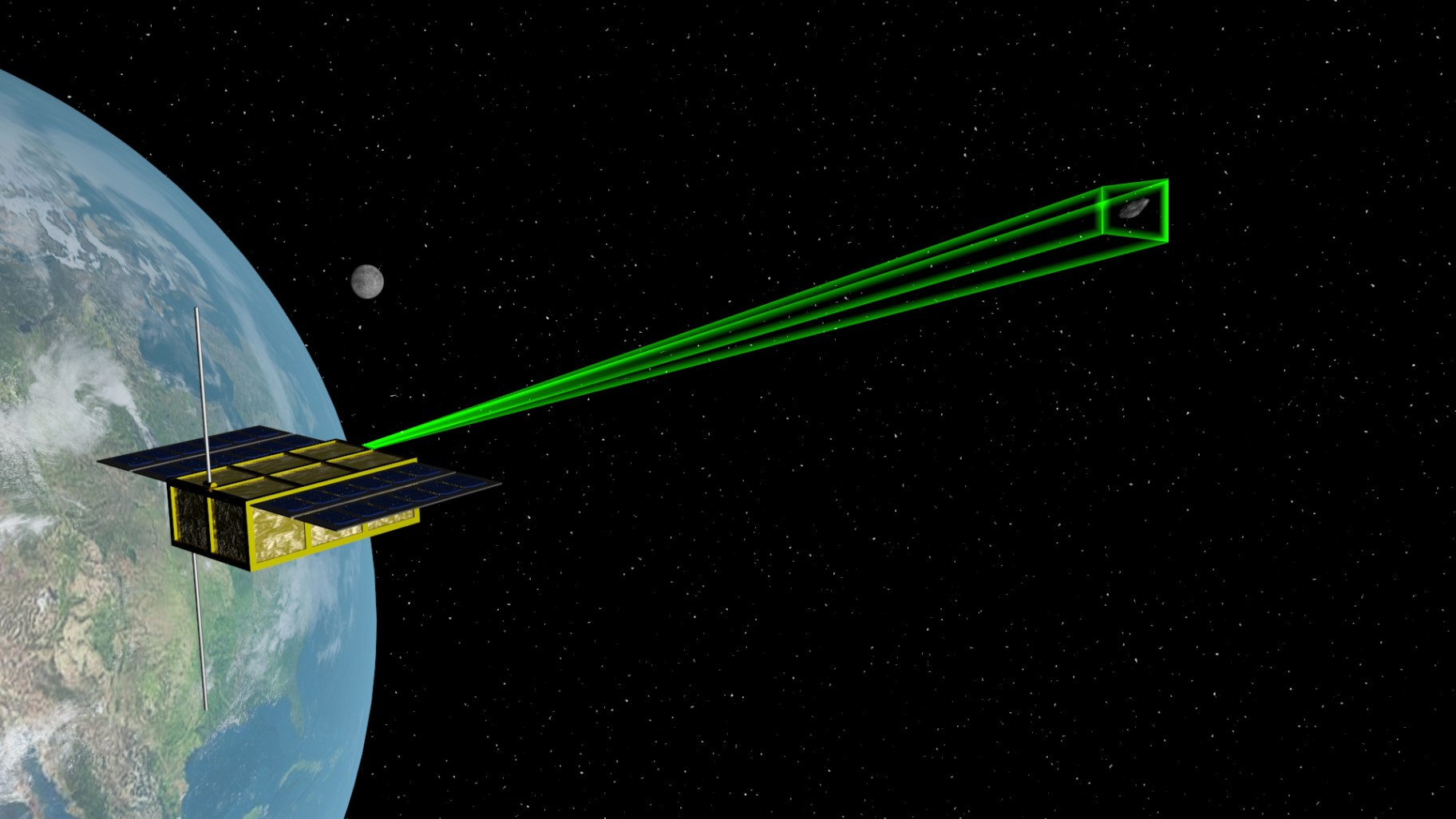
It is about resources that not a word is said here,which, of course, gives rise to controversy now: states adhere to different positions. In the USA, for example, they support "mining", while in Russia they at least doubt and only formulate their position. Therefore, the situation has so far been left to chance.
When cosmic law is worked out, it will fix the status quo between the powerful. Until then, you need to stake what will be yours. By any means.
Alexander Ilyin, General Director of the Russian company "Lin Industrial"
As a result, "space mining" is stillremains a dark horse in both technology and investment. On the one hand, we will inevitably come to the point of mastering the resources of outer space, and on the other, there are challenges here literally from all sides. The issue of developing asteroids or other celestial bodies combines issues of economics, politics and technology, therefore, for success, it is best to move forward in all directions at once.
See also:
Physicists have created an analogue of a black hole and confirmed Hawking's theory. Where it leads?
Because of the Sun, the Earth's atmosphere will lose all free oxygen
Abortion and science: what will happen to the children who will give birth