Scientists have removed certain amino acids from the diet of rodents suffering from glioblastoma (deadly
Death of cells inside the human body -a normal part of its functioning. Through apoptosis, abnormal cells that are no longer needed are destroyed and reabsorbed. However, this process is blocked in the abnormal cells, making it more difficult for the body to get rid of them. As a result, they multiply and pose a danger to human health. Ferroptosis is another type of cell death that was discovered relatively recently; Iron plays a key role in it. Previously, its activation was associated with a possible way to fight cancer.
Research team from the School of MedicineUniversity of North Carolina and Columbia University found that the cells involved in the formation of glioblastoma are especially susceptible to death from ferroptosis. However, glioblastoma is incurable and fatal in 100% of cases. It is a fast-growing cancer with an average survival period of only 16 months.
As part of the study, scientists fed micea diet that limited the intake of cysteine and methionine, two sulfur amino acids. Previously, the reduction of these substances was associated with ferroptosis and the death of cancer cells in lung and pancreatic cancer, as well as in sarcomas. Biologists not only discovered that such a diet increases the likelihood of glioblastoma cells dying from ferroptosis. They also noted that the cells become more susceptible to chemotherapy drugs, which means they can be administered in lower doses. All mice on a special diet had a better survival period than animals from the control group. The rodents that were kept on a combination diet and chemotherapy regimen felt better.
Cysteine is found in whole grains, beef,eggs and poultry, and foods high in methionine include Brazil nuts, fish and pork, as well as beef, eggs and poultry. It is unclear whether human glioblastoma patients on a diet restricting these amino acids would fare as well as mice. But presenter Dominic Higgins, lead researcher at the University of North Carolina School of Medicine, plans to find out.
“Now we need to find a way to eliminate thesecomponents (cysteine and methionine) at the expense of dietary requirements, while maintaining the energy that a patient may have, especially a cancer patient, ”said Higgins.
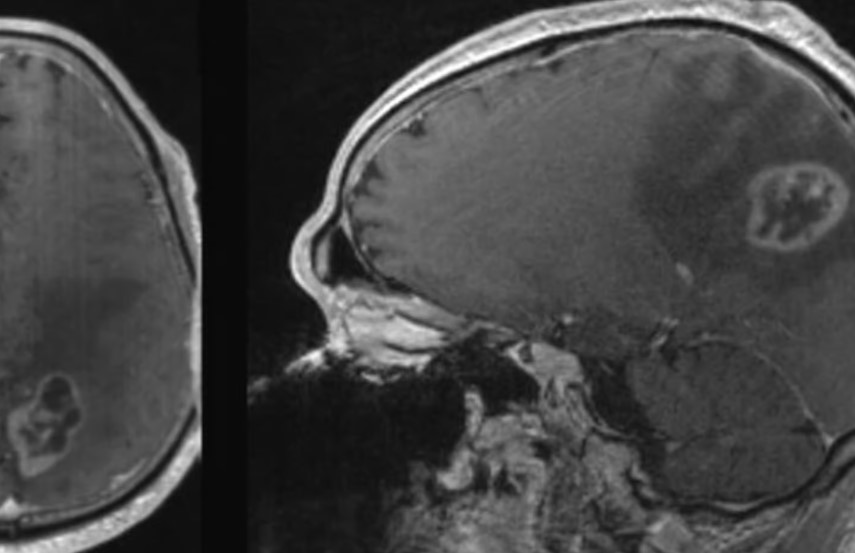 MRI image of glioblastoma. Author: Dominic Higgins, MD, PhD
He works with colleagues to developA human study in which patients with glioblastoma will be put on a restricted diet before surgery to remove the tumor. After surgery, scientists will analyze the tumors to see what effect the diet had.
The study was published in the journal Nature Communications.
Read more:
A red halo flared up over Italy. Now its nature has been explained
Named a way to reduce appetite without surgery
Chia seed experiment confirms Alan Turing's famous mathematical model
Cover: Glioma, by Katherine E. Warren, Wikimedia Commons