The legs of the Cupiennius salei spider consist of almost 2,400 tiny hairs one hundredth of a millimeter thick. Authors
When we started our experiments, we expected to finda specific angle for best adhesion and similar adhesive properties for all individual hairs on the spiders legs. But surprisingly, these adhesion forces varied greatly among individual hairs, with one hair adhering best to the surface at a low angle while another was positioned perpendicularly.
Clemens Schaber, doctor from the University of Kiel in Germany.
Adhesion is adhesion of surfaces of dissimilar solids and/or liquids.
However, every spider hairexhibited unique adhesive properties. The authors then observed the hairs under a powerful microscope and discovered that each of them had distinct and previously unrecognized structures. The team believes this is why spiders can climb on so many types of surfaces.
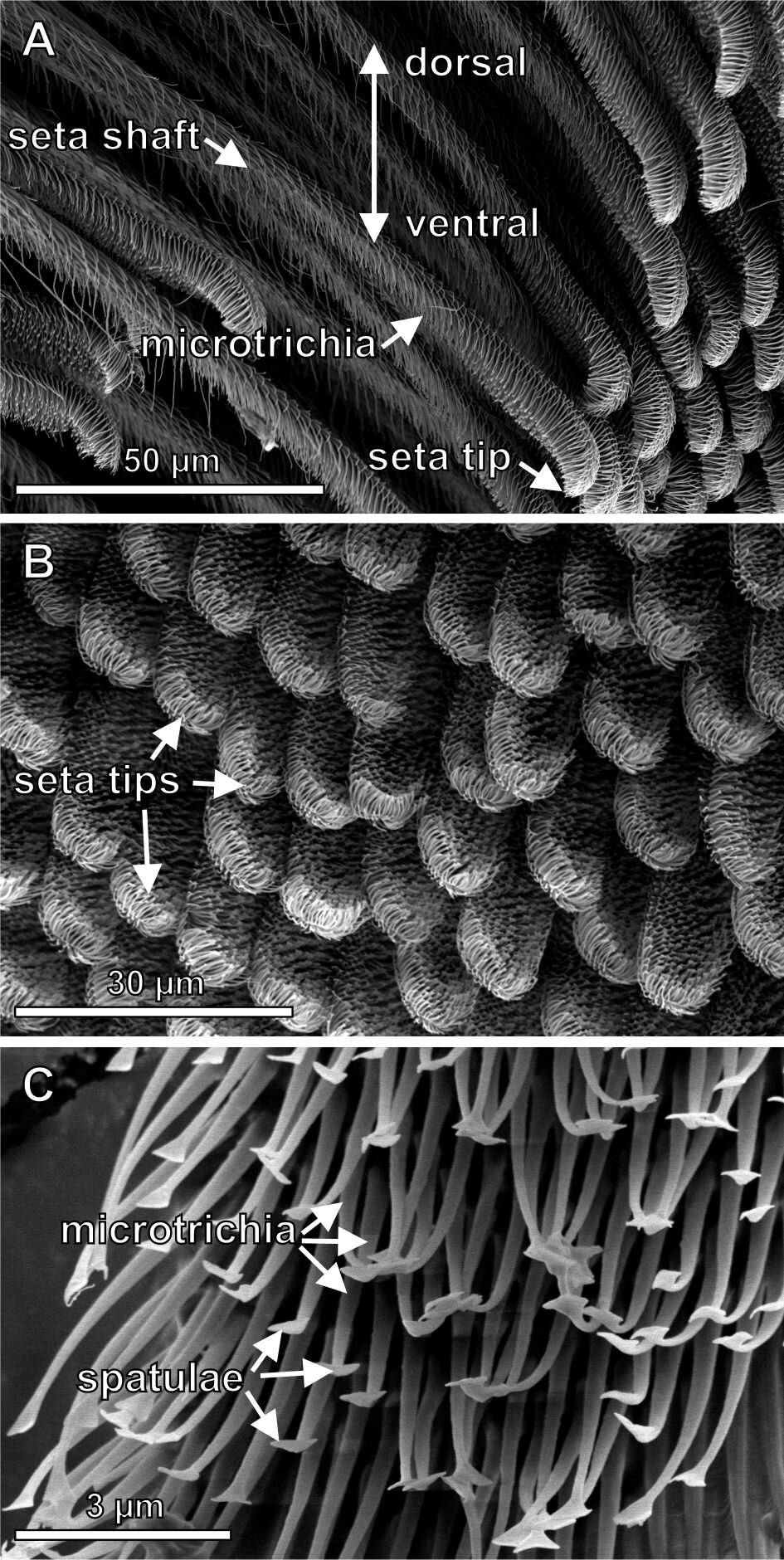
However, the authors believe that not all hairs are unique and that clusters or repeating patterns will be found.
The new work aims to create a unique type of glue that will also have a strong grip on the object and allow it to be pulled apart if necessary.
Read more:
Damage to the skin, brain and eyes: how COVID-19 enters human organs
It turned out that huge cosmic filaments in the Universe rotate like drills
Scientists have found out who is at risk of re-contracting COVID-19 and when