Paleontologists from the universities of Southampton and Ohio have reconstructed the brain structure of the oldest spinosaurs,
For their analysis, the researchers usedfossils of Baryonyx from Surrey and Ceratosuchops from the Isle of Wight. These are the oldest fossilized remains of spinosaurs that lived on Earth about 125 million years ago. The skulls of both specimens are well preserved, and scientists were able to make digital reconstructions of the internal soft tissues.
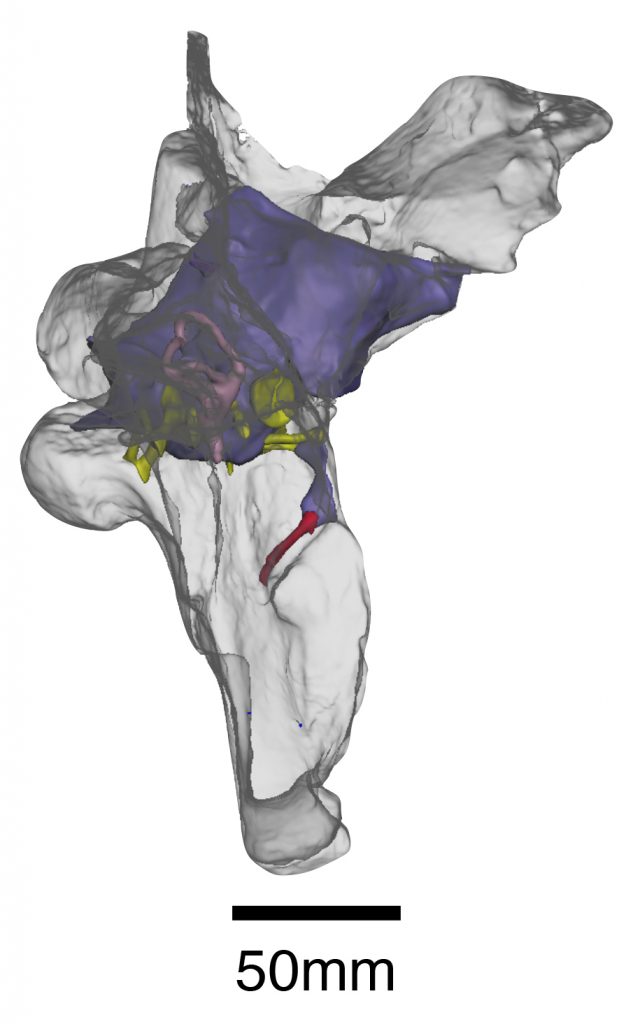
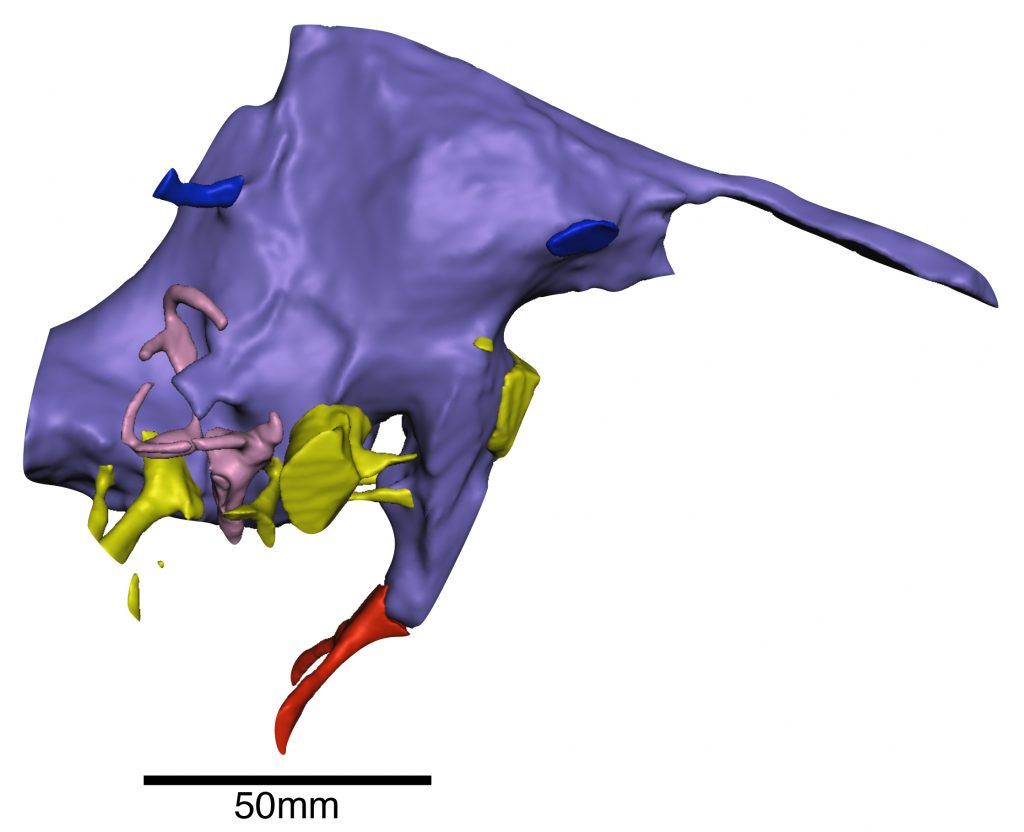 Reconstruction of the brain of Baryonyx (left) and Ceratosuchop (top). Images: WitmerLab and Chris Barker, University of Southampton
The researchers found that the olfactorythe bulbs that process odors were poorly developed, and the ear of ancient spinosaurs perceived only low-frequency sounds. The reconstruction also showed that, compared with later species, the parts of the brain responsible for stable head position and fixation of the gaze on prey were less developed.
Because the skulls of all spinosaurs are so specialized for catching fish, it's amazing to see such a "non-specialized" brain.
Darren Naish, study co-author
Researchers note that the way of life of the ancientspinosaurs assumed the presence of developed hearing and high coordination of head movements, which are necessary for fishing. Nevertheless, the structure of the brain of spinosaurs retains much in common with other large theropods - tyrannosaurs and allosaurs.
A possible explanation for this phenomenon isthat theropods, the predecessors of spinosaurs, also knew how to fish in the water. In this case, “all spinosaurs needed for a semi-aquatic existence was to develop an unusual snout and teeth,” the scientists conclude.
Read more:
A powerful flare erupted on the Sun: it has already affected the Earth
It turned out that the drug for arthritis "reverses aging" and rejuvenates the body
Remains of 'delicacy' meal found in Neanderthal cave
On the cover: Artistic illustration of a Spinosaurus. Image: Anthony Hutchings, University of Southampton