Space technology has long been an expensive pleasure, available only to the largest countries. XXI Century
Back in 2020, SpaceX, Elon Musk's company,became the first commercial "player" to send people into space. It is followed by Richard Branson's Virgin Galactic and Jeff Bezos' Blue Origin, both of which made their first crewed suborbital flights in 2021.
Although the companies of American millionaires, especiallyWhile SpaceX remains the most prominent supplier of space technology, there are many other manufacturers developing their own series of launch vehicles around the world.
First 3D printed rocket
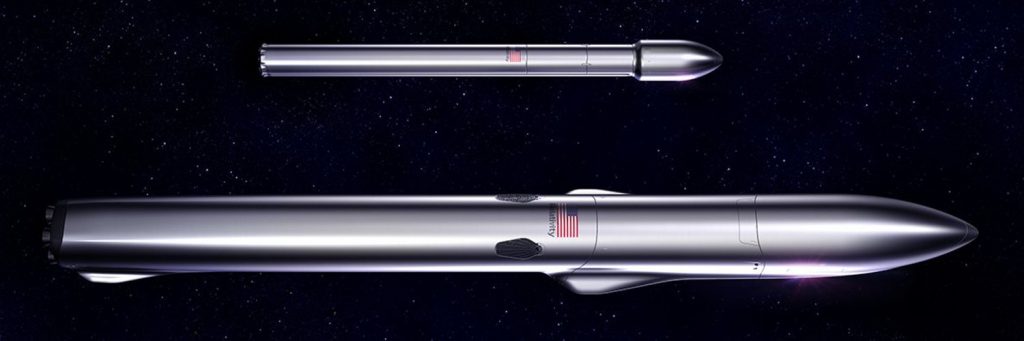 Artistic illustration of the Terran 1 and Terran R rockets. Image: Relativity Space
Startup from Los Angeles, Relativity Space,established in 2015, aims to be the first space company to launch an entirely 3D printed launch vehicle into orbit. After nearly eight years of development, the company has scheduled the first orbital flight of the Terran 1 rocket for January 31, 2023.
Terran 1 - disposable two-stagelow-capacity launch vehicle. It will be able to launch up to 1,250 kg into low Earth orbit. Most of the new rocket's components are made on Relativity's Stargate 3D printer from a proprietary aluminum alloy. The company's goal is to ensure that 95% of the total mass of the rocket is printed on a printer, while in reality they are claiming 85%. But even this is a record high for the space industry.
To achieve these results, Relativityreduced the number of parts in the rocket by 100 times compared to traditional production. As a result, you can create a finished Terran 1 in just 60 days, the company says.
Manufacturing components of the Terran 1 launch vehicle. Video: Relativity Space
The launch vehicle consists of two stages andreaches 33.5 m in height and 2.3 m in diameter. It uses nine engines in the first stage and one in the second. Like the rocket body, the engines are also 3D printed. They run on fuel from liquid oxygen and liquefied natural gas. As a result, they will be easiest to convert to methane when flying from Mars.
The first flight in January will take place without a usefulload, but if the launch is successful, the company will launch several NASA satellites into orbit in March. In addition, Terran 1 serves as a prototype for the company's second rocket, which is also in the final stages of development - Terran R. It will also be a two-stage, but reusable launch vehicle with a higher payload capacity (up to 20 tons).
Relativity Space and Impulse's planned mission to Mars. Video: Relativity Space
By the way, if everything goes well, the companiesRelativity Space and Impulse promise to send the first space mission to Mars on Terran R in 2024. Perhaps this plan sounds too optimistic for a company that has not yet made a single flight into orbit, but who knows.
First Australian and first hybrid rocket
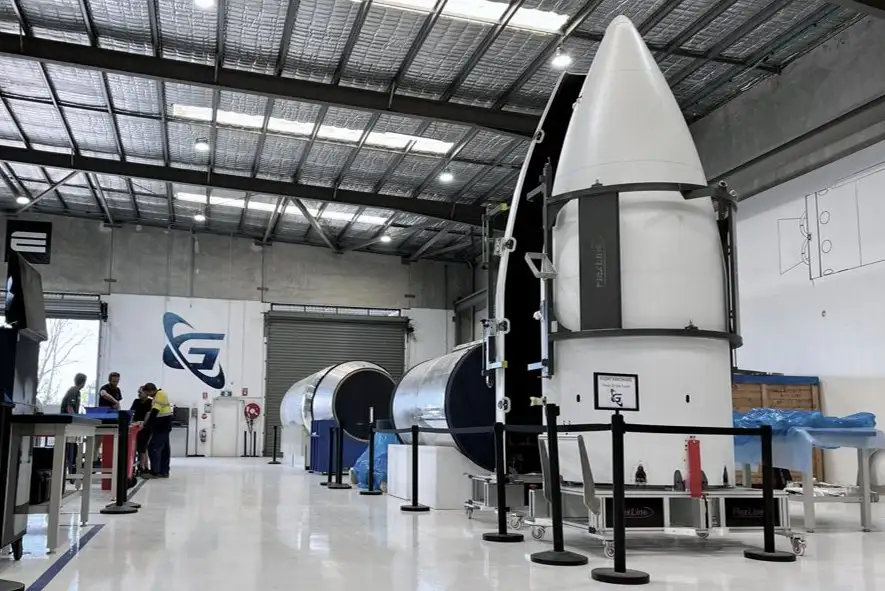 Eris rocket under construction. Image: Gilmour Space Technologies
Another new company to openfor itself, space in the coming year is the Australian Gilmour Space Technologies. The first orbital launch of the company's Eris rocket is scheduled for April 2023.
Eris is a three-stage small launch vehiclepayload capacity, which can deliver a payload of up to 305 kg into low Earth orbit. The rocket is 25 m high and has a diameter of 2 m for the first stage, which then tapers to 1.5 m for the second stage.
The launch vehicle is equipped with five hybridengines running on solid fuel and liquid oxidizer. This is the first hybrid rocket for orbital flights, which uses fuel and oxidizer in different states of matter. Theoretically, this technology provides safer and cheaper space flights.
Engine testing for the Eris rocket. Video: Gilmour Space Technologies
If the launch is successful, Australia will becomeonly the 12th country in the world to send its own orbital rocket into space. So far, Russia, the US, the UK, China, Japan, South Korea, North Korea, France, Israel, India and Iran have succeeded.
After the successful launch of Gilmour SpaceTechnologies plans to build larger rockets that can carry up to 1,000 kg of payload into low Earth orbit and become the Australian space agency's main satellite launch partner for the country.
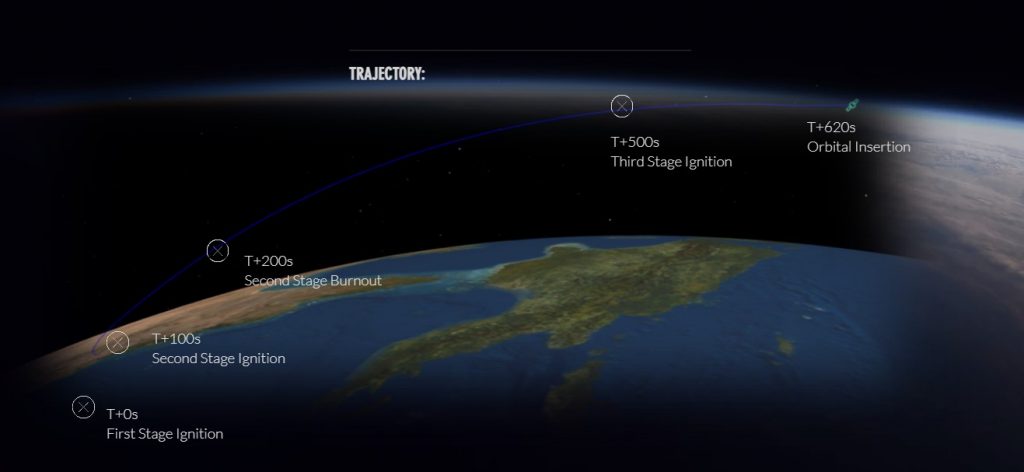 Orbital launch trajectory for Eris. Image: Gilmour Space Technologies
Elon Musk's Starship and Jeff Bezos' Rocket
Not only young companies, but also "veterans"private space plan to celebrate 2023 with new developments. Elon Musk's SpaceX has been working on a fully reusable super-heavy Starship rocket for several years. This development is expected to be the largest launch vehicle ever, surpassing the SLS that sent the Orion spacecraft to the Moon in 2022.
Starship is a two-stage rocket thatconsists of a Super Heavy launch vehicle and a SpaceX Starship spacecraft. The first stage is designed to launch the rocket into orbit, and the second stage is designed to transport cargo and crew flights in space. It is assumed that both stages can be reused: they make a soft landing on the launch pad or on a separate platform.
SpaceX has already conducted a number of flight testsprototypes and components of the future rocket. Although the exact date of the first orbital flight has not been announced so far, experts predict that it could take place as early as the first half of 2023.
Presentation of the Starship rocket. Video: SpaceX
Musk's rival, billionaire Jeff Bezos,until everything goes so smoothly. His company Blue Origin has repeatedly demonstrated the ability to make suborbital flights, but the first flight to low Earth orbit is constantly being delayed. Perhaps this can be changed in 2023: the first flight of the New Glenn orbital rocket, developed by Bezos, is scheduled for the end of the year.
New Glenn is a two-stagean orbital launch vehicle with a diameter of 7 m with a reusable first stage and a disposable second stage. It is assumed that the first stage will be able to withstand at least 25 launches. According to the company's plans, the launch vehicle will be able to launch up to 13 tons of payload into geostationary orbit and up to 45 tons into low Earth orbit. This will allow Blue Origin to compete in satellite launches and cargo delivery for NASA with SpaceX and United Launch Alliance.
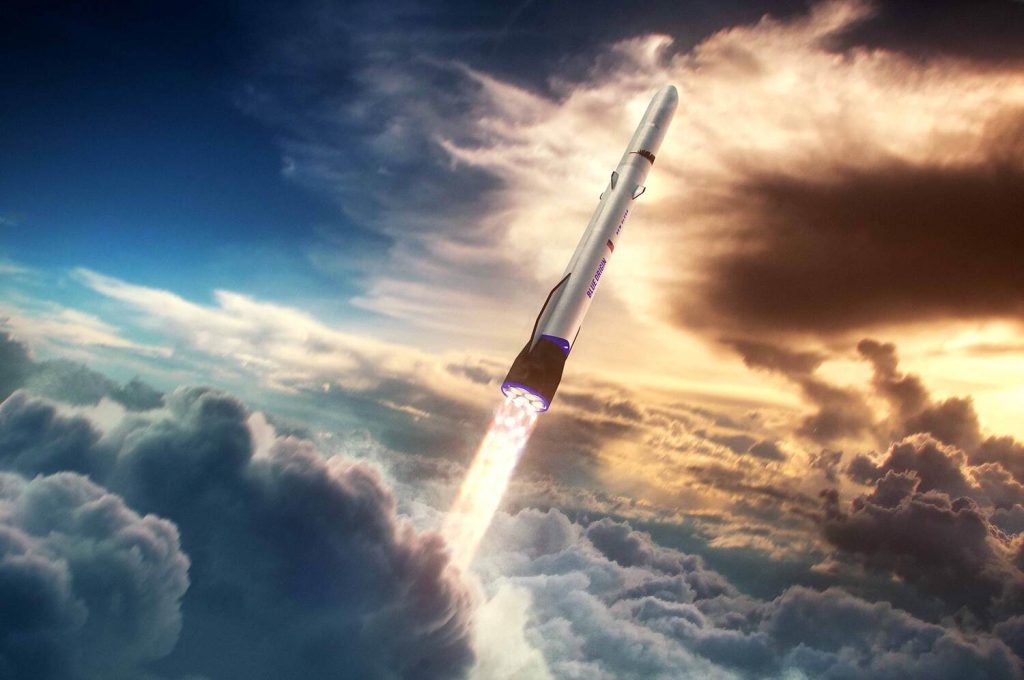 Artistic illustration of the New Glenn rocket. Image: Blue Origin
European championship race
Several companies will befight for the right to become the first commercial company from the European Union to reach orbit. The German company Rocket Factory Augsburg from Bavaria plans the first launch of its RFA One rocket at the end of 2023. This is a three-stage rocket designed to launch small satellites and payloads weighing up to 1,350 kg into polar orbits.
This missile is not the only attempt by Europeanspace companies will gain a foothold in orbit: the completion of development and plans for the first launch in 2023 were also announced by the Scottish Skyrora and the German Isar Aerospace. The first of these is developing the Skyrora XL rocket, which will launch up to 315 kg into sun-synchronous orbit, and the second is the two-stage Spectrum rocket, designed to launch up to a ton of payload into low Earth orbit.
Regardless of whether everyone succeedsnew rockets to reach space in the coming year or it will take longer, the number of space companies, countries and flights will undoubtedly continue to grow.
Read more:
Named foods that cause cancer. They are served on the New Year's table
Chinese rover discovers traces of never-before-seen basalt on the moon
The most beautiful photos of "Webb" for 2022: see what the $ 10 billion telescope did