Holes were discovered on the ocean floor off the coast of Oregon, from which liquid seeps. This
Cascadia subduction zoneThe Cascadia subduction zone (CSZ) is the subduction zone where the Juan de Fuca tectonic plate meets the North American tectonic plate, located along the west coast of the United States and Canada from Vancouver Island to Northern California.
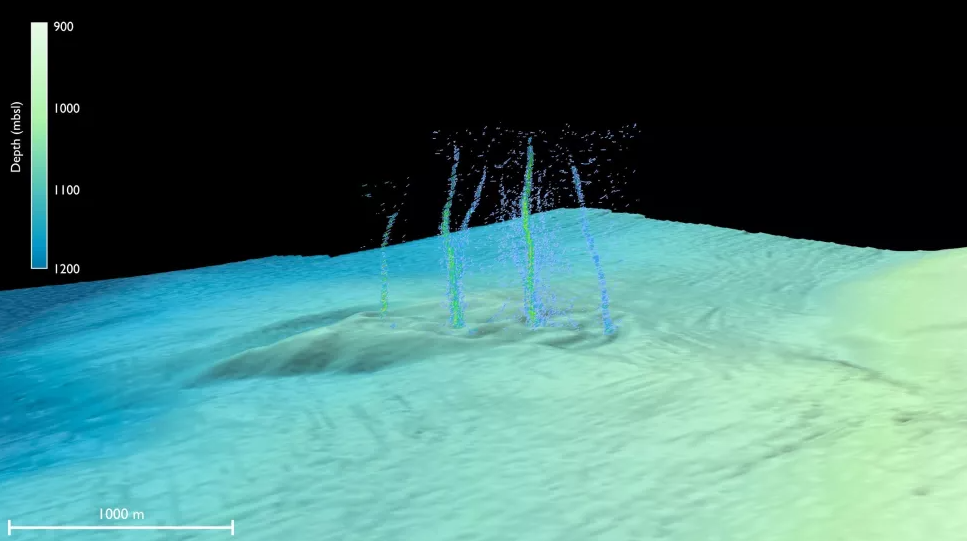 Image courtesy of Philip B., Science Advances, 2023, DOI: 10.1126/sciadv.add6688
Scientists have discovered that off the coast of Newport,Oregon, on the sea floor at a depth of 1,040 m below the ocean surface, there is a series of at least four small holes where liquid is bubbling from the depths of the fault. The size of each hole is about 5cm across, they are located approximately 80km from the coast. The geochemistry of these fluids shows that they originate at a depth of about 4 km, close to where tectonic plates meet.
There is a possibility of a “liquid leak”controls the pressure between the oceanic and continental plates in the CSZ where the two plates collide. This phenomenon can affect the interaction of plates, which will ultimately trigger a powerful earthquake.
According to the Department of EmergencyIn Oregon situations, the plate boundary is capable of producing earthquakes of magnitude 9 or greater—one of the most powerful earthquakes on Earth. A destructive earthquake can also be accompanied by tsunami waves up to 30.5 m high.
The study was published on January 25 in the journal Science Advances.
Read more:
There was a photo inside the second deepest underwater sinkhole in the world
See what happened to Mercury when it got as close as possible to the Sun
Scientists are ready to recognize the new tree as the oldest in the world
Cover photo: Fluid erupting off the Oregon coast comes from the Cascadia subduction zone
Image courtesy of the University of Washington