Engineering students from the University of New South Wales in Sydney have developed an electric car claiming to be
Student-designed car weighs only500 kg, which is about a quarter of the weight of the Tesla Model S. To achieve a record speed, engineers developed a special aerodynamic design, increased the efficiency of the engines and the entire drive chain.
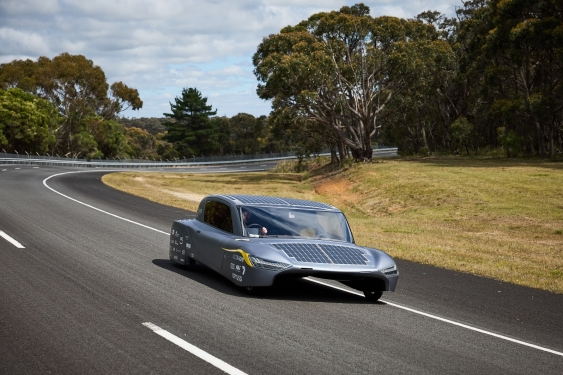
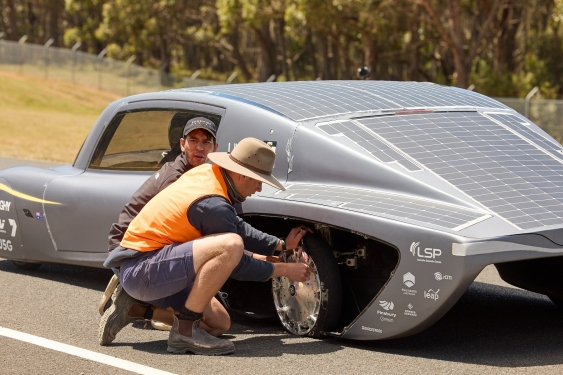
Sunswift 7 during a test run. Images: Richard Freeman, UNSW
To achieve ultra-light weight, engineersI had to abandon air conditioning systems, brakes, airbags, wipers and other functions without which it is impossible to imagine a production car. With these changes, they achieved ultra-low rolling resistance. If the Tesla Model S has a drag coefficient of 0.208, then the Sunswift 7 has only 0.095.
The researchers spent on assembling theirelectric car for two years. It was designed specifically for the record-breaking run in the category of the fastest solar-powered electric vehicle over 1,000 km. During testing at the proving ground, the Sunswift 7 covered 240 laps on a single charge at an average speed of 85 km/h.
During this record, energy consumptionwas only 3.8 kWh per 100 km, whereas today even the most efficient electric vehicles on the road only achieve a rating of 15 kWh per 100 km, with an average of around 20 kWh per 100 km.
Richard Hopkins, professor at the University of New South Wales in Sydney and leader of the work
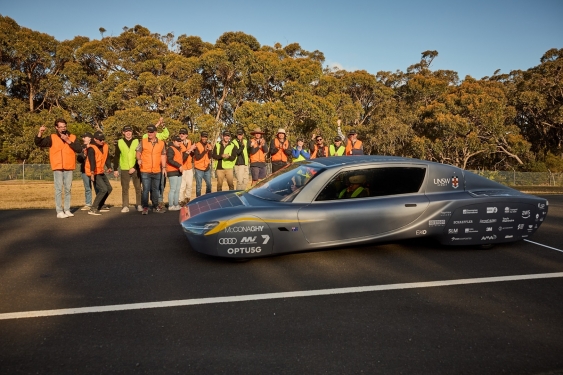
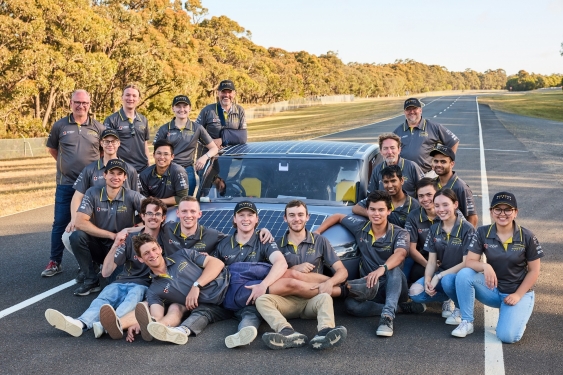
Sunswift 7 during a test run. Images: Richard Freeman, UNSW
The researchers note that the created model is notdesigned for mass production, since it is deprived of many necessary elements for the sake of increasing speed. But it serves as a demonstration of the theoretical possibility of creating efficient and environmentally friendly cars in the future.
Read more:
17-year-old engineer came up with a magnetless motor: it can be used in electric vehicles
Two planets have been found not far from Earth. Perhaps they are inhabited
A unique meteor rewrote the history of the solar system: where did it come from