Student group for the development of hybrid engines HyEnD (Hybrid Engine Development) of the University of Stuttgart
The N₂ORTH rocket is equipped with a hybrid engine,which develops a thrust of 1.5 tons, and also runs on solid fuel and liquid nitrous oxide. The name N₂ORTH alludes both to nitrous oxide (N₂O), which is used as an oxidizer, and to the launch site in the North (north). To make the rocket as light as possible, it was built almost entirely from composite materials.
The length of the hybrid rocket is 7.80 m and itweighs about 70 kg. Approximately 60 people took part in the construction. “This is one of the most powerful and advanced student-built hybrid rockets in the world,” explains Max Oechsle, project manager at HyEnD. At the same time, the students have big plans: they want to break their own record, which they set in 2016.
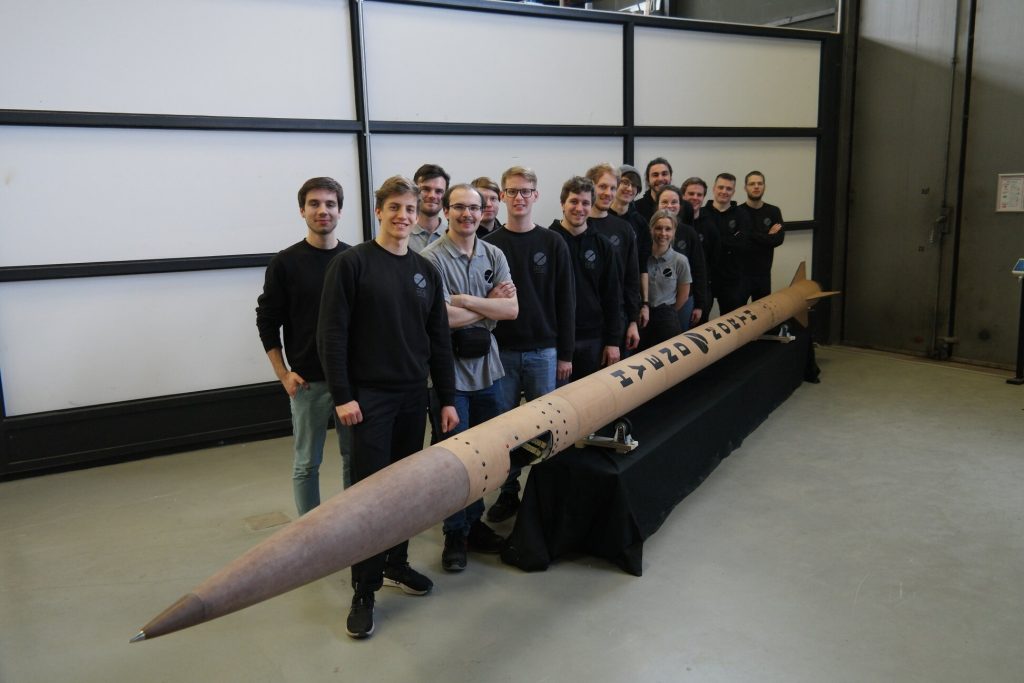 University group HyEnD of the University of Stuttgart with a homemade rocket N2ORTH.
Credit: HyEnD/University of Stuttgart
Students also hope their rocket will take off.to an altitude of 100 km. The previous record is 103.6 km and was set by the University of Southern California team in 2019. “The world record is within our reach. We can really beat him,” says Oechsle. However, he is well aware that the record also depends on other factors, such as weather.
It is still unclear when exactly the attempt will take placelaunch. The window is scheduled for the period from April 14 to April 25. Since schedules can change at short notice, HyEnD posts regular updates on the website. In addition, a live broadcast is planned on the SSC YouTube channel of the Swedish Space Agency.
Read more:
Special diet triggers self-destruction of brain cancer cells in mice
Scientists have deciphered the mysterious manuscript of Ptolemy. It was hidden under other text
New image of Hubble puzzled scientists
On the cover: the first test of the assembly of rocket components
Credit: HyEnD/University of Stuttgart