Digitalization has opened up services to a new audience. They didn't think about them before
UK Business Loses 2
The global theme of inclusive technologies onlyis emerging, but there is already a leader in its formation - this is MuseumTech. Digital inclusive solutions from Russia can be considered the first in the world, they set the trend for the integration of creative technologies.
MuseumTech Russia is showing strong growth by expanding digital opportunities. According to a study by Vinci Research, museums' revenues from paid services have grown to 17.7 billion rubles since 2012.
We found out what inclusive technologies have already been implemented in leading Russian museums, and figured out the specifics of their digital development.
Pioneers of inclusive technologies in Russia
"Museum on RL for Children" - Garage Museum of Contemporary Art
This is the first dictionary of modern terms in Russia.art in Russian sign language for children. “Museum on RSL for Children” is an educational application with videos and illustrations, from which children will learn not only about the Garage Museum, but also about the art world in general. The app was rated 5.0 on iOS, and the Trinity Monsters mobile app studios awarded the Grand Prix of the Best Runet Apps Golden App - 2020.
Scanned 3D models at the State Darwin Museum
For those who cannot come to the exhibitionon its own, the museum made 3D scans of over 600 exhibits. On the official Sketchfab channel, the museum presented three-dimensional models of objects. By their number, he entered the top 20 among 500 museums around the world.
"Meeting".Two Horses | “A meeting”. Two horses by darwinmuseum.ru on Sketchfab
Animated 3D scan of the Neanderthal by darwinmuseum.ru on Sketchfab
Podcast "TifloMuseum" - Pushkin Museum im. A.S. Pushkin
Tiflo commentary - an audio description of an object orspaces for blind and visually impaired visitors. With the help of the TifloMuseum, you can visit exhibitions and expositions of the museum, receiving special verbal explanations for the presentation of objects of visual culture.
Features of creating inclusive digital applications
The mission of inclusive digital products is to beaccessible, without barriers, so that the user can perceive them without interference. According to the standards of the Web Content Accessibility Guidelines (WSAG), they should be clear, responsive, with an easy-to-use functionality and interface.
For example, blind people to view the siteor an application using programs with a voice interface - Screen Reader. On Apple, this is built-in VoiceOver, which speaks out what is displayed on the screen, from the battery level to the name of the caller. Screen Reader speaks information block by block. The application developer should provide for the text to be separated as a logical navigation element for blind users. Labels for fields and forms should not be laid out as a single text block, since without separation it is impossible to understand which field this or that signature belongs to.
When creating the "Museum on RSL - for children" forFor hearing impaired children, the developers took into account the methodology for creating illustrations, relying on David Boehm's children's book "How a Museum Works", analyzed scientific articles in the field of artistic perception of people with hearing loss. Sign language children have a great visual ability: they need more visuals to replace sounds. When creating inclusive applications, one should take into account the unpredictability in the routes of such users, a high degree of interactivity, and avoid game mechanics with the identification of a winner. This entails isolation.
Artificial Intelligence: Opportunities and Challenges
In 2019, Google announced the launch ofresearch project Euphonia. Its goal is to train AI algorithms for recognizing atypical speech, sounds and gestures. People with a wide range of speech illnesses (stroke, ALS, deafness, or Down syndrome) have high hopes for the automatic generation of voice commands. The project has collected millions of samples of sounds in English over 1,400 hours in duration from people with varying degrees of speech impairment. The results of the experiment were presented at the Interspeech 21 conference in September. The error rate fell from 89 to 13%.
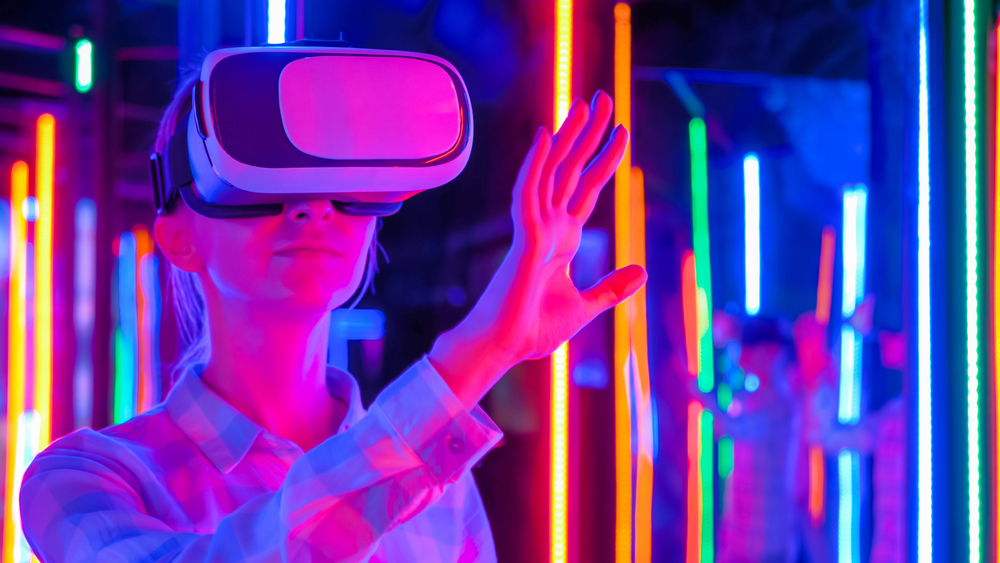
The International Labour Organization (ILO Global) talks about the risks of AI development, which are not always taken into accountOnly in Mexico does the gap in mobile internet use between people with and without disabilities reach38%," according to a recent report by the organization.Observing such a serious digital barrier now, it is difficult to imagine the future that paintsWe want the concept of the "Metaverse": VR & AR headsets, the transition of a digital avatar from one action to another in a single cyberspace.Perhaps Mark Zuckerberg, who said in the summer, "The metaverse is the successor to the mobile internet," is not sure that people with disabilities will be able to access it.
Inclusive growth of technology is the basis forensuring an accessible society of the future. But it will be so if creative technologies find their application not only in MuseumTech, but in all spheres of life.
Read also
Astronomers accidentally find two galaxies at the edge of space and time
People first descended to the bottom of the "Hell's Well": what did they find there
Geneticists have found remains that will help scientists "resurrect" dinosaurs