Biologists from the Garvan Institute for Medical Research have discovered many ways cancer cells
Scientists used breast cancer cellsmice labeled with the famous "barcode" DNA, a sequence of nucleotides that has been passed down from one generation of cells to the next. With this sequence, it was possible to track which cells survived over time and how the cancer developed.
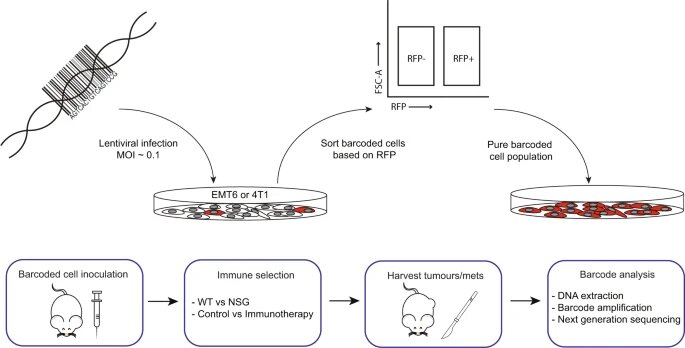 Scheme of the experiment.The barcode library is introduced into breast carcinoma cell lines (EMT6 or 4T1) in vitro at low multiplicity of infection (MOI). Cells are sorted based on red fluorescent protein (RFP) expression to select cells containing the barcode. The barcoded cells are then transplanted into the mammary adipose tissue of immunocompromised (NSG) or immunocompetent (WT) mice. Image: Louise A. Baldwin, Nature Communications
The results of the analysis showed that by suppressingkiller T cells and by interfering with the immune system's ability to mark tumor cells for destruction, breast cancer cells are able to proliferate and metastasize.
Immunotherapy (use of natural defensesbody) is an effective treatment for many types of cancer. However, in some people, tumor cells evolve to overpower the defenses of the immune system. During this process, many cancer cells are destroyed by the immune system, but some go unnoticed and continue to grow and spread, the scientists explain.
Analysis of the spread of cancer using"DNA barcodes" showed that even before treatment, cancer cells diversified. Some cells had an innate ability to evade immunity, and it was they who survived and contributed to the growth of the tumor.
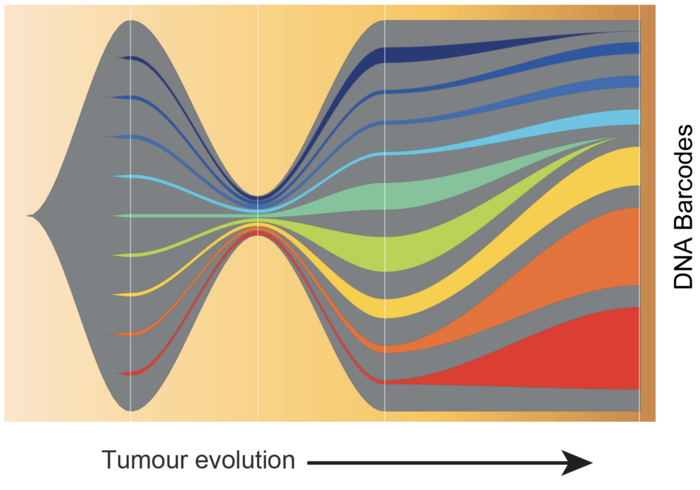 Each colored ribbon represents a barcodeDNA. As a tumor develops, some cancer cells begin to dominate it. This shows that these cancer cells already have the ability to evade the immune system and can continue to grow even after treatment. Image: Garvan Institute of Medical Research
Researchers have identified two different waysinteractions between cancer cells and the immune system. The first of these is the suppression of the action of T-killers. These are lymphocytes, which should protect the body from damaged cells. The second is a decrease in the expression of the MHC1 gene, which act as a flag for the immune system to recognize harmful cells.
The researchers believe that by understanding the strategies of tumor spread, it is possible to create effective therapies that target these immune-resistant cell types.
Read more:
A massive impact from a space object triggered the Earth's magnetic field
Scientists Confirm Alternative Gravity Theory: Why It Changes Physics
Pig heart beats slower after transplant to human