An international group of scientists, using an innovative mobile laser method, was able for the first time
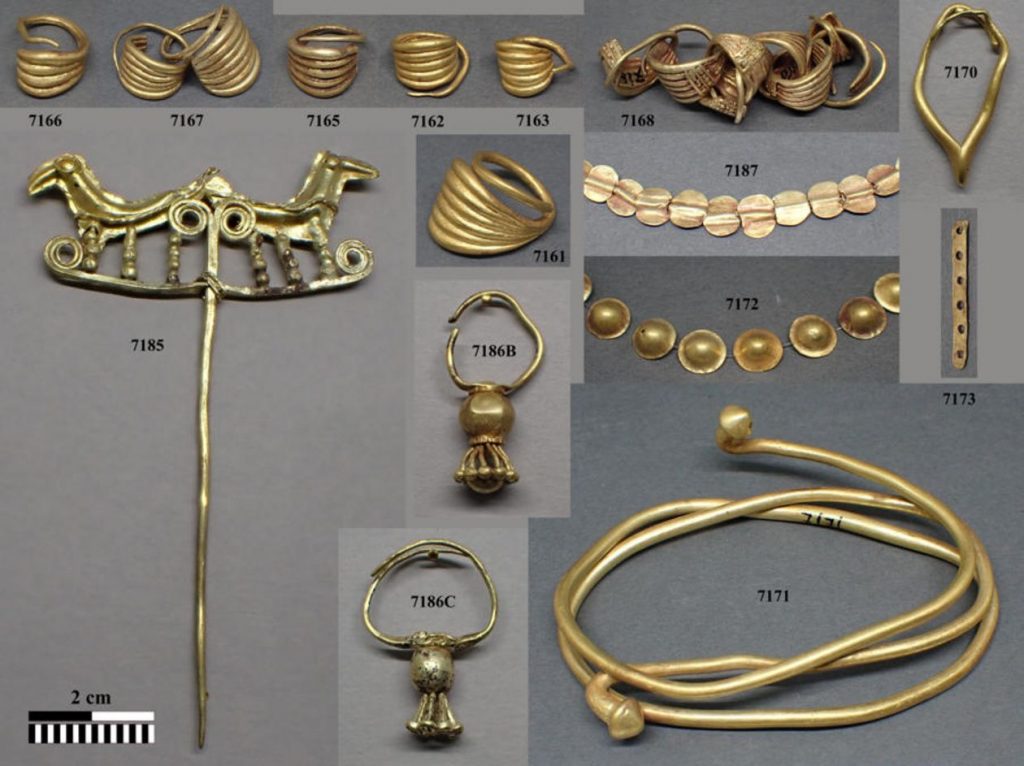
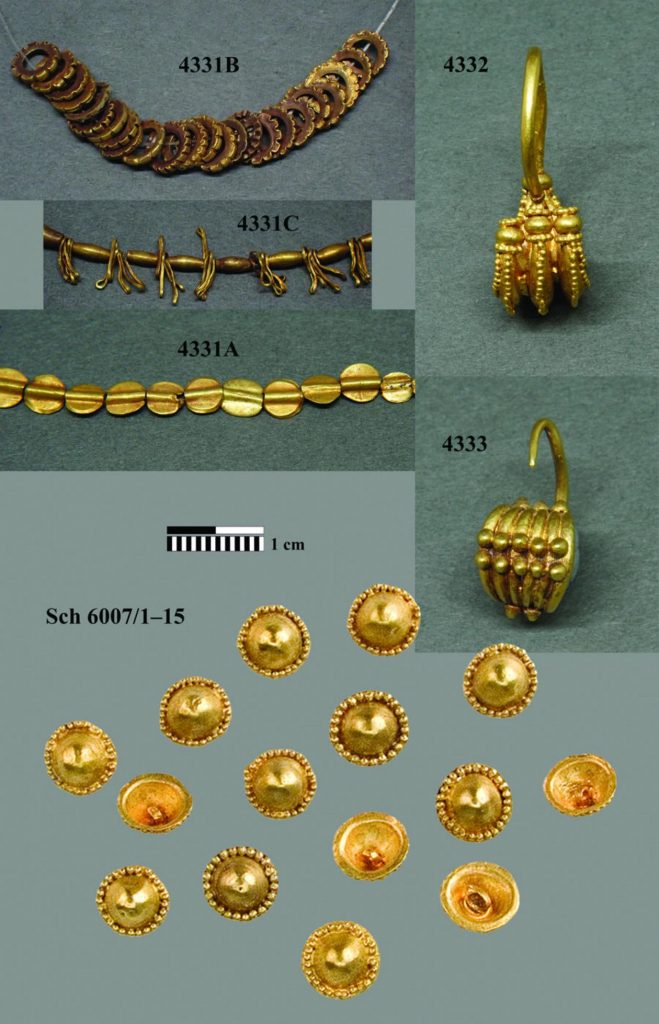
Bronze Age gold jewelry from Poliochni (left): Foto: Christoph Schwall, ÖAI Wien. Bronze Age gold jewelry from Troy (right): J. Huber, Ch. Schwall (ÖAI Wien) und Born et al.
Necklaces, pendants, earrings and necklaces that have beenstudied in the work, were kept in a museum in Athens. All of them are so valuable that they cannot be transported to the laboratory or carried out any research, they leave visible marks on objects. Because of this, the analysis is difficult.
Scientists used mobile technologyportable laser ablation system to carry out the analysis directly in the museum. The hole melted in the surface of a gold item by a beam of such a system has a diameter of only 120 microns and has a conical shape. Damage can only be distinguished using an electron microscope.
 Micro-holes made during the analysis under an electron microscope. Image: Curt-EngelhornZentrum Archaeometrie
gGmbH
In addition to gold, historical jewelry is alwayscontain other elements such as silver, copper, zinc, palladium and platinum. Depending on the alloy, it is possible to create a specific chemical profile of the finds and use it to draw conclusions, the scientists explain. For example, the high concentrations of zinc, palladium, and platinum in jewelry from Troy are a clear indication that the gold used to create the jewelry was washed away by the river as gold dust.
The researchers were also able to show thatjewelry was mass-produced in workshops, and not just in the form of individual pieces. This confirms, for example, the same amount of platinum and palladium in gold discs in necklaces of the same design found in different places. Archaeologists believe that their work testifies to the existence of a developed trading network that covered the entire Mediterranean and extended to the Indus River in Asia.
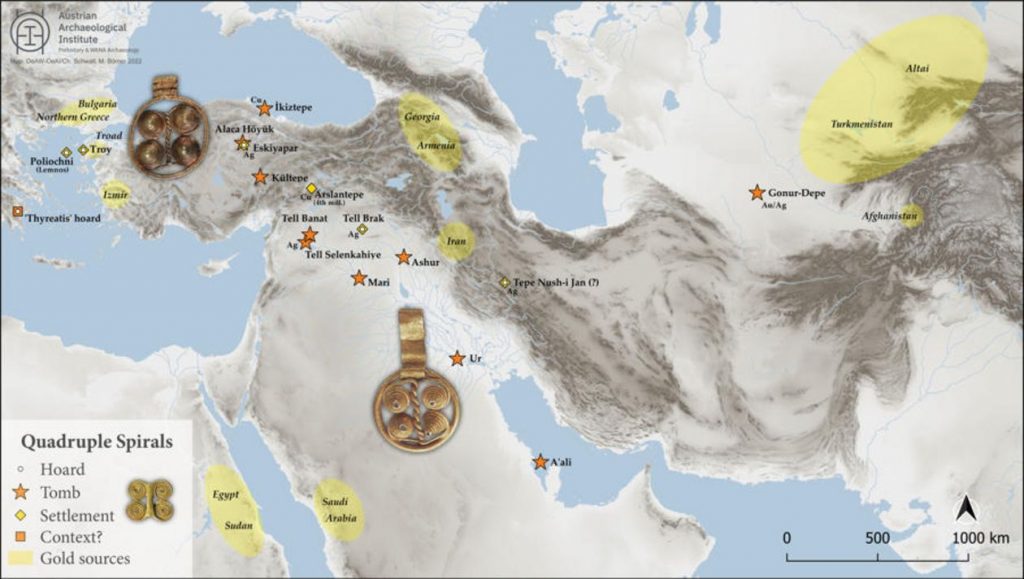 Location of burial sites of bronze objectscenturies with similar structure and origin (asterisks) and gold deposits (yellow areas). Source: Numrich et al. 2022; Map: Ch. Schwall, M. Börner (ÖAI Wien)
Read more:
The ancient mystery of the genome is revealed: what our DNA has been hiding for so many years
See what a woman Thora looks like. She lived 800 years ago
Rules for communicating with digital natives: omnichannel, usability and a single window