The ideal landing site on Mars - what is it?
In general, there are dozens, if not hundreds of potential places
- Water
To begin with, the landing site needs freeaccess to water. This isn't too difficult, since NASA has discovered that Mars itself is, oddly enough, quite wet. Even in the driest parts, around the equator, there is water. It is worth noting that water is necessary not only for drinking and, ultimately, for crops, but also for protection from radiation. Water is also a ready source of oxygen, which can be obtained through electrolysis. By the way, this will also help in the production of rocket fuel.
- Radiation
Radiation is another problem that will complicatedevelopment of the Red Planet. Within the Earth's magnetic field and relatively thick atmosphere, humans are protected from harmful radiation particles carried through space by galactic cosmic rays and solar flares, not to mention the constant flux of protons ejected from the Sun. But Mars does not have a strong enough magnetic field, and its atmosphere is much thinner than we are used to. A carefully chosen location would certainly make planetary exploration easier.
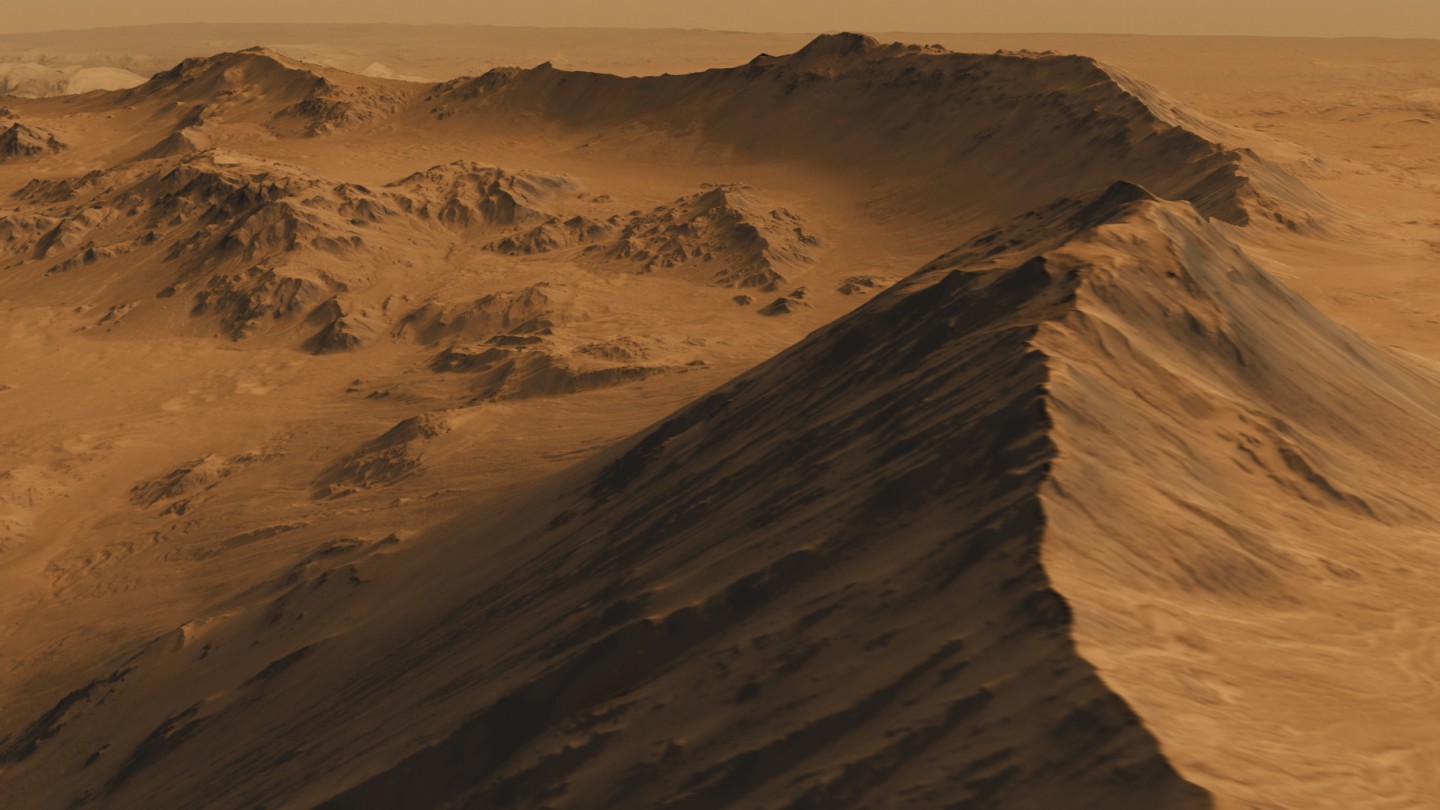
The landing site should be near somea natural formation that facilitates the use of regolith (Martian soil) to provide radiation protection for long-term habitats. For example, a tunnel in soft regolith and strengthening it like a mine would help the colonialists. Sand or fine-grained material is easiest to create shelters. Lava tubes will work as well. This idea of shielding from radiation is not new, but now that scientists know more about surface geology, this information can be used to optimally select landing sites to create an ideal habitat. It is much cheaper to use building material from Mars than to bring everything from Earth.
Where shouldn't you land?
The list includespolar regions,volcano peaks, Verydusty poolsAndsmall craterswith a radius of less than 100 km.
Why?The polar regions are very cold in winter and very windy at other times of the year. The tops of volcanoes have very little atmosphere to protect settlers from radiation. Too much dust is harder to filter out from cars and people. Small craters limit research opportunities."
The good news is that Mars has the same land area as our Earth. Therefore, despite these no-go zones, there is still plenty of space left on the planet for people.
What kind?
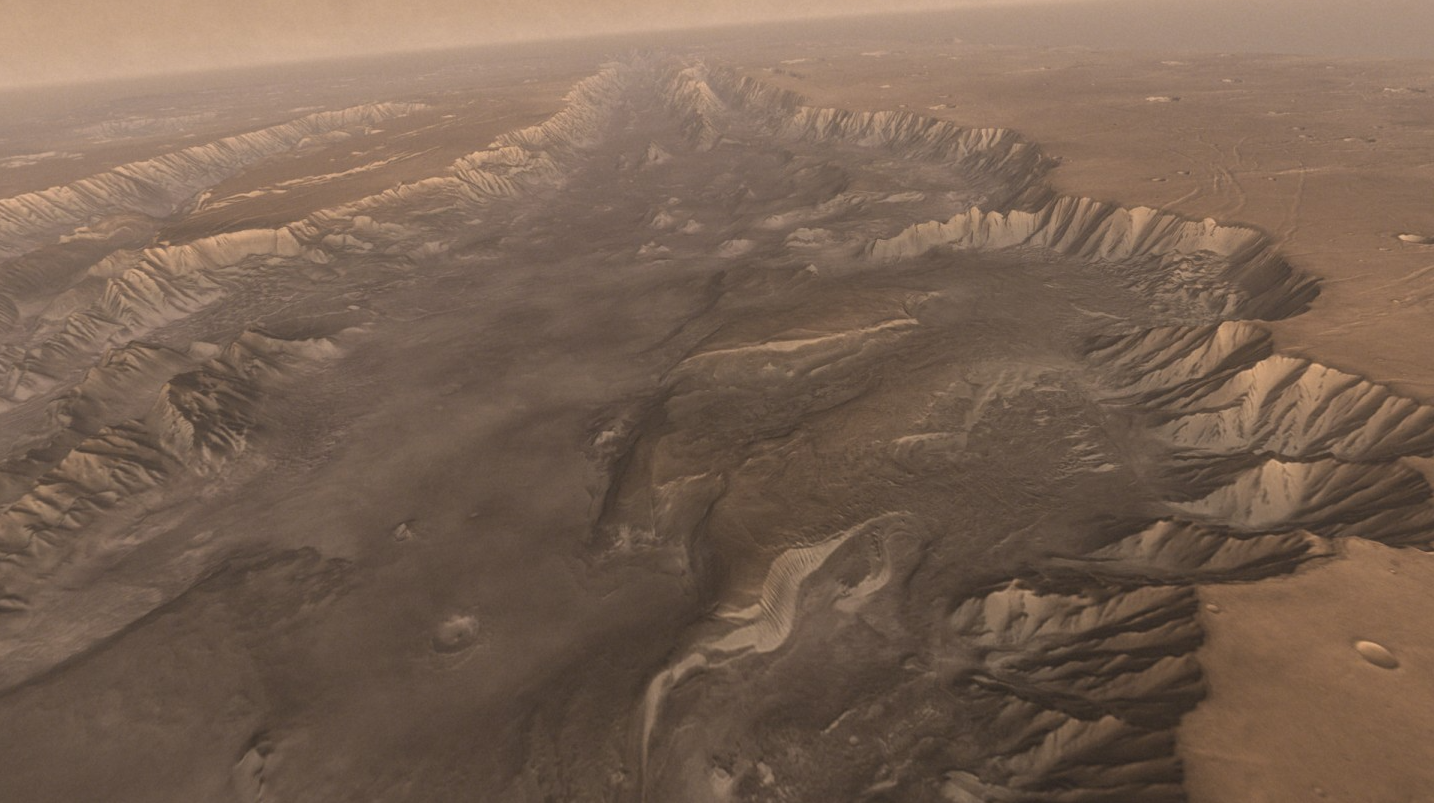
Depths of Valles Marineris - Grand Canyon of Mars
Giant canyon system on Mars discovered in1971-1972 by the Mariner 9 spacecraft. In 1973, at the suggestion of William Pickering, it was named after the Mariner program. Stretches from the province of Tharsis to the southeast.
This deep bay known as the Grand CanyonMars, stretches 4000 km along the Martian equator and in some places reaches 8 km in depth. On the one hand, landing a spacecraft amid steep slopes, jagged ravines and potentially high canyon winds would be a daunting feat, but it might be worth the risk.

Daytime temperatures may approach0 ° C. It is believed that there are ice deposits under the deep canyon, from which groundwater can break through to the surface. This makes the Grand Canyon of Mars not only a good candidate for water sources, but also an ideal hunting ground for the search for microbial life. Its low elevation contributes to a denser atmosphere. In turn, this means better protection against radiation.
Gale crater
When it comes to sending people tothe surface of Mars, little information about the landing site is better than nothing. In the years since NASA's Curiosity rover landed in this 154 km wide basin, it has uncovered evidence of water and an ancient freshwater lake, analyzed valuable soil samples, sent weather reports and captured breathtaking selfies at Gale Crater. People have already gotten some idea of what to expect from the landing site. This makes Gale Crater as good a choice as any.

Gale is an impact crater on Mars named afterWalter Frederick Gale, an amateur astronomer who observed Mars in the late 19th century and described the canals on it. Its diameter is about 154 km, the coordinates of the center are 5 ° 22 ′ S. sh. 137 ° 49 ′ E 5.37 ° S sh. 137.81 ° E The age of the crater is 3.5-3.8 billion years.
Curiosity rover lands on the surfaceMars in 2012. Its main task is to collect information about the climate and geology of the Red Planet. From the moment it landed in Gale Crater, the rover has been moving towards the foot of Mount Sharpe, which is the crater's central elevation covered with a huge layer of eroded sedimentary rock. Previously, scientists assumed that the crater was once completely filled with sedimentary rocks, which eventually formed the summit of Mount Sharpe. However, new evidence suggests that Mount Sharpe was originally about the same as we see it today.
Ridges of Medusa Fossa
Ridges of the Fossae Formation (Medusae Fossae) - regionon Mars origin, discovered near the "dichotomous border between the highlands and lowlands" of the Red Planet between the centers of volcanic activity Tarshish and Elysium. This dichotomous boundary is a narrow region separating the crater-covered highlands, located mainly in the southern hemisphere of Mars, from the plains of the northern hemisphere.
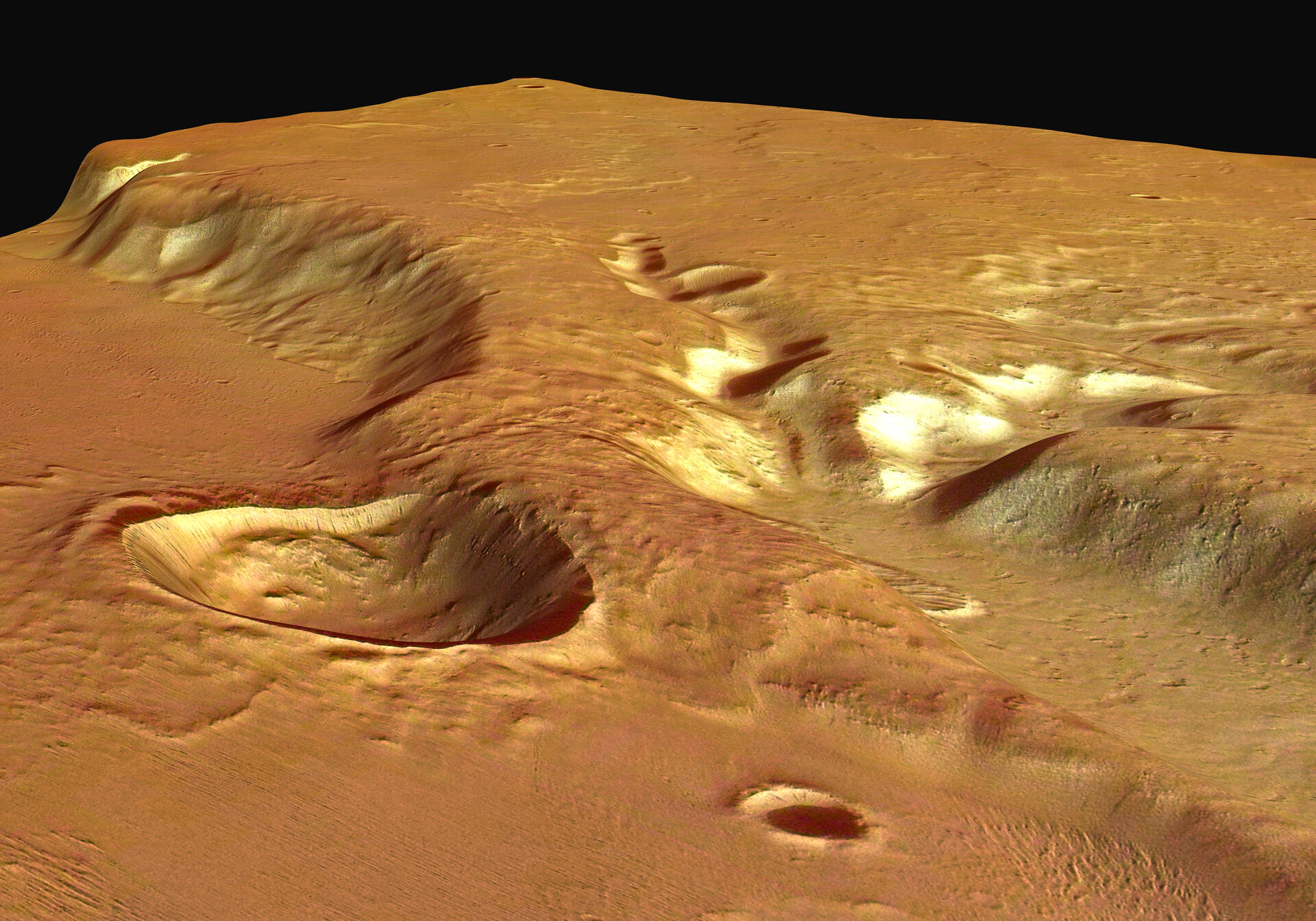
The crater-covered highlands stand for two to fivekilometers above the low-lying plains, so the border runs along a relatively steep slope. The processes that created and altered the frontier of dichotomy remain some of the major unanswered questions in Mars science.
As scientists note, there is a lot of suitable building material in this region.
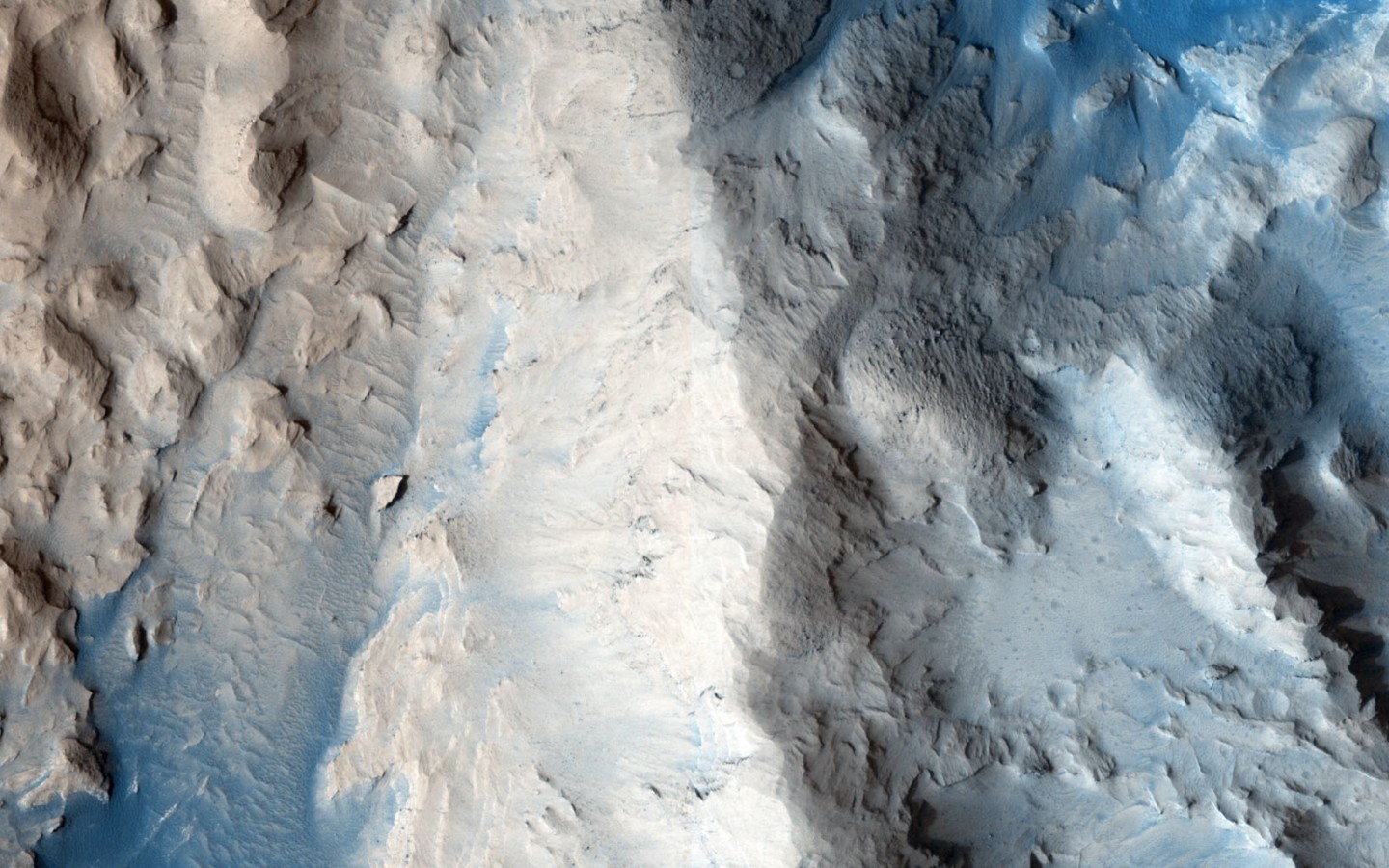
Medusae Fossae region originallyidentified back in the 1960s by NASA's earliest orbital missions on Mars. The formation ranks fifth in the continental United States. It is marked by long ridges and deep valleys.
Read more
Nuclear reactions intensified in the reactor of the Chernobyl nuclear power plant
Scientists have shown how a black hole tears apart a star
Physicists have created an analogue of a black hole and confirmed Hawking's theory. Where it leads?