For years, glaciologists have been tracking a series of cracks in the Brunt Ice Shelf, which borders
A later unnamed crack was seen inDuring observations by the Copernicus Sentinel-1 mission in late 2019, it recently increased by more than 20 km in length. Satellite data have also been used to track the movement and measure the resulting deformation of the ice shelf.
Data show that the area of the floating shelfThe glacier north of the new crack is the most unstable, with an approximate movement of almost 5 m per day. The central part has an average speed of 2 to 2.5 m per day, while the lower part indicates a more stable area of the ice shelf.

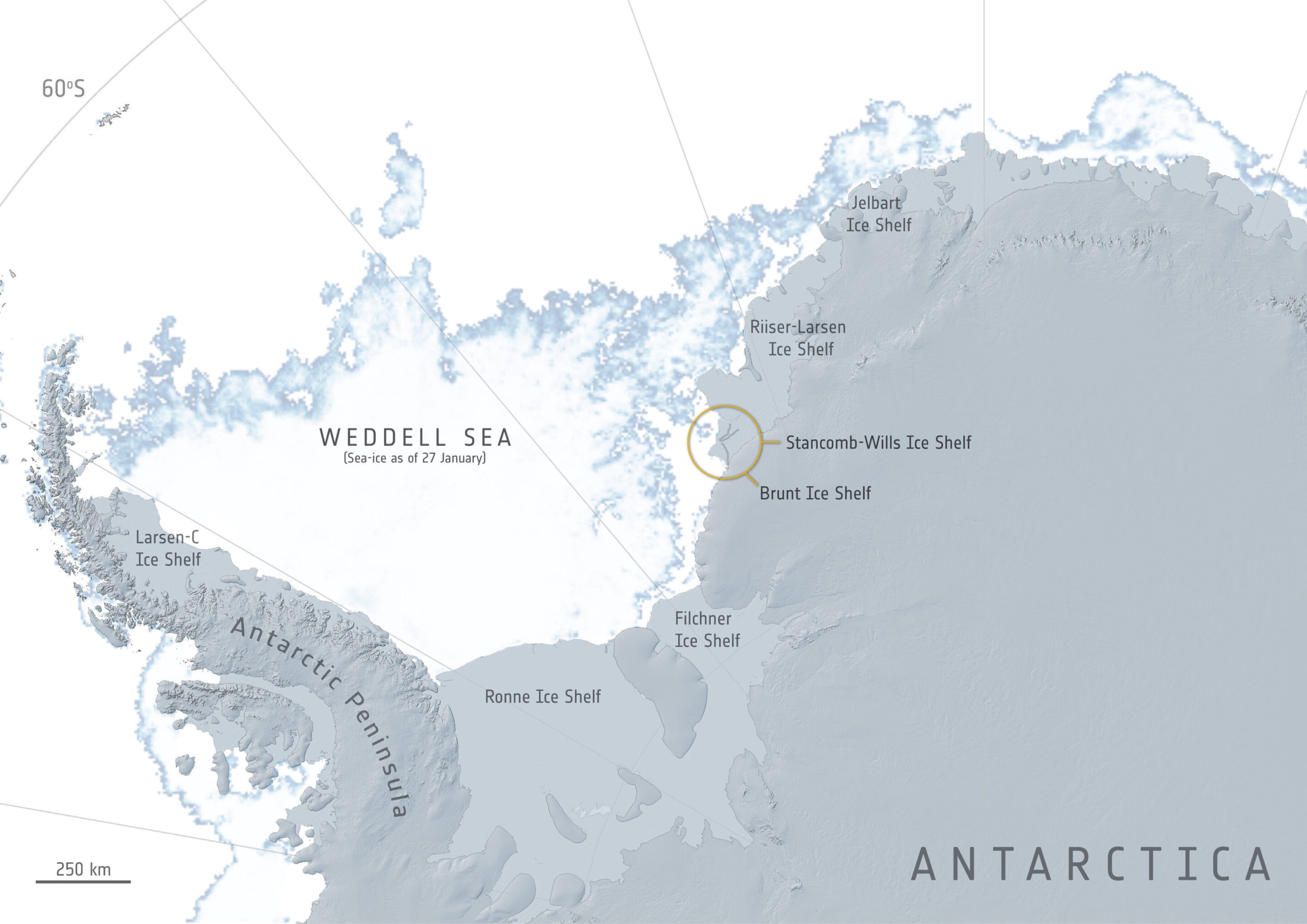
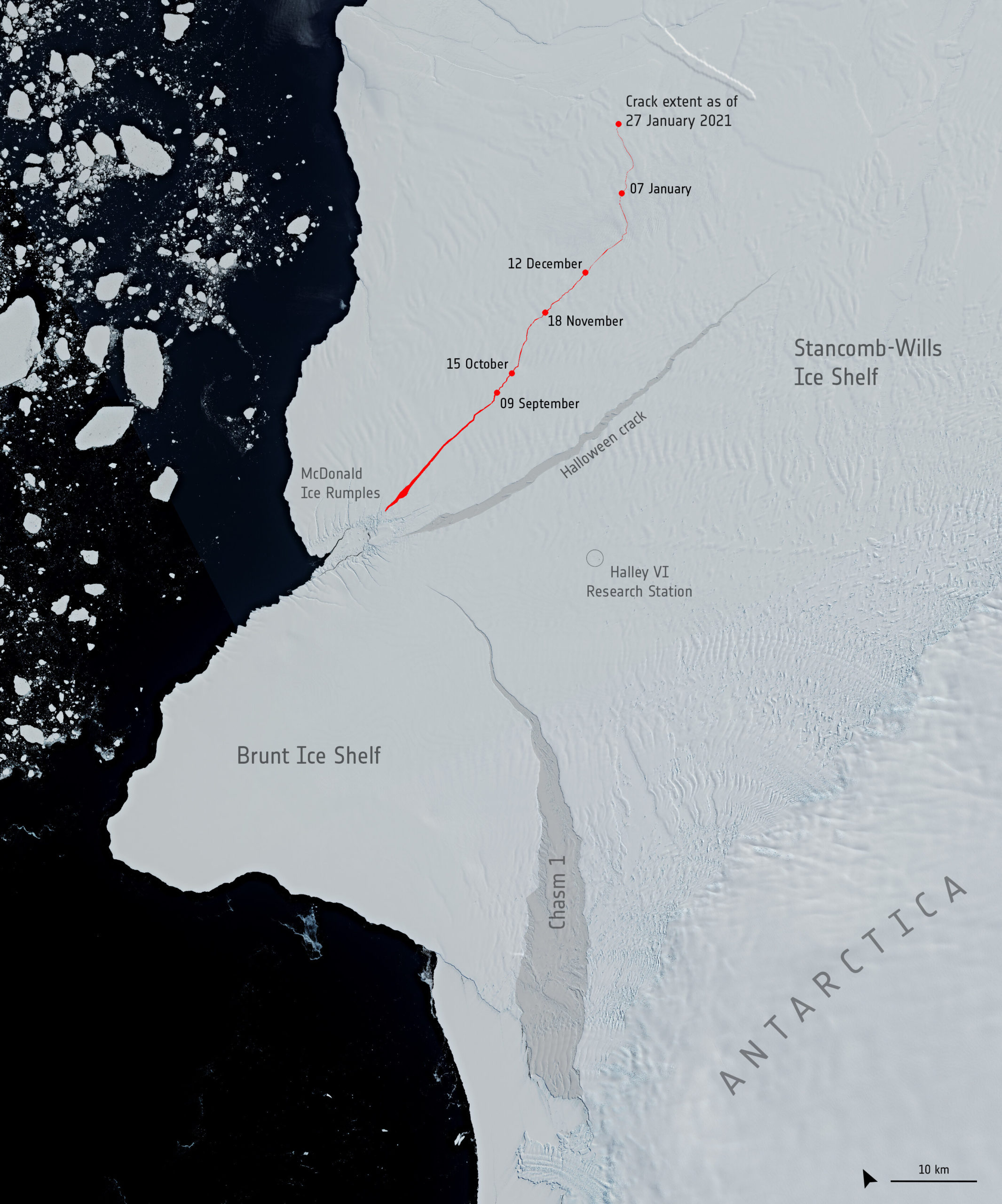
Strong gradient of ice speed towardsthe faster moving Stancombe Wills ice stream and the ice shelf to the north have activated a new rift that now threatens to release a second large iceberg.
Regular satellite monitoring showshow ice shelves respond to changes in ice dynamics, air and ocean temperatures. Since Antarctica is in darkness during the winter months, radar imagery is necessary because, in addition to the remoteness of the region, radar continues to transmit images regardless of the presence of light.
History shows that the last major event to occur on the Brunt Ice Shelf was in 1971, when some of the ice broke north of the area known as the McDonald Ice Hills.
Since in 2017 the ice shelf wasdeemed unsafe due to invading cracks, the British Antarctic Survey closed its Halley VI research station and relocated south of Halloween Crack to a safer location. In service since 2012, Halley VI consists of eight interconnected containers. This makes it easy to move capsules in case of unstable ice and cracks on the shelf.
Read more:
Abortion and science: what will happen to the children who will give birth.
The largest iceberg in the world collapsed, fragments rushed north. Is it dangerous?
In Korea, they have created a solar panel that can be rolled up.
Look at the 8 trillion pixel image of Mars.