Comet C/2022 E3 (ZTF), discovered only this year, is approaching the Sun. It will reach perihelion (closest to
C/2022 E3 (ZTF) was discovered on March 2, 2022using the Zwicky Transient Facility sky survey. It was located between the orbits of Jupiter and Mars at a distance of about 640 million km from Earth. This area is known as the asteroid belt, and it is not surprising that researchers initially mistook it for an asteroid. But subsequent observations revealed the dense coma characteristic of comets.
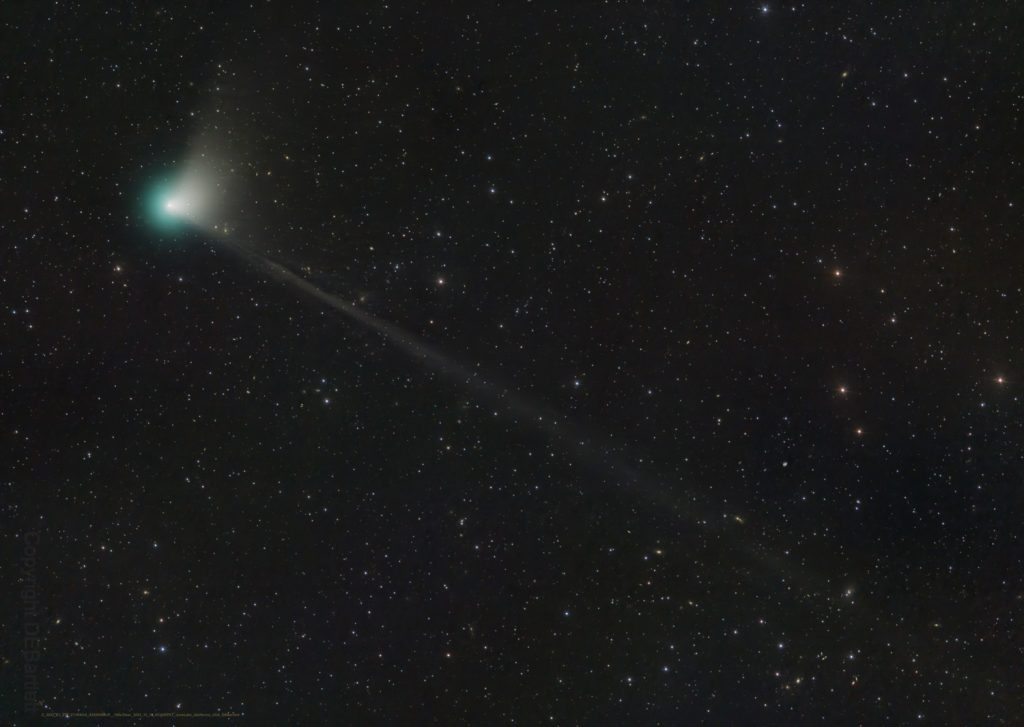 Comet C/2022 E3 (ZTF). Image: Dan Bartlett, NASA
At the time of discovery, the comet had an apparent magnitude17.3. This indicator characterizes the brightness of objects in the sky. Moreover, the smaller it is, the brighter they shine. With the naked eye, stars and comets with an apparent magnitude of less than 6 can be distinguished. Since the discovery, the comet has become much brighter. Now, according to an estimate, it is at a distance of 160 million km from the Earth, and its magnitude is slightly more than 10. This is not yet enough for observations with the naked eye, but it can already be seen with ordinary binoculars.
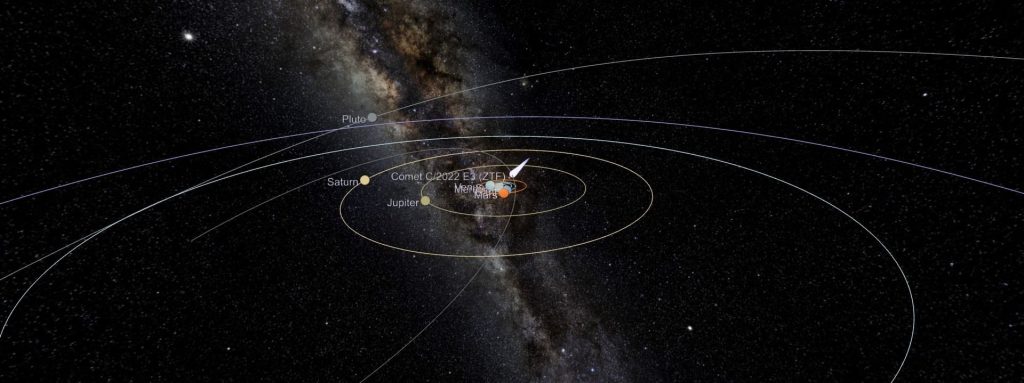 comet orbit. Image: The Sky Live
The comet continues to approach both the Sun andEarth. It will reach perihelion on January 12 (it is no coincidence that it was called the “Christmas Comet”), and perigee (the closest point to Earth) on February 2. At this point, C/2022 E3 (ZTF) will be only 40 million km from our planet (more than three times closer than the Sun).
Now the comet can be observed in the morning sky in the region of the constellation Northern Crown, and by the time of closest approach it will move towards the polar star.
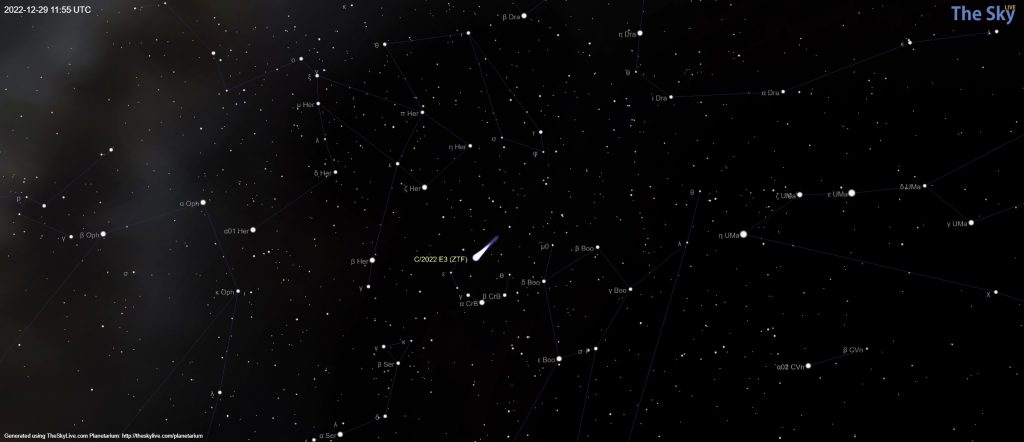 The comet's current position in the night sky near the constellation Northern Crown. Image: The Sky Live
Read more:
The tomb of the “midwife of Jesus” was unearthed: scientists told what they found there
Today, scientists from Earth will hit the asteroid with a radio pulse
Named smartphones on which WhatsApp will stop working from 2023