Ecologists from the Autonomous University of Barcelona in Spain and Aalborg University in Denmark conducted a
In their work, the researchers analyzed thehappens to tiny plastic particles as they sink to the bottom of the sea. Ecologists have taken sediment cores from the western Mediterranean Sea and used advanced imaging technology to study particles as small as 11 microns.
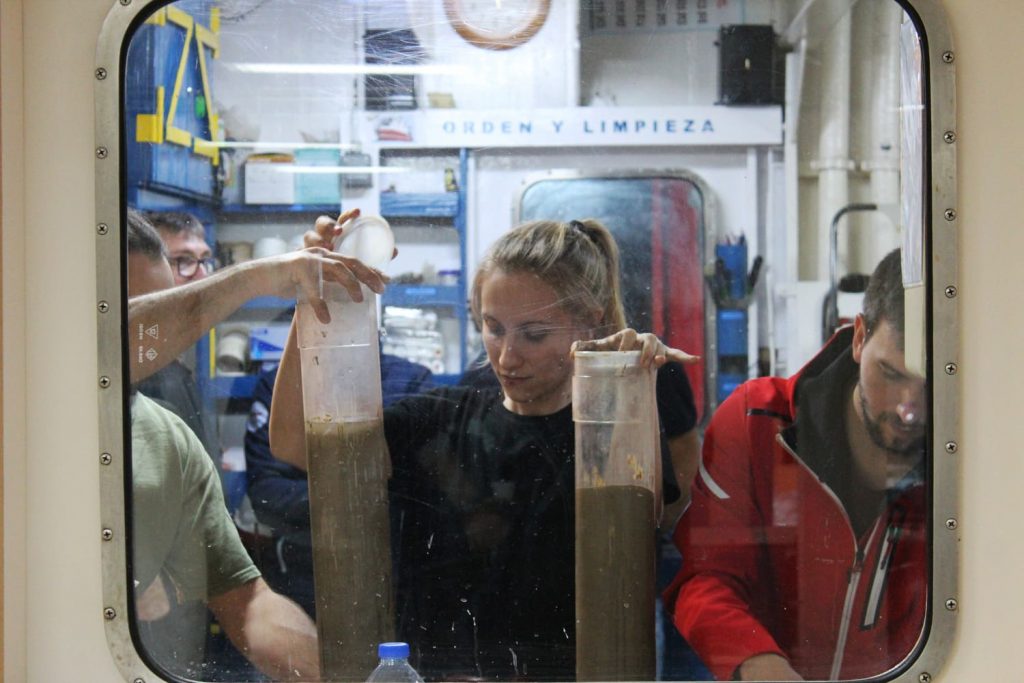 Samples of bottom sediments from the Mediterranean Sea. Image: ICTA-UAB
The study showed that after diving onseabed plastic is preserved virtually intact. The absence of erosion, oxygen and light leads to the fact that particles that fell into the ocean back in the 60s of the last century are still “stored” at the bottom of the sea.
Due to the amazing preservation of particles, scientistsestablished how pollution has changed in recent years. The study found that since about the early 2000s, the amount of garbage has increased especially rapidly, with bottom sediments consistent with changes in global plastic production over the past decades.
Since the 1980s, but especially in the last twodecades, the accumulation of particles of polyethylene and polypropylene from packaging, bottles and food films, as well as polyester from synthetic fibers in clothing fabrics has increased.
Michael Grelod, study co-author
Read more:
It turned out how old the water we drink today
17-year-old engineer came up with a magnetless motor: it can be used in electric vehicles
Two planets have been found not far from Earth. Perhaps they are inhabited