A team of researchers led by the Royal Institute of Psychiatry, Psychology and Neuroscience
The researchers analyzed records from the UKBiobank. This is a large biomedical database containing anonymous information about the genetics, lifestyle and health of over half a million people in the UK. The authors tested for links between high levels of exposure to fine particulate matter (PM 2.5) and nitrogen dioxide (NO₂) and the development of 36 physical and five mental chronic diseases.
The study showed that the strongestA correlation has been observed between living in air polluted areas and comorbid neurological, respiratory, cardiovascular, and general psychiatric illnesses such as depression and anxiety disorders.
In addition, the authors of the work found thatparticipants who were exposed to higher concentrations (greater than 10 µg/m³) of fine particulate matter had a 21% higher risk of developing two or more comorbidities than people living in areas where the air was cleaner. Almost the same impact - a 20% increase in the risk of developing several diseases - was observed for areas in which the concentration of nitrogen dioxide exceeded 30 µg/m³.
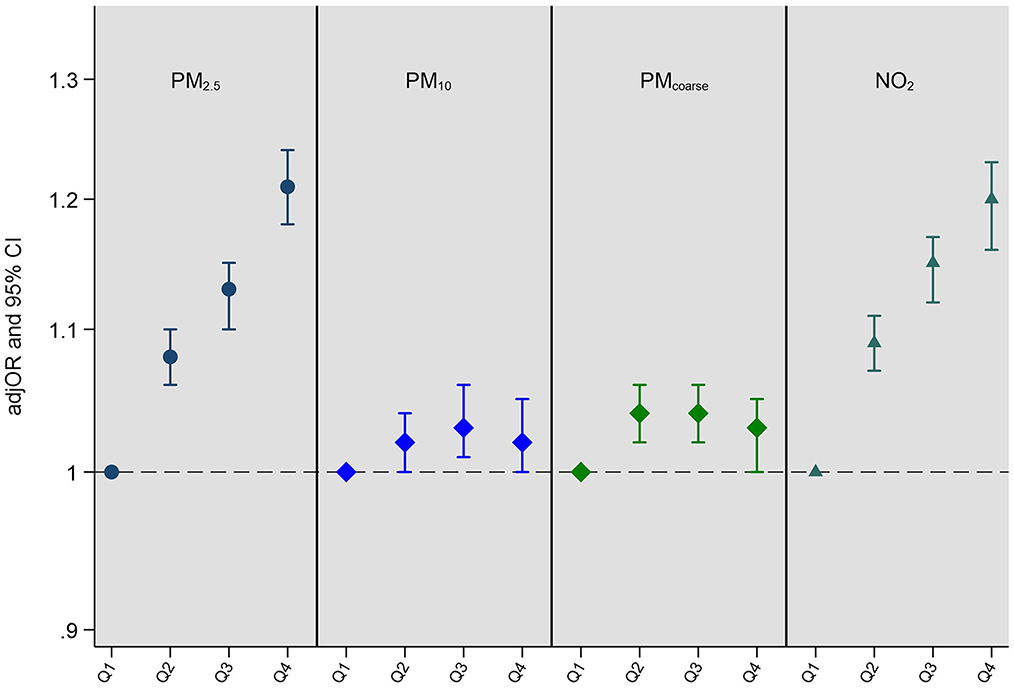 Increased risk of developing several chronic diseasesdiseases with varying exposure to various pollutants. All participants are divided into equal quartiles. The unit chosen is the risk for the quartile with the lowest impact. Image: Amy Ronaldson et al., Frontiers in Public Health
High correlation between polluted airobserved not only for diseases of the respiratory system (asthma, chronic lung disease). It has also been associated with cardiovascular disease (atrial fibrillation, coronary heart disease, heart failure), neurological disease, and psychiatric disorders, including substance abuse, depression, and anxiety.
How air pollution affects severalorgans and systems at the same time is not yet fully understood, but there is some evidence that mechanisms such as inflammation, oxidative stress, and immune activation can be triggered by airborne particles, which can cause damage to the brain, heart, blood, lungs, and intestines.
Ioannis Bakolis, study co-author
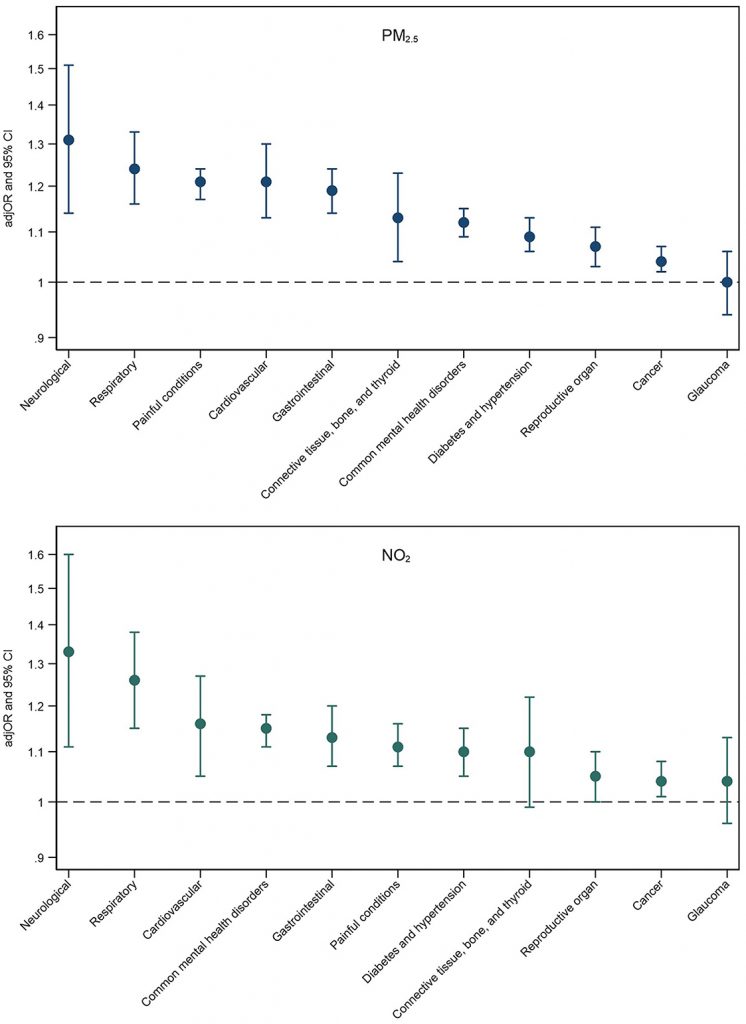 Increased risk of developing various diseases with high exposure to fine particulate matter (top) and nitrogen dioxide (bottom). Image: Amy Ronaldson et al., Frontiers in Public Health
Scientists say air pollution is linkedwith common mechanisms that adversely affect multiple body systems and make people more likely to develop many long-term diseases. More research is needed to establish how risks can be mitigated.
Read more:
The egg was dropped from space: look what happened to it
Brain-eating amoeba is spreading in the US: is there a danger to Russia
See what a woman Thora looks like. She lived 800 years ago