Cancer is the second leading cause of death in Switzerland. Among the various types of cancer, one of the most dangerous is
“Dark matter” of the genome—what is it?
They used a little-studied class of genes—long non-coding RNA (ribonucleic acids) or lncRNA—as new targets.
lncRNAlong non-coding RNAs, lncRNAs) are non-coding RNAs, whose length is usually more than 200 nucleotides, and are located in the nucleus or cytoplasm. The exact number of lncRNAs in human cells is still unknown. It is believed that there are about 15,000 lncRNAs in the human genome.
Long non-coding RNAs existin abundantly in the so-called “dark matter” of the genome. That part of DNA that does not code for protein and makes up the vast majority of it. The genome contains about 20,000 “classical” protein-coding genes. But this number is negligible against the background of 100,000 lncRNAs. The biological functions of 99% of lncRNAs are unknown.
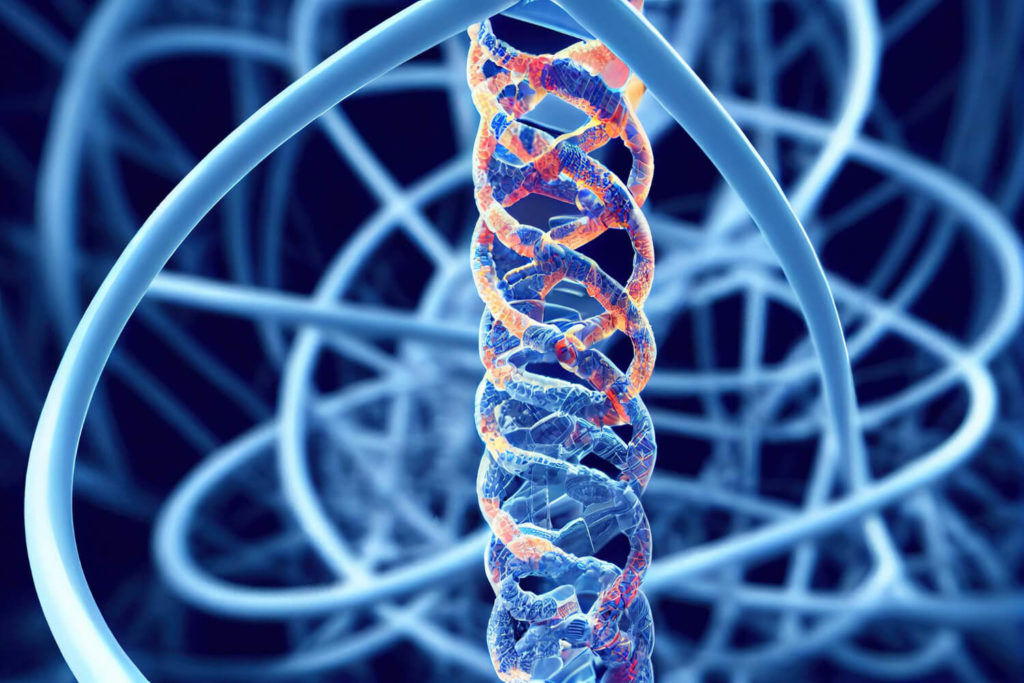 Cover photo and image: studioworkstock
As their name suggests, “longnon-coding RNAs, unlike messenger RNAs (mRNAs), lncRNAs do not encode plans for building proteins. As is the case with mRNA, instructions for building lncRNA are contained in cellular DNA.
Preparation for the experiment
To study the role of lncRNAs in NSCLC,The researchers examined publicly available data sets. As a result, scientists compiled more than 800 lncRNAs, the importance of which for cancer cells biologists wanted to test. To do this, they developed a special screening system that prevents the production of selected lncRNAs by removing part of the instructions for their structure in the DNA itself.
Scientists have already used a screening systemto two NSCLC cell lines obtained from patients. And then we looked at how inhibition of selected lncRNAs affects the distinctive features of cancer cells. These include behaviors that contribute to disease progression: proliferation, metastasis, and resistance to therapy.
As a result, out of 800 candidates studiedbiologists have compiled a list of a total of 80 high-confidence lncRNAs that are important for NSCLC. Further, from these 80, scientists selected only a few for subsequent experiments.
How did the study go?
For subsequent experiments, biologistsused an approach that does not work at the DNA level, but is aimed specifically at lncRNAs after their formation. For this purpose, scientists used small chemically synthesized RNAs - antisense oligonucleotides (ASO). They bind to the lncRNAs they target and lead to their degradation. It should be noted that several ASOs are already approved for the treatment of human diseases, but none yet for the treatment of cancer.
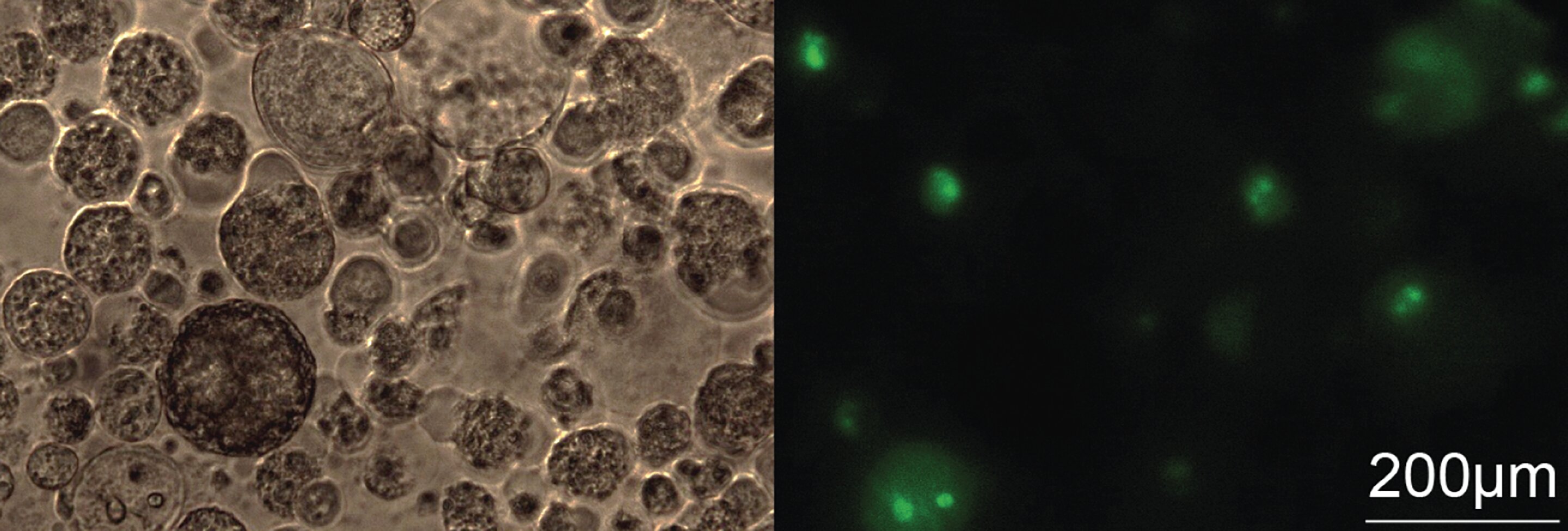 Microscopic images of 3D lung cancer spheroids transfected with green fluorescently labeled ASOs.
Credit: UniBE/NCCR
Antisense oligonucleotides aresingle-stranded chemically modified DNA fragments, the “target” of which is pre-mRNA, short pieces of genetic information, which then act as “instructions” for the ribosome, which assembles proteins on them. Depending on how a particular antisense oligonucleotide works, the mRNA is eventually either destroyed or otherwise spliced, a process in which certain exons (coding regions) are either included in the final mRNA or excluded from it.
What did the experiment show?
Subsequent experiments showed that forof most selected lncRNAs, their destruction with the help of ASO inhibits the division of cancer cells in cell culture. Importantly, the same treatment had little or no effect on non-cancerous lung cells, which should not be harmed by cancer treatment. In a 3D model of NSCLC that resembled a tumor more than a cell culture, inhibiting one lncRNA with ASO reduced tumor growth by more than half.
 Photo: onlyyouqj
As the study authors note, they were “pleasantly surprised to see how well antisense oligonucleotides inhibited tumor growth in a variety of models.”
What's next?
Researchers continue researchpreclinical cancer models and are considering collaborating with existing companies or creating a start-up to develop a drug to treat patients.
As for other types of cancer, scientists said -their approach should be easily adaptable to identify new potential treatments for other types of cancer. The next target is colorectal cancer. It is the third most common malignant tumor in the world. Every year, about 880,000 people die from colorectal cancer worldwide. Around 1.8 million new cases of this disease are diagnosed annually worldwide. This is an important goal.
Read more:
An unknown species of winged insect "hidden" in amber for more than 35 million years
Gas leak from Nord Stream was shown from space
See how Jupiter and the Moon approached in the night sky