A speck of light that scientists once thought was a distant galaxy may actually be the brightest ever
The new pulsar was named PSR J0523−7125,it is located approximately 160,000 light-years from Earth in the Large Magellanic Cloud (a satellite galaxy orbiting the Milky Way). It is twice as wide as any other pulsar in the region. In fact, the object is so large and bright that researchers initially interpreted it as a distant galaxy. However, a new study published in the Astrophysical Journal Letters shows that this is not the case.
Using the Australian Square radio telescopeKilometer Array Pathfinder (ASKAP) in Western Australia, the study's authors studied an area in the sky using equipment that blocks all wavelengths of light except a special type of radiation associated with pulsars. As a result, after studying the data obtained, scientists realized that they were not looking at a galaxy at all, but at a pulsating dead star.
 Field of view of the MeerKAT radio telescope without filtering equipment showing an image of the new pulsar. Image: Yuanming Wang
“It was an amazing surprise,” said the presenter.Study author Yuanming Wang, an astrophysicist at the Australian Scientific and Industrial Research Organization (CSIRO), said in a university press release. — I didn’t expect to find a new pulsar, let alone the brightest one. But with the new telescopes we now have access to, it really is possible.”
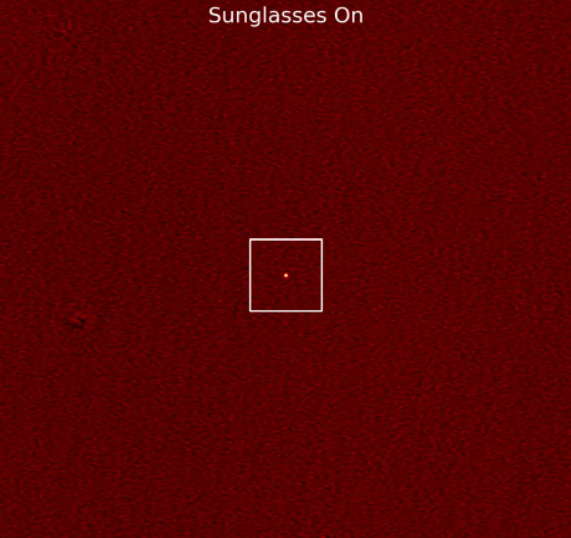 The field of view of the MeerKAT radio telescope with a filter and an image of a new pulsar. Contributed by Yuanming Wang
According to the researchers, the exceptional brightnessThe pulsar explains why the object was misidentified as a galaxy after its initial discovery. And by filtering out circularly polarized light from future star surveys, researchers may be able to find even more unusual pulsars that are “hiding in plain sight.”
Read more
Look at the "silent" drone with a new generation of ion propulsion
Ancient trilobite males strapped females on during mating
Russia and the United States have Doomsday planes: how and where they will fly in the event of the end of the world
</ p>