Researchers have found that biocrusts currently prevent the release of approximately 700
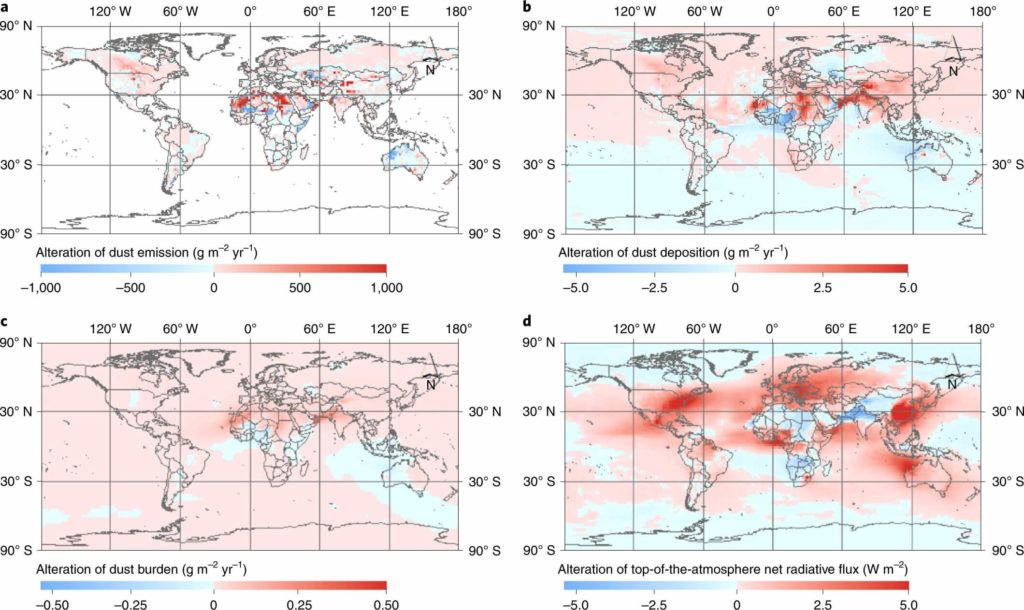 Dynamics of dust emissions into the atmosphere
The climate model showed that the globalwarming is shrinking the biocrust to such an extent that global dust emissions will increase by 15% by 2070. It is currently unknown what impact increased dust emissions could have on the planet as a whole, or which places will experience the greatest impact. Previous research has shown that dust in the atmosphere scatters solar radiation and also plays an important role in the formation of ice and clouds. Dust particles have also been found to carry nutrients long distances, and in some cases even bacteria and viruses.
Biological soil crusts (biocorts)They are dry, but not sandy, areas of land. Instead, the topsoil contains a community of nonvascular plants, microbes, and lichens. Together they strengthen and prevent soil from being released into the atmosphere. Researchers suggest they are comparable to living skin, covering up to 12% of all land surfaces worldwide.
Read more:
American satellite "saw" an unusual message from Earth
Published video from the rocket, which was launched from an experimental accelerator
The monster at the center of our Galaxy: look at the photo of a black hole in the Milky Way