Researchers from the A.F. Physico-Technical Institute Ioffe of the Russian Academy of Sciences synthesized
To obtain catalysts, researchersused the method of electrodeposition from complex ammonium-sulfosalicylic electrolytes. The metal coating on the surface of the electrode was formed during the electrochemical reaction.
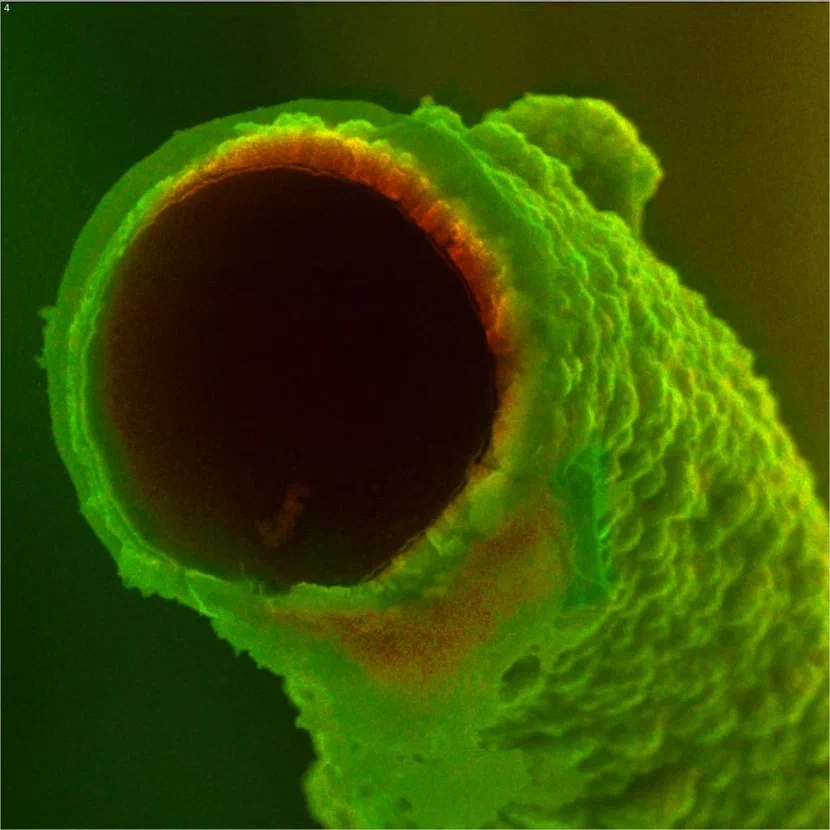
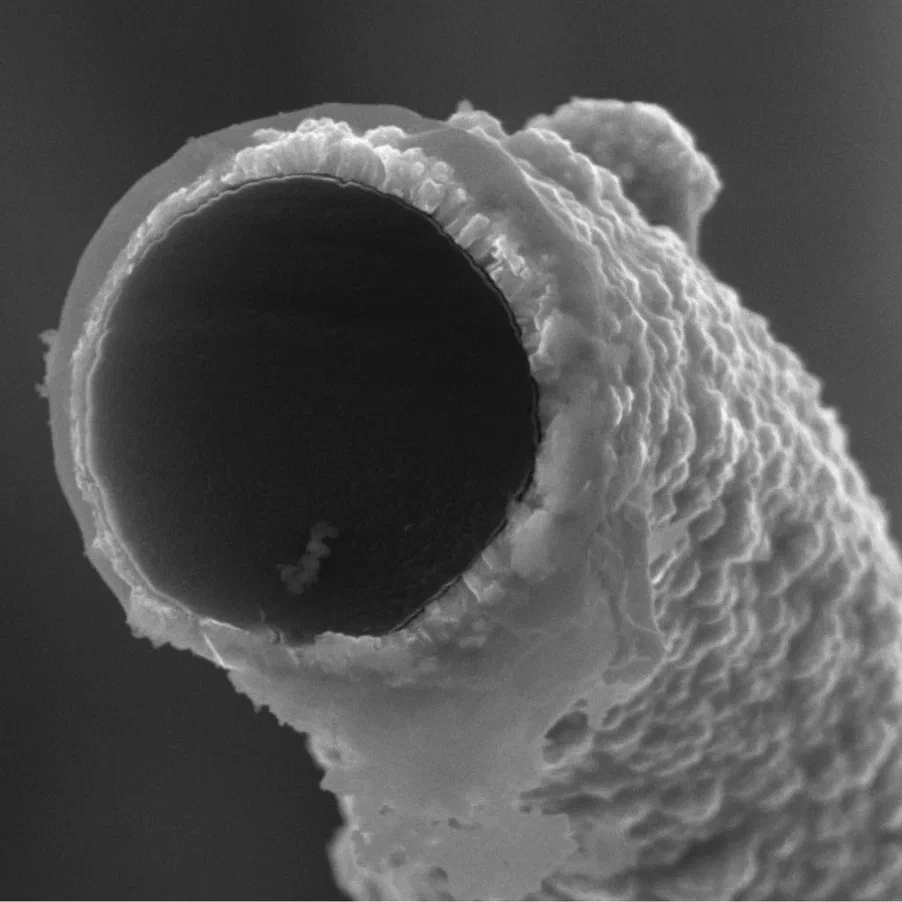
Carbon microtube with metal coating.The images were obtained using energy-dispersive X-ray spectroscopy (left) and scanning electron microscopy (right). Images: Dmitriev et al. /Int. J. Hydrog. Energy, 2023
Using the technology described in the magazineInternational Journal of Hydrogen Energy, the researchers created very thin coatings with metal nanoparticles on the surface of the electrodes. The thickness of the carbon microtubes was about 1.2 nm with nickel-only plating and about 0.5 nm with nickel-copper plating.
Researchers note that changing technologyproduction of electrodes increased the electrochemically active surface area of materials: five times (from 265 to 1400 cm²) for nickel and almost three times (up to 780 cm²) for nickel-copper catalysts, respectively.
We have made improvements in electrocatalyticproperties both due to a decrease in the size of crystallites, and due to the presence of copper additives. It improves electrical conductivity and lowers the overall metal-hydrogen bond energy, which reduces the diffusional limitations of the reaction.
Dmitry Dmitriev, researcher at the A.F. Ioffe and study co-author
Both hydrogen and oxygen can be synthesized withoutgreenhouse gas emissions by electrolysis of water - decomposition under the influence of an electric current. But in order for this process to proceed efficiently, catalysts are needed to speed up the reaction. The use of nickel and copper coatings (relatively cheap metals) in this capacity will reduce the cost of producing medical oxygen and green fuel.
Read more:
The secret of longevity is revealed: scientists have figured out how to start the necessary mechanism in the human body
Named a new cause of autism
2,700-year-old temple found in Sudan He surprised scientists