Chemists from Northwestern University have developed a new decomposition method for two classes
The secret of the stability of FPAS in carbon bonds withfluorine. These are the strongest bonds in organic chemistry and are extremely difficult to break. But when studying compounds of perfluoroalkylcarboxylic acids, scientists discovered an “Achilles heel”. It turned out that at one end of the molecule is a group that contains charged oxygen atoms.
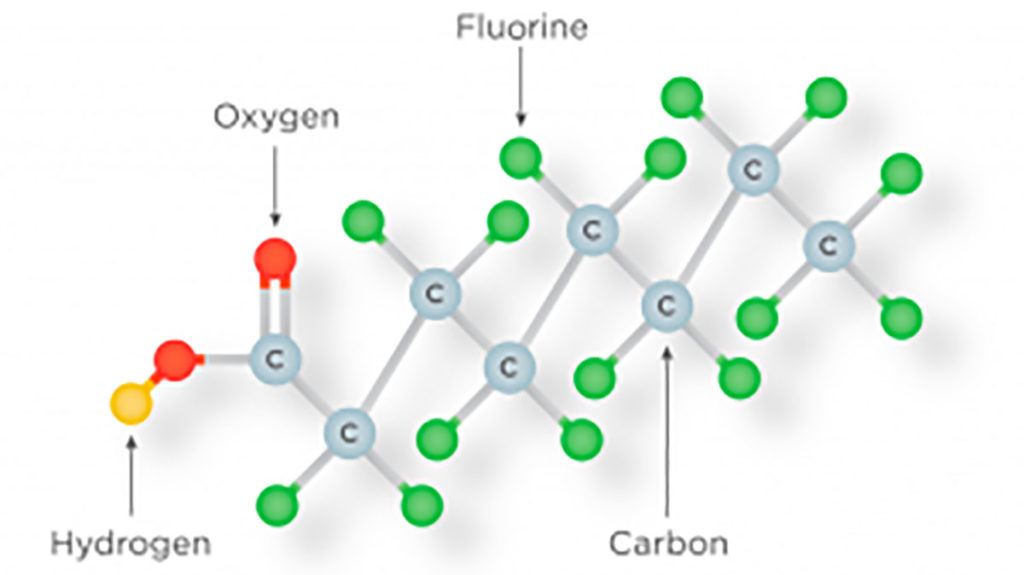 FPAW structure. Image: Northwestern
The researchers exposed the solventtargeted at this group. To do this, they heated FPAS in dimethyl sulfoxide with sodium hydroxide. Such an impact destroyed the "head group" of the molecule and launched the processes of further decay of the substance. At the same time, the material released fluorine atoms in the form of fluoride, the safest possible form, the authors of the study say.
FPAS is a class of chemicals with very strongfluorine-carbon bonds. They are often referred to as the "timeless chemicals" because they are extremely difficult to destroy. Bacteria cannot eat them, fire cannot incinerate them, and water cannot dilute them. Since the 1940s, these substances have been actively used as non-stick and waterproofing agents. They are commonly found in non-stick cookware, waterproof cosmetics, fire-fighting foams, water-repellent fabrics, and products that are resistant to fats and oils.
Previous studies have shown the possibilityremoval of surfactants from water, but the question of their disposal remains. With standard disposal, they will simply be washed into the soil and returned to the environment. The proposed technology is not the first method for decomposing polysurfactants, but alternative approaches require high temperatures or complex reagents.
Previously, Hi-Tech said that FPAS are found in rainwater and snow, even in the most remote parts of the world.
Read more:
Record coronal mass ejection at Betelgeuse is 400 billion times larger than the sun
Megalodon ate an animal the size of a killer whale at a time
Everest found traces of DNA that should not be there