Over the past 55 years - from 1961 to 2016 - glaciers around the world have lost more than 9 trillion tons of ice. The most serious blow
The study was based on analysisLandsat and SPOT satellite imagery taken in 1986, 2000 and 2014. Based on them, scientists found that glaciers of the Greater Caucasus Mountain Range lose about 0.5% of ice per year - a rather significant loss compared to the beginning of the 20th century.
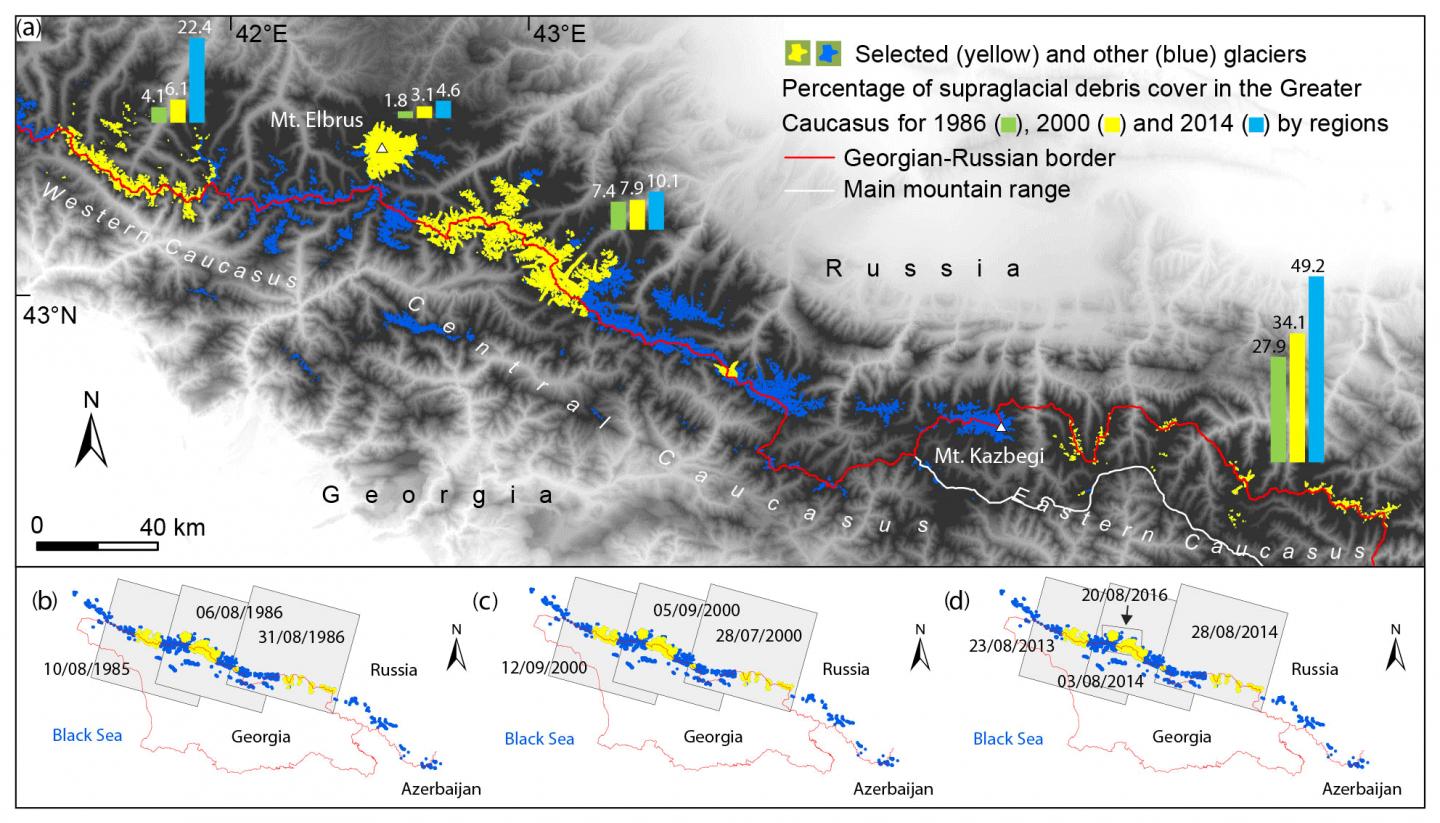
For about three decades, the areadecreased from 692 km2 to 590 km2 - that is, by 30%. According to scientists, this trend may pose a danger: the reduction in the area of glaciers leads to instability of slopes, which in turn leads to an increase in the number of landslides and rockfalls.
“In the Caucasus, melting glaciers do not affectwater supply is as strong as in the tropical Andes or Central Asia, where meltwater from glaciers is an important resource. Here, rain and snowfall have a greater impact on water supply. However, the water balance changes - along with the minimums and maximums of floods"
Stanislav Kutuzov, lead author of the study
Previouslywas reportedthat on August 1, 2019, the Greenland ice sheet lost 12.5 billion tons of ice - this is an absolute record of melting speed in the entire history of observations.