Hubble Space Telescope scientists have published an image of the galaxy cluster SPT-CL J0019-2026, located in
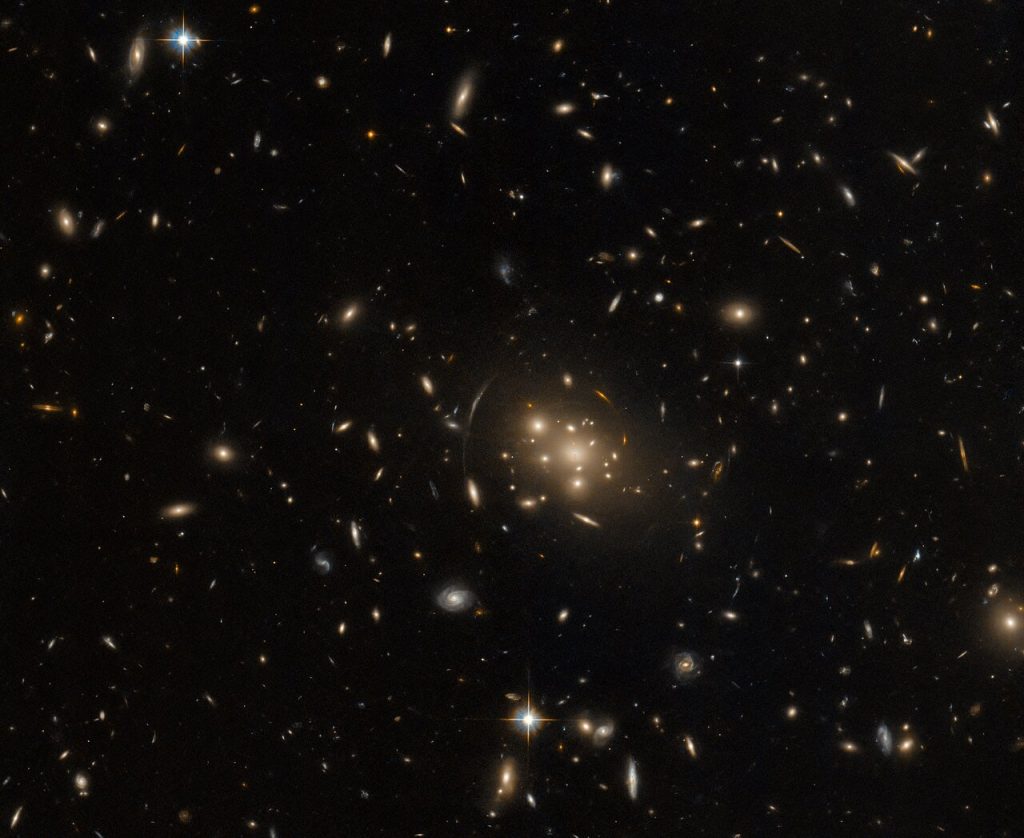 A panoramic image of the space around the galaxy cluster SPT-CL J0019-2026. Image: ESA/Hubble & NASA, H. Ebeling
The massive cluster consists mainly of brightelliptical galaxies surrounded by a warm glow. It is located in the constellation Cetus. Unlike the cluster's galaxies, those that appear to be near it are elongated in bright arcs. These objects are actually located beyond SPT-CL J0019-2026, but their dim, distant light is distorted and enhanced by the cluster's gravity.
A massive cluster of galaxies acts asanalogue of a giant magnifying glass. The powerful gravitational field of such an object, in accordance with the general theory of relativity, changes the direction of propagation of electromagnetic radiation. Gravitational lenses amplify light from objects that are usually too far away and dim to be seen directly.
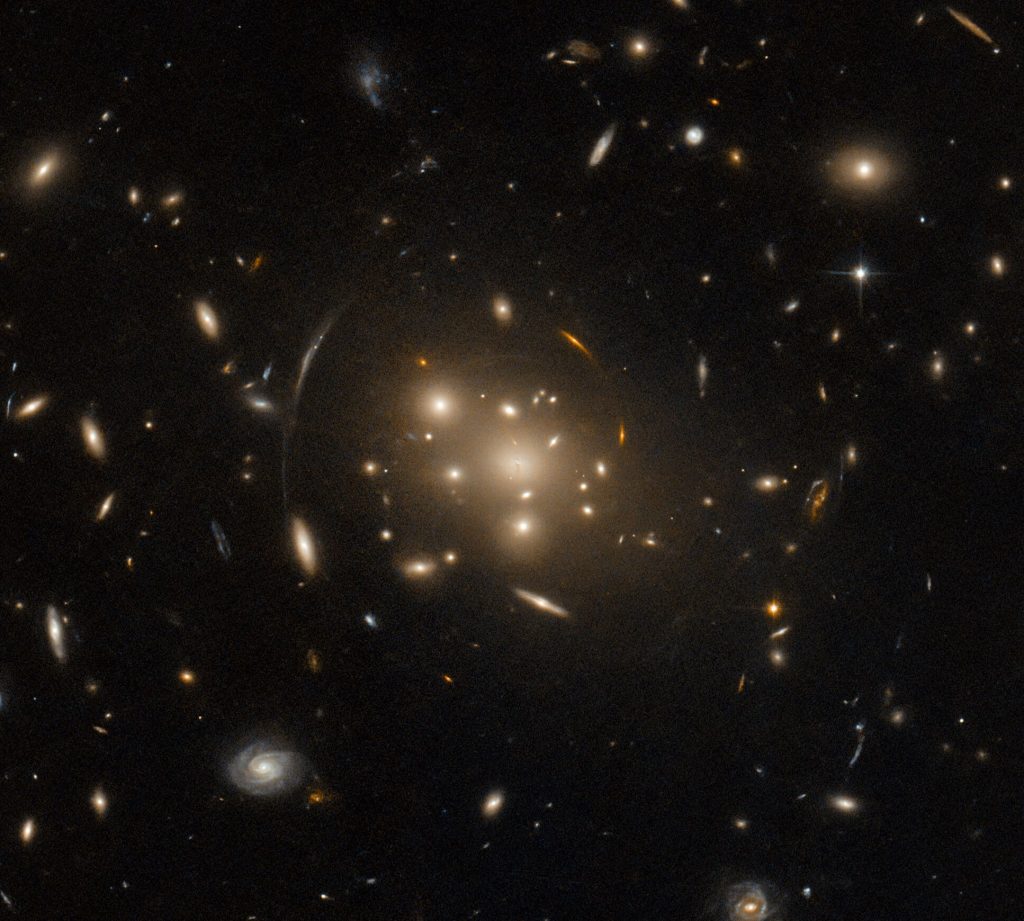 An enlarged view of the central region of the image of space around the galaxy cluster SPT-CL J0019-2026. Image: ESA/Hubble & NASA, H. Ebeling
The new snapshot is part of a "free" program"Hubble". The observation time and objectives of the telescope are traditionally scheduled at the request of astrophysicists and research centers. But there are short breaks between such observations, which the Hubble team uses, among other things, to study gravitational lenses in search of new objects for research.
Astrophysicists will study the SPT-CL J0019-2026 image,to understand whether previously unknown objects of the early Universe are hidden behind the gravitational lens. If such are found, the cluster will be further studied using Hubble, the James Webb Space Telescope, or other instruments.
Read more:
Land in China drilled to a record depth
It's not about the Earth: scientists explained why the solar system is the rarest
Medieval fortress accidentally discovered in the forest: the find surprised scientists