An experiment led by Michael Devorette of Yale University proves that
What are qubits?
Information in classical computing comesin the form of bits corresponding to ones or zeros. In quantum computing, it is stored in special devices with quantum properties, which are known as quantum bits or “qubits.”
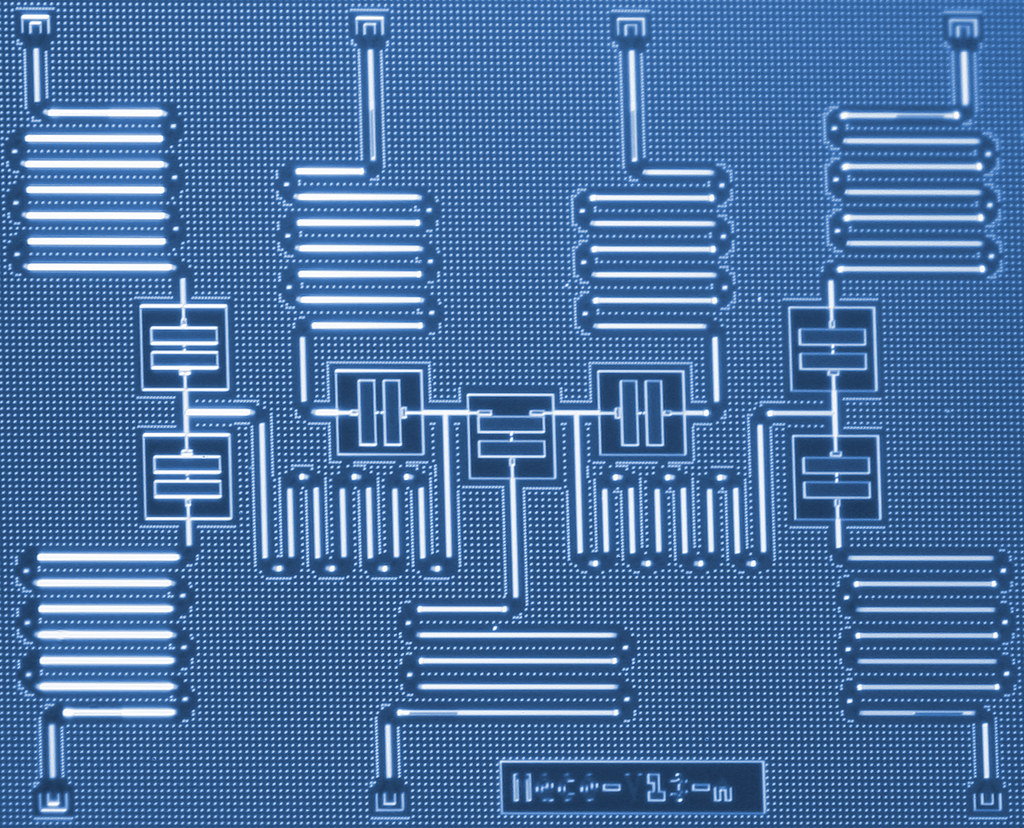 IBM 7 Qubit Device. Photo: Flickr
In a laboratory at Yale Universitythey are created from superconducting circuits cooled to temperatures 100 times lower than in outer space. Each qubit represents one or zero, or, oddly enough, both one and zero at the same time. This “quantum parallelism” is one of the properties that allows quantum computers to perform calculations. Potentially—several orders of magnitude faster than is possible on classical supercomputers.
What is the problem with quantum computing?
However, quantum systems are fragile. They are haunted by the fundamental phenomenon of decoherence - a process in which the information stored in qubits quickly loses its quantum properties as a result of their interaction with the environment. In simple words, any interference from the external environment interferes with the operation of such systems, making them impossible. This prevents quantum computers from being implemented everywhere.
There is a solution, but it’s not that simple
Quantum error correction, which is theoreticallydiscovered in 1995, offers a means to combat this decoherence. It protects a quantum bit of information by encoding it into a larger system than is generally necessary to represent a single qubit.
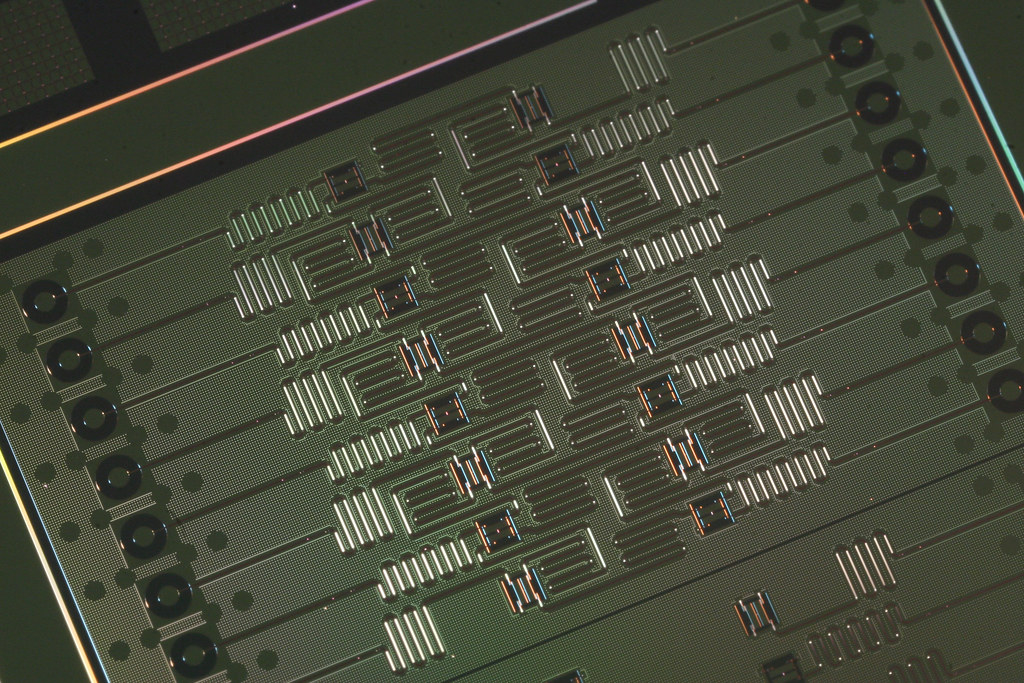 IBM 16 Qubit Processor. Photo: Flickr
However, this larger system makes an impactenvironment is even more aggressive, and the encoded qubit is more fragile. Because of this effect and the complications associated with additional error correction components, this process did not extend the life of the quantum bit in practice. The researchers say that in fact, breaking even with even an uncorrected qubit is a rare event. Contrary to theoretical promises, in most experiments, error correction speeds up the decoherence of quantum information.
What have the scientists done?
During the experiment, scientists showed for the first timethat increasing system redundancy, active detection and correction of quantum errors ensured increased stability of quantum information. “Our experiment proves that quantum error correction is a real, practical tool. This is more than just a demonstration of the principle,” explains the physicist.
A group of scientists has managed to more than double the lifetime of quantum information. Their error-correcting qubit lasted 1.8 milliseconds—in quantum computing, everything happens quickly.
They achieved results using codeerror correction software, which was invented in 2001. “Yes, in our field there are delays between theoretical proposals and their practical implementation,” explains Michael Devorette.
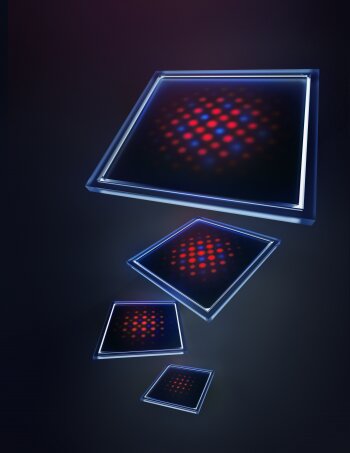 Illustration of qubits. Credit: Yale University
Vladimir Sivak, the lead author of the article, stated thatPerformance was partially achieved through the use of a machine learning agent. He customized the error correction process to improve the result.
“There is no one single breakthrough thatallowed us to get this result. In fact, it is a combination of various technologies developed over the last few years. We combined in this experiment, explained a student in Devoret's lab, now a Google researcher.
Why is it so important?
The practical success of quantum computing will bedepend on the ability to create extremely high quality quantum bits using quantum error correction. A new experiment confirms a cornerstone assumption about quantum computing; By doubling the life of a qubit, researchers have proven a key theory in quantum physics. “This is very encouraging,” the study authors conclude.
Read more:
Found a way to lower blood sugar without insulin injections
Scientists believe that the shape of the universe is not what everyone thinks
NASA helicopter showed sunset on Mars. It doesn't look like earth.
Cover illustration: geralt