What are sex hormones?
The function of hormones is to be regulators, that is, to maintain dynamic
Sex hormones are produced by the sex glands: the ovaries in women and the testes in men and are the main elements of the reproductive system.
Male hormones (androgens, testosterone) provide a male body type, muscle mass, sexual characteristics, low tone of voice, male-pattern hair growth.
Female hormones (estrogens and gestagen)provide a feminine body type, breast growth, lactation, development of internal genital organs, and also help to bear the fetus during pregnancy and are responsible for less body hair.
However, nature provided for something else, creating men and women: added hormones of the opposite sex to their sex hormones.
What do XX and XY chromosomes mean?
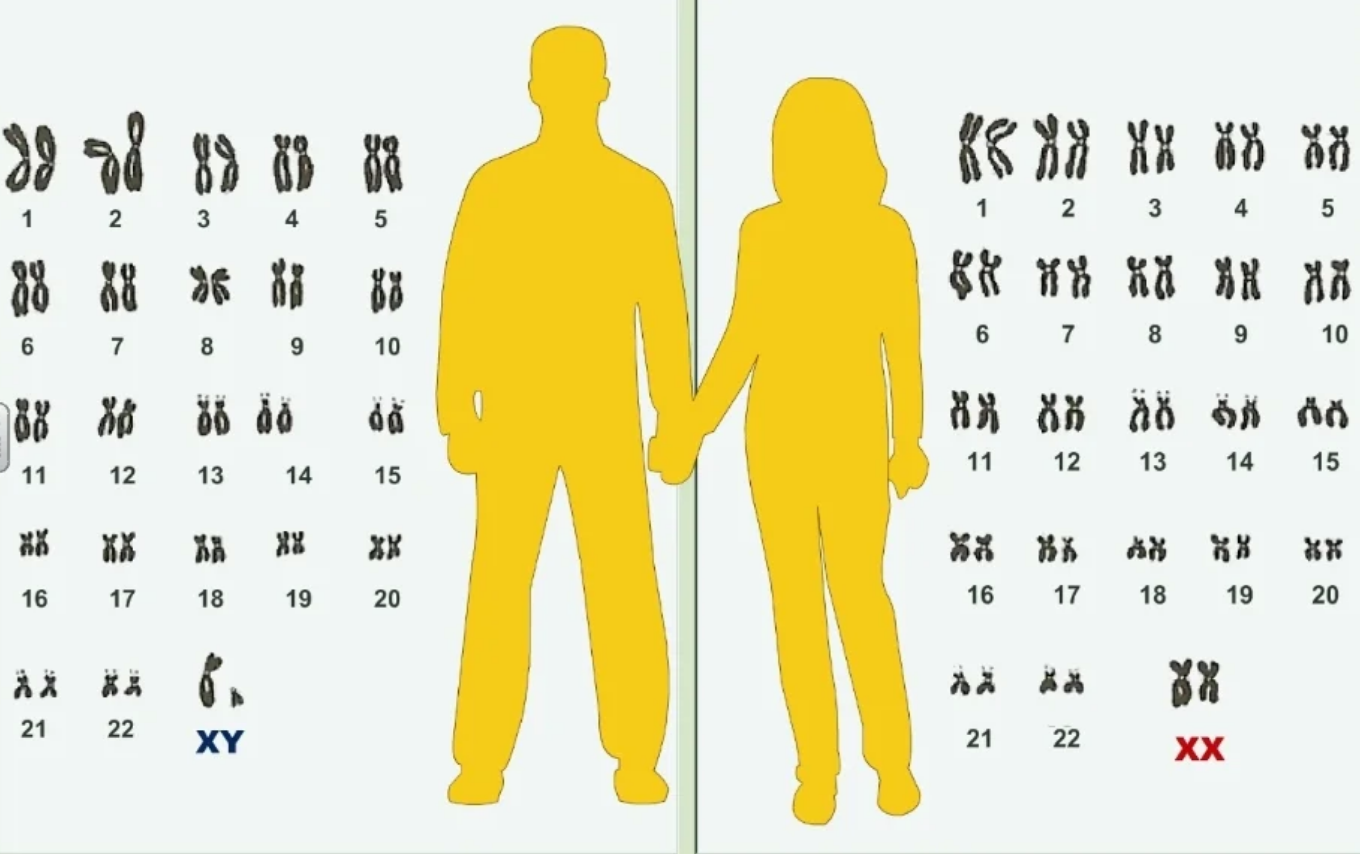
- X chromosome- sex chromosome.In all mammals and other heterogametic male organisms, females have two X chromosomes (XX), and males have one X chromosome and one Y chromosome (XY). There are also organisms (for example, platypuses) that have several non-homologous X chromosomes.
The human X chromosome contains about 150 millionbase pairs, which is approximately 5% of DNA in women's cells, 2.5% in men's cells. It carries more than 1,400 genes, of which about 800 are protein-coding (compare with the Y chromosome, which carries only 78 genes). Women have two X chromosomes; Males have one X chromosome and one Y chromosome. One X chromosome is inherited from the mother, and the second (in women only) from the father.
The X chromosome has long been famous for its specialproperties among geneticists, who named it the letter X not because of its shape, as might be expected (autosomes also look like the letter X), but because early researchers were confused by how different the X chromosome was from other chromosome pairs. The Y chromosome was named the next letter of the alphabet because it was the next to be discovered. The fact that the Y chromosome during mitosis has two very short arms that appear Y-shaped under a microscope is a coincidence.
The X chromosome was first identified in 1890By Hermann Henking in Leipzig. Hanking was doing research on bug testicles and noticed that one chromosome was not involved in meiosis. Hanking was not sure if it was a chromosome or an object of another class, so he called it the X-element, later it was found that it was indeed a chromosome, which was called the X-chromosome.
In 1901, Clarence Erwin McClang (eng. Clarence Erwin McClung first suggested that the X chromosome is involved in sex determination, based on a comparison of his research on locust with that of Hanking and others. McKlang noticed that only half of the sperm receive the X chromosome. He considered it an additional chromosome that determines male sex. It was later found that McClang was mistaken, and the chromosome that determines the male sex is more likely the Y chromosome.
- Y chromosomeis one of two sex chromosomes in the XY chromosomal sex determination system, which is found in many animals, including most mammals, including humans.

In mammals, it contains the SRY gene, which determinesthe male sex of the body, as well as the genes necessary for the normal formation of sperm. Mutations in the SRY gene can lead to the formation of a female body with the XY genotype (Swier's syndrome). The human Y chromosome is made up of over 59 million base pairs.
The cells of most mammals contain twosex chromosomes: Y-chromosome and X-chromosome - in males, two X-chromosomes - in females. In some mammals, such as the platypus, sex is determined not by one, but by five pairs of sex chromosomes. At the same time, the sex chromosomes of the platypus are more similar to the Z-chromosome of birds, and the SRY gene is probably not involved in its sexual differentiation.
In the human population, the cells of some mencontain two (less often several) X chromosomes and one Y chromosome; or one X chromosome and two Y chromosomes (XYY syndrome); some women's cells contain several, more often three (Trisomy on the X chromosome) or one X chromosome (Shereshevsky-Turner syndrome). In some cases, the SRY gene is damaged (with the formation of a female XY organism) or its copying to the X chromosome (with the formation of a male XX organism).
How did chromosomes come about?
It is believed that the X and Y chromosomes originated from a pairidentical chromosomes, when a gene arose in ancient mammals, one of the alleles (one of the varieties) of which led to the development of the male body. The chromosomes carrying this allele became Y chromosomes, and the second chromosome in this pair became the X chromosome. Thus, the X and Y chromosomes initially differed in only one gene.
Over time, genes that are good for males and harmful (or have no effect) for females either developed on the Y chromosome or were transferred to the Y chromosome during translocation.
What are the chromosomes responsible for?
Our human chromosome set consists of 23pairs of chromosomes (46 in total), of which 22 pairs (autosomes) are the same in men and women. The genes in them determine the differences between humans and other animal species. Autosomes are responsible for the shape of the body, the location of internal organs, the structure of cells, tissues, organs, and for their work. There is no gender disagreement here.
But the 23rd pair — these are sex chromosomes. That's what it's all about. They contain information about sexual differences between males and females.
Metabolic metabolic processes differ. Women are dominated by anabolic processes focused on nutrition, integration, energy conservation. Thanks to this, the female body has a great survival rate. Men are characterized by catabolic processes (energy expenditure, reproduction, disintegration).
How did the new discovery correct these functions?
Scientists from the University of Montreal foundthat “turning off” two genes on the male Y chromosome leads to a change in the responses of some non-genital organs to stress. In experiments on mice, the researchers noticed that heart muscle cells with altered genes on the Y chromosome respond differently to reduced blood supply, as well as to mechanical stress.
It was previously thought that the Y chromosomes that are inevery cell of the male body, do not participate in the regulation of the activity of non-genital organs. In a study by Montreal scientists published in Scientific Reports, the authors explain where this huge gap in knowledge about the Y chromosome came from. The fact is that the male chromosome controls the functions of various cells differently from other chromosomes. Instead of directly activating genes, the Y chromosome likely affects cell function through the production of certain proteins, which are more difficult for scientists to trace.
According to Professor Christian Deschepper,Director of the Experimental Cardiovascular Biology Research Unit at the Montreal Clinical Research Institute, “the discovery provides a better understanding of how male genes on the Y chromosome allow male cells to function differently from female cells. In the future, these results may help shed light on why some diseases occur differently in men and women." Deschepper cited the example of the situation with COVID-19. It is known that men die from this disease 1.5-2 times more often than women.
Read also
The Doomsday glacier turned out to be more dangerous than scientists thought. We tell the main thing
Study: cats can imitate humans
On day 3 of illness, most COVID-19 patients lose their sense of smell and often suffer from a runny nose