The liver recovers even in old age and remains surprisingly healthy, although the chromatin in its
The aging process is thought to be caused by changes inepigenetics. It describes changes in genetic information that do not change the sequence of the genes themselves, but affect their activity. Among other things, the process is regulated by the accessibility of proteins to DNA in chromatin.
In a new study, scientists observed thatThe DNA in liver cells becomes less packaged with age. This makes it more accessible for the production of an RNA template molecule. If DNA is readily available, more RNA produced can be observed. But it wasn't.
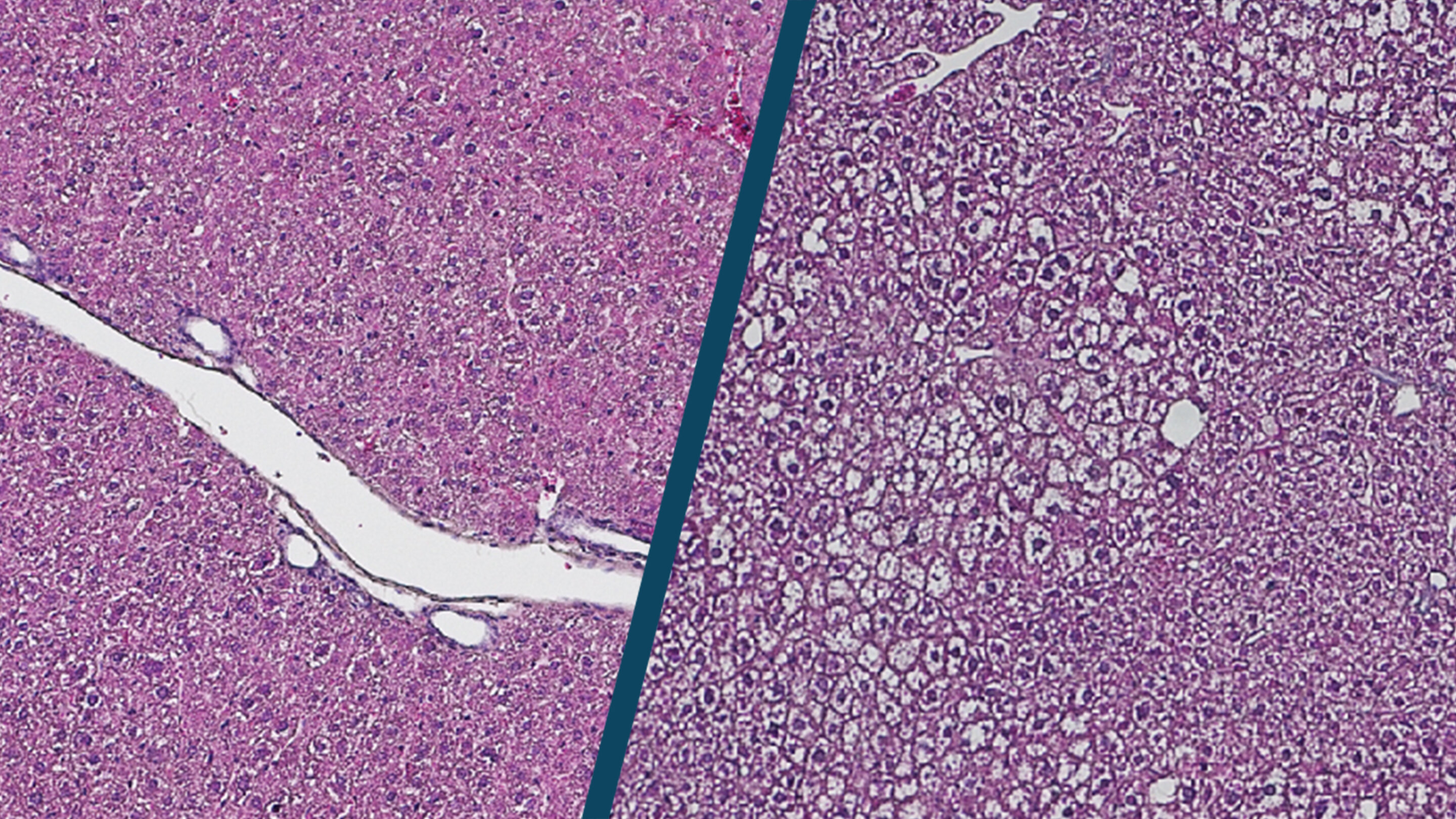 The structure of the liver changes with age. Shown here is a histological image of young (left) and old (right) liver cells. Credit: Institute of Biology of Aging. Max Planck
The researchers found a possible explanation for this.They found that RNA polymerase (a protein that binds to DNA and then produces RNA) falls off DNA faster in old liver cells than in young ones. This means that despite the increased availability of DNA, there is no net increase in RNA production. In this way, balance is maintained within the cell.
Scientists believe they have discovered a new way tocells, which compensates for age-dependent epigenetic changes. This is most likely one of the reasons for the liver's ability to continue functioning for so long. Whether a similar mechanism counteracts epigenetic changes in other tissues remains to be seen.
Read more:
The space plane will deliver cargo to the ISS and land at a regular "airport"
The star approached the black hole and it was torn apart: scientists observed this from three telescopes
Scientists have found traces of genetic mutations in the blood of every person who has been in space
Cover photo: Mikael Häggström, M.D., CC0, via Wikimedia Commons