How did it all start?
European Space Agency officially approves Comet Interceptor mission
This week a representative of the EuropeanThe space agency said the mission will launch before the end of the current decade. Scientists from the European Union and Japan are working on the ambitious mission.
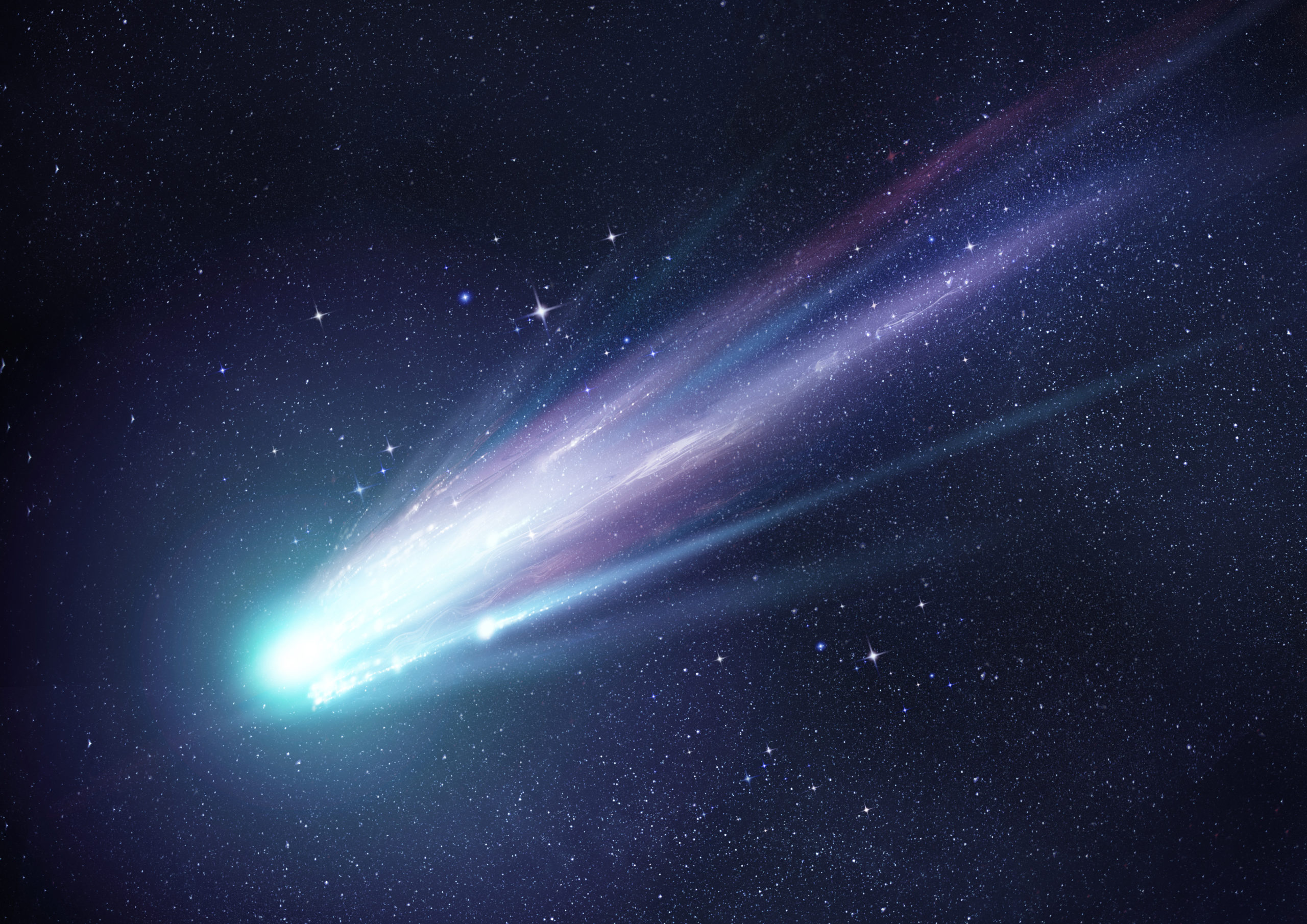
The creation of the main apparatus within the missionBritish specialists Thales Alenia Space will take care of it. The Comet Interceptor concept uses two small auxiliary probes developed by the Japan Aerospace Exploration Agency (JAXA). Together, these modules will collect comprehensive information about the object of study.
How will the mission work?
Comet Interceptor will be output to the Lagrange pointL2 of the Sun-Earth system and left there in standby mode. Next, astronomers will start looking for a suitable comet, making its first visit to the vicinity of the Sun. After such an object is found, the apparatus will be directed towards it, which will approach it along the flight path.
A few weeks before the flyby of comet CometThe Interceptor will split into three independent modules. Each of them will be equipped with its own set of scientific instruments. It is assumed that during the flight they will create a three-dimensional profile of the object, collecting as much information as possible about its behavior and interaction with the environment.

Comet Interceptor will not be the first in historymission launched to study the comet. But there is one difference. All previous efforts were directed by scientists to comets that have already visited the inner regions of the solar system. During their numerous visits to the Sun, they have lost a huge part of their original reserves of volatiles, and the shape of their nuclei has changed a lot. Scientists hope that a visit to the "pristine" comet will provide a lot of new data on the evolution of such objects and on the processes taking place at the very edge of the solar system.
According to ESA standards, the Comet Interceptor belongs toF-class missions (from Fast). This means that it will take about eight years from the beginning of the project development to the start. The mass of the spacecraft will be less than 1,000 kg. It will be launched as a passing load along with another European probe - most likely the Ariel telescope, which is scheduled to launch in 2028.
How does the Comet Interceptor work?
Comet Interceptor consists of threespacecraft. The composite spacecraft would wait for a suitable target at L2 and then travel before the three modules separated several weeks before the comet was "intercepted." Each module will be equipped with additional scientific equipment, providing different views of the comet's nucleus and its gas, dust and plasma environment. Such “multipoint” measurements will greatly improve the three-dimensional information needed to understand the dynamic nature of a pristine comet as it interacts with the ever-changing solar wind environment.
The Comet Interceptor toolkit will bebuild on the legacy of other missions. For example, the camera in the craft will be based on the one currently on the ExoMars Trace Gas Orbiter, along with instruments for measuring dust, fields and plasma, and a mass spectrometer similar to those flown on ESA's Rosetta mission.
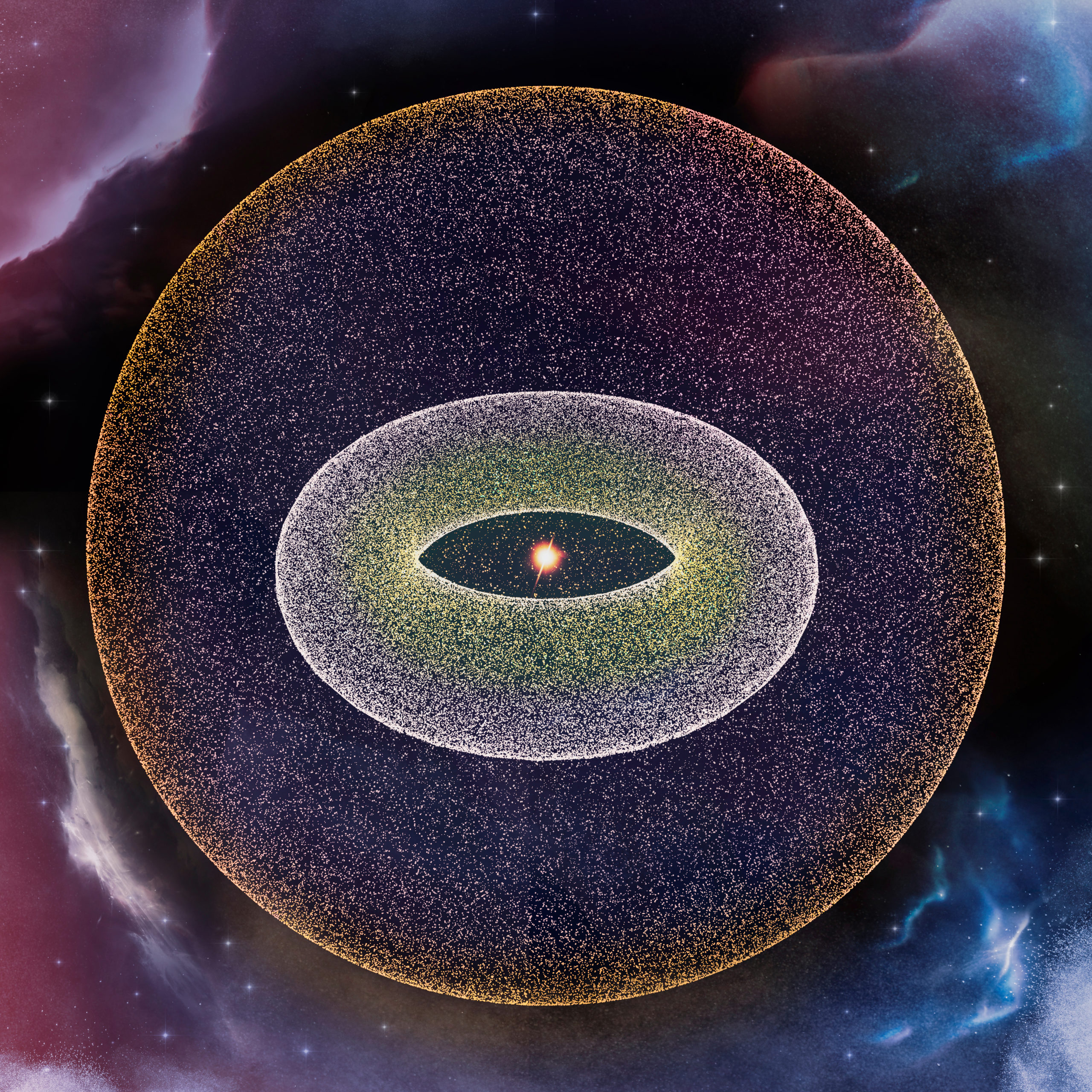
Previous comet missions, includingESA's pioneering Giotto and Rosetta spacecraft encountered short-period comets. These are comets with an orbital period of less than 200 years, which came several times closer to the Sun and changed in the process. For example, Rosetta encountered comet 67P/Churyumov-Gerasimenko, which orbits the Sun once every 6.5 years; and the "Giotto" mission - comet 1P/Halley, which returns to the Sun every 76 years.
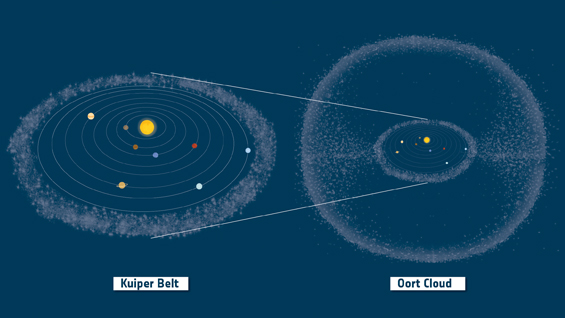 Kuiper Belt and Oort Cloud
The mission of the Comet Interceptor differs from previous onesby targeting a comet that first visited the inner solar system from the huge Oort cloud. Thus, the comet will contain material that has hardly changed since the appearance of the Sun and planets. Thus, the mission will offer a new understanding of the evolution of comets.
Why do you need a mission?
Such a comprehensive study of the comet will allowanswer a number of important questions related to the formation of the solar system and the Earth. Scientists, in particular, want to confirm or refute the hypothesis that water was brought to Earth by comets.
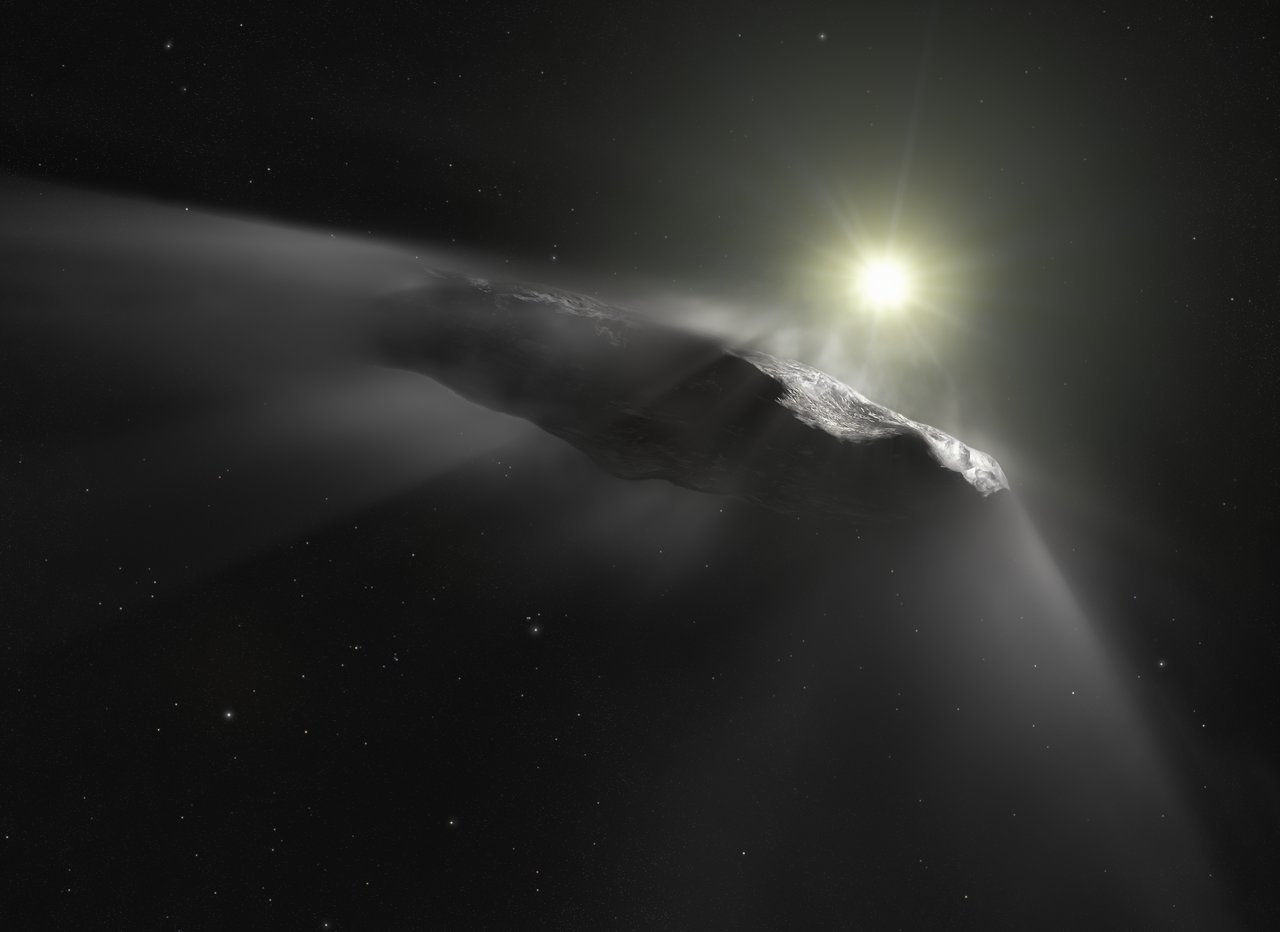 Artistic impression of ‘Oumuamua
Another example of a potential target is interstellara visitor from another star system such as 'Oumuamua, which flew past the Sun in a highly inclined orbit in 2017. Studying the interstellar object will help scientists understand how similar bodies and comets form and develop in other stellar systems.
Scientists have discovered 'new' comets in the pastjust months or years before they approached the Sun. However, this is too short a time frame to plan, build and launch a space mission. The Comet Interceptor will change the situation.
Read more
The slowing down of the Earth's rotation caused the release of oxygen on the planet
New particle discovered at the Large Hadron Collider
Scientists have found the oldest example of applied geometry