An international team of astronomers has used a new research method to study stars in a group
This mysterious phenomenon is difficult to study, becauseeven the brightest parts of the intragroup glow are about 50 times darker than the night sky on Earth. It is very difficult to detect even with the help of the largest ones, either on the surface of the planet or in space.
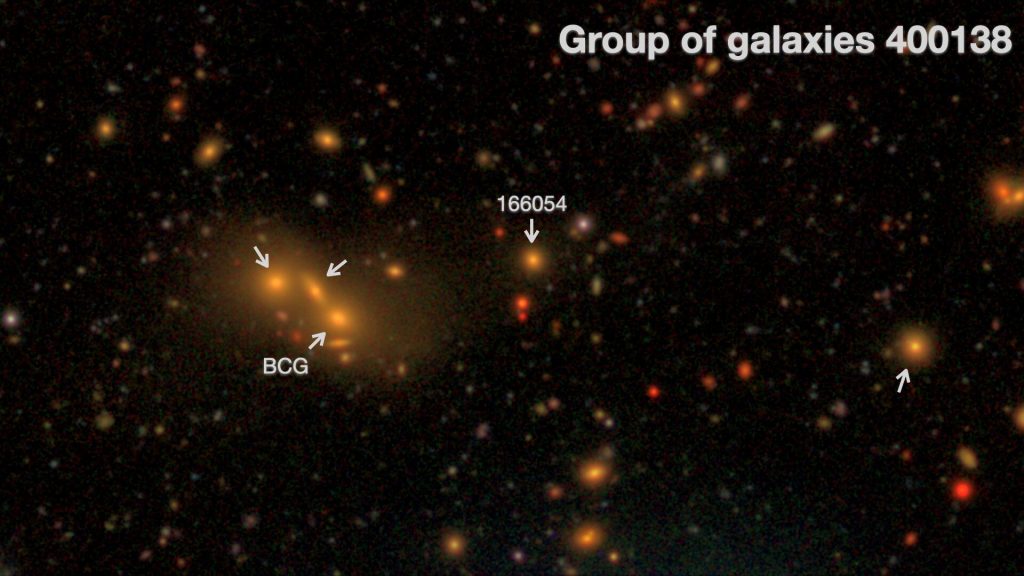 “Intragroup light,” no matter how dim, comes from stars deprived of their home galaxy. Credit: Martinez-Lombilla et al/UNSW, Sydney
However, using ultra-sensitive technology andUsing advanced observation methods, scientists succeeded. They eliminated light from all objects except the one within the galactic group. This has helped astronomers study and tell the story of the stars that inhabit it.
They turned out to be “orphans”.This means that the stars in the intragroup light turned out to have a different origin than their closest neighbors. Scientists have uncovered the history of this “space shelter.” It turned out that individual stars separated from their parent galaxies in childhood, and now they “float freely, following the gravity of the group,” scientists explain.
As a result, scientists have proven that intragroup light, no matter how dim it may be, comes from stars deprived of their native galaxy.
Read more:
A magnetic storm is about to hit Earth
Named the main danger of the lunar mission "Artemis"
The true meaning of mummification is revealed: all this time, scientists were wrong