According to the authors of the study, 9 synthesized faces can replace images of at least 40% of people
During the work, scientists found out that the onlythe generated face is capable of simulating 20% of faces from the open database of the University of Massachusetts. As you know, it is she who is often used to test personality recognition systems.
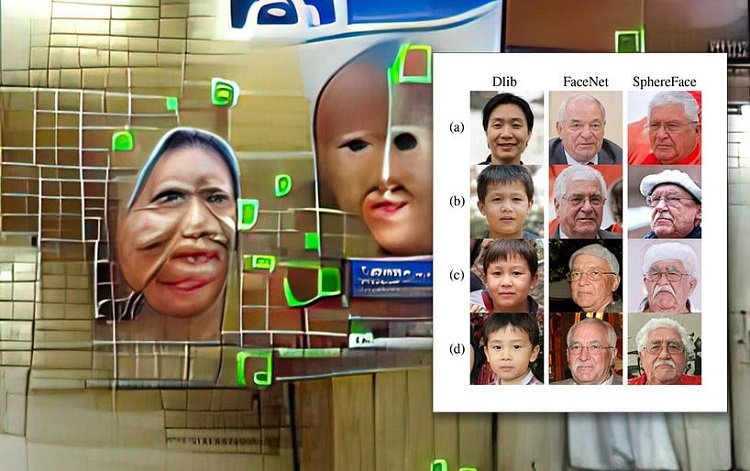
 Consecutive groups of "key persons" obtainedduring the survey using various coverage search methods, including LM-MA-ES. The Average Target Coverage (MSC) is indicated below each image.
The method of Israeli scientists allows you to applyopen sources as "models" for "substitution" of the overwhelming majority of people, without using closed databases. Under different conditions, scientists were able to achieve "positive" identification of more than 40% to 60% of faces using only 9 generated photographs.
 An Israeli system workflow in which the StyleGAN is used to iteratively search for “top persons”. Source: https://arxiv.org/pdf/2108.01077.pdf
The system uses the so-called. An "evolutionary algorithm" and a "neuropredictor" that estimates the likelihood of how much the current "candidate" will be better than the faces generated during previous attempts.
Read more
See how a black hole begins to destroy a star
New particle discovered at the Large Hadron Collider
NASA: the situation with the module "Science" is more serious than previously announced