The tiny Stentrode device reads brain activity using the jugular vein. It registers
Stentrode is intended for people with paralysisand it can be controlled with thought. Test participants used the device to create text messages and emails, as well as for online banking and shopping.
Analogue devices are usually implanted in the brain,however, this is not required for the Stentrode to operate. Instead, the technology's authors use blood vessels in the brain to gain access to the motor cortex. The motor cortex, also known as the motor cortex, is the area of the cerebral cortex responsible for planning, controlling and executing voluntary movements.
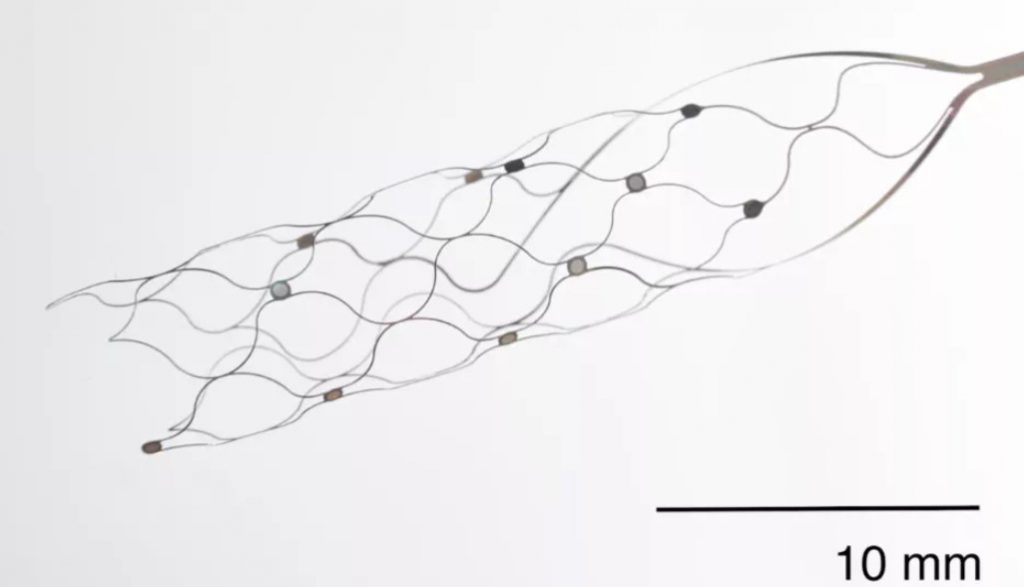 A brain activity recording device called a Stentrode sits inside a nearby blood vessel. Image courtesy of Synchron
Four people took part in the studymen of European descent with amyotrophic lateral sclerosis (ALS). This is a progressive disease that causes the death of nerve cells that control voluntary movements. All study participants had severe paralysis of the upper limbs and varying degrees of impairment of lung function and speech.
Each participant had a Stentrode placed in their uppersagittal sinus, a large vein that drains fluid from the brain to the jugular and is adjacent to the motor cortex. The device itself is made of mesh material with 16 electrodes. Doctors insert the device into the body using a catheter, and once it is in place, surgeons expand the mesh so that it fits snugly against the sinus walls. The wire runs from the electrodes to a small electronic device in the chest, which wirelessly transmits the brain signals recorded by the device to the computer.
Read more:
The strongest class X flare occurred on the Sun
Engineers figured out how to keep drones in the air "forever"
The secret of the durability of Roman concrete is revealed: it can be restored
</ p>