In the new work, scientists first obtained a “pattern” of the brain activity of zebra finches using
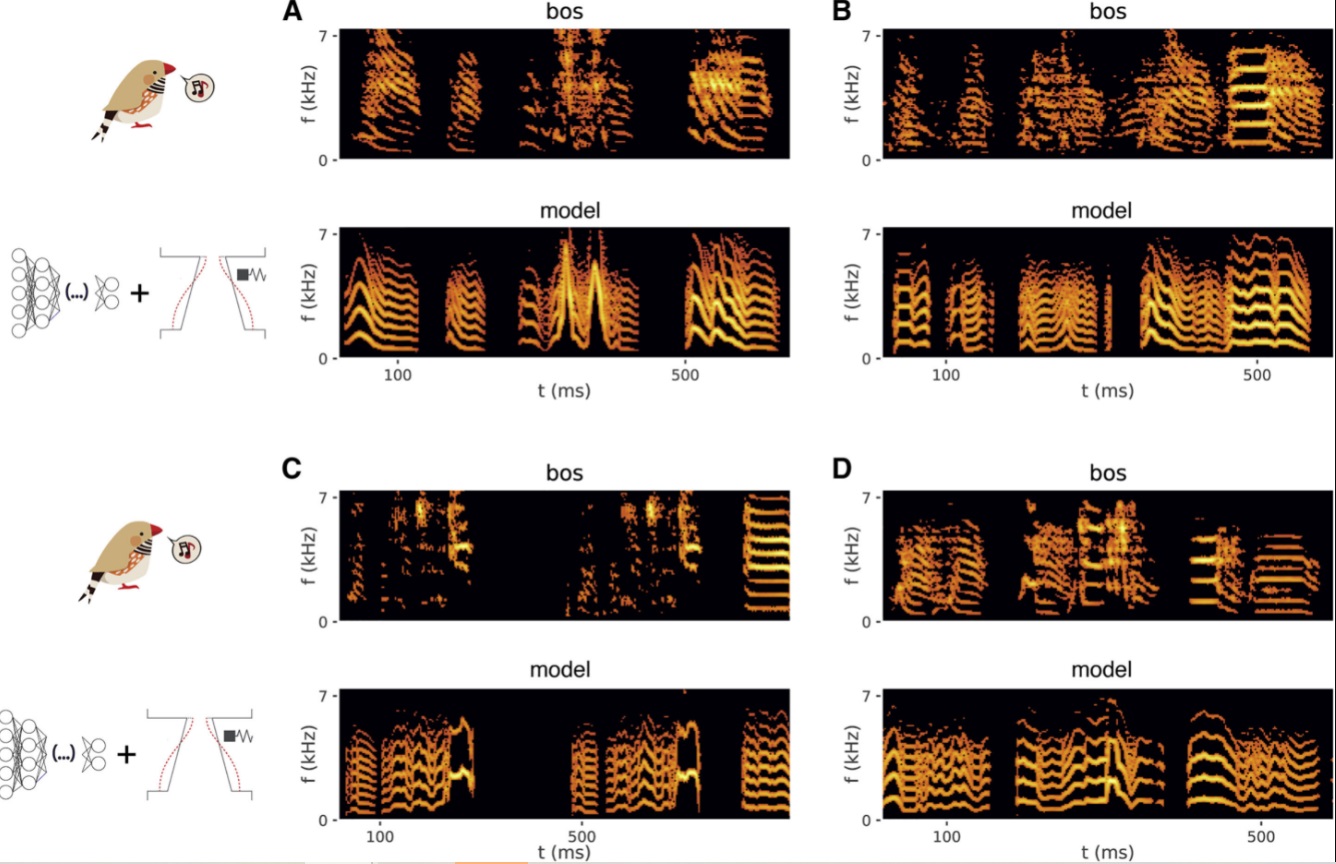
The authors loaded the brain activity data into a neural network - it broke the recorded bird songs into small patterns and connected them with the patterns of the birds' brain activity.
As a result, scientists literally read the bird's mindand reproduced them in the familiar trill. Moreover, the reproduction accuracy turned out to be very high - the device was able to recognize the smallest details of bird vocals, down to the pitch, timbre and volume of sounds.
If you need to model every nuance, everydetail of the underlying sound, the problem of reproduction becomes much more complicated. And with a simple view, the system can learn data - more reliable and suitable for a wider range of conditions and behavior.
Vikash Gilya, author of the work
The device cannot currently operate inin real time, because birds, when singing, constantly change the vocal pattern of their trills, adapting to the surrounding conditions. The authors plan to solve this problem and use a speech prosthesis for mute people in the future.
Read more:
Damage to the skin, brain and eyes: how COVID-19 enters human organs
It turned out that huge cosmic filaments in the Universe rotate like drills
Scientists have found out who is at risk of re-contracting COVID-19 and when