Environmental Control and Life
Water recovery system ensures cleanwater for use by astronauts through the reuse of urine, moisture condensation in the cabin from sweat, breathing and crew hygiene, and water obtained from the air recovery system. The urine treatment unit, which is part of the water recovery system, is designed to recover 85% of the water from the crew's urine. It has been significantly improved over the past year and is now restoring 87%. “This distillate is combined with condensate and treated with a Water Treatment Facility (WPA) that recovers 100% of the treated water,” explains Lane Carter, ISS Water Subsystem Manager in Marshall. "As a result, the overall water recovery is about 93.5%."
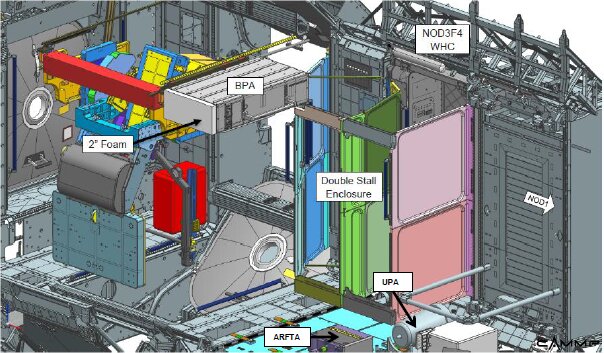 This chart shows how BPA fits into the water system. Credit: NASA
Astronaut crews on long exploration missions will need ECLSS systems to recover approximately 98% of the water they bring with them at the start of their voyages.
To leave low Earth orbit and provide long-term exploration far fromModern systems for regenerating water from urine usedistillation, resulting in the formation of a brine solution.This water-containing wastewater extracts the remaining water.
Caitlin Meyer, Deputy Project Manager for Life Support Systems at NASA's Johnson Space Center
Once installed in the Tranquility Station module, BPA will pump brinefrom the advanced recirculation filter unit to the double-diaphragm cylinder.selectively let water vapor into the atmosphere of the cabin.Pulled out of the air by another part of the water recovery system, the condensing heat exchanger.The heat exchanger will send the moisture back to the water treatment unit, where it will be converted back into drinking water.Used BPA cylinders will be removed and stored, and eventually discarded or returned to Earth for study.
“With this new processing devicebrine, we will extract additional water from the brine produced by the urine treatment device, so the overall water recovery is close to 98%, ”concludes Carter.
 This chart shows how BPA fits into the water system. Credit: NASA
The brine treatment system will eventually help provide long-duration crewed exploration missions and reduce the need to replenish water supplies from Earth.
Read more
Physicists have created an analogue of a black hole and confirmed Hawking's theory. Where it leads?
The first panorama of Mars appeared. It consists of 142 photos!
Abortion and science: what will happen to the children who will give birth