Researchers from the University of Toronto have identified a new genus and species of algae called Protocodium sinense. He
The fossil is over 541 million years old,discovered in China is the first and oldest green algae of this era to be preserved in three dimensions. Usually organisms and their parts, which do not absorb minerals, unlike shells or bones, require exceptional conditions for preservation. The ancient fossil survived only by replacing the original organic material with phosphate.
Scientists used electronic and X-raymicroscopy to virtually cut open the fossil. The study allowed us to examine the internal structure of the fossil and determine that it is a close relative of modern seaweeds from the genus Codium (Codium).
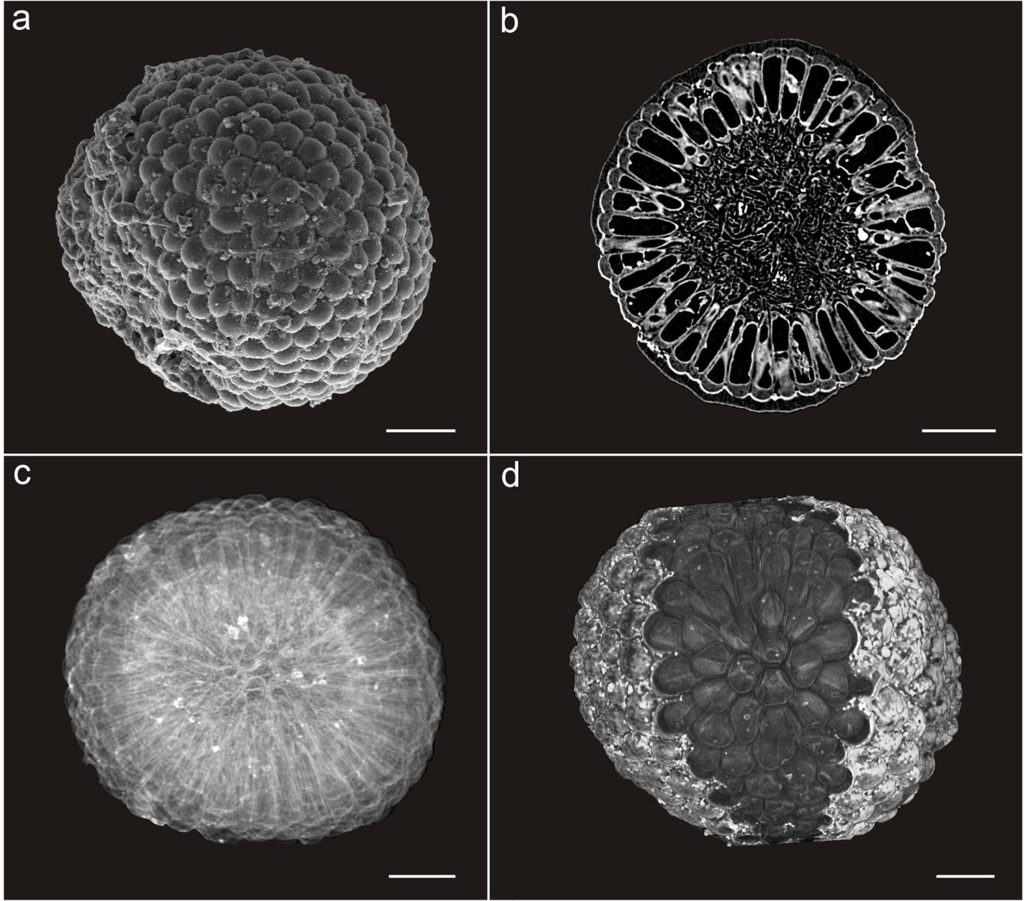 Pictures of Protocodium under a microscope. Image: Shu Chai et al., BMC Biology
Protocodium fossils aresmall spheres 0.5 m wide. They resemble large pollen grains covered with many small domes. Their surface is part of a complex single cell that contains thin filaments called siphons. This morphology is typical of some modern unicellular algae containing many nuclei, the scientists note.
Seaweeds and land plants havea common ancient ancestor, it was previously believed that it grew on Earth from one to one and a half billion years ago. But the fact that more than 500 million years ago, algae identical to modern ones already existed on the planet suggests that the separation between marine and terrestrial plants occurred even earlier, the authors of the study add.
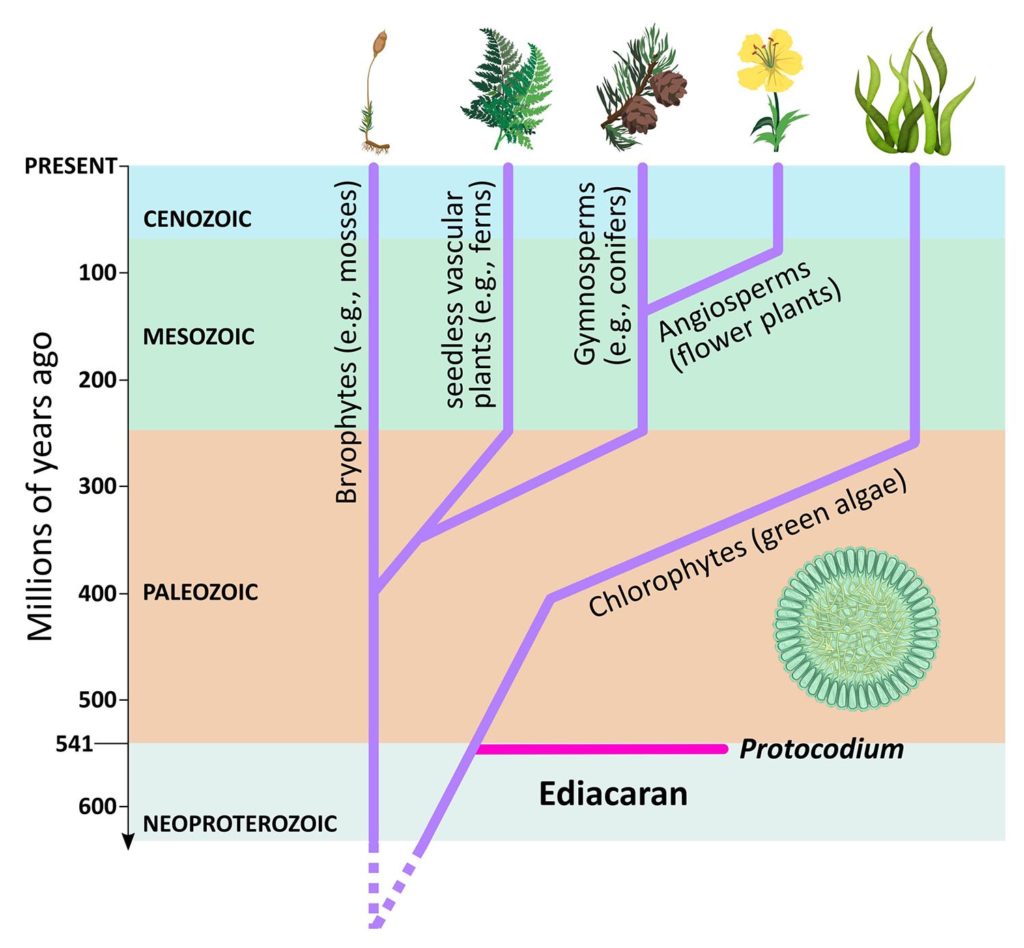 An evolutionary tree linking land and sea plants. Image: Cedric Aria, University of Toronto
Read more:
Mysterious 'blue goo' at the bottom of the sea baffles scientists
Developed generator for wind farms without expensive magnets
Look at a phenomenon that is simply impossible on Mars
On the cover: microscopic views of Protocodium surface (left) and internal structure (right). Image: Cedric Aria, University of Toronto