Analysis of a beaver ankle fossil found in Montana, USA, suggests that the evolution of river beavers occurred when
Study author: Jonathan Kaledeevolutionary biologist at Ohio State University. He took 15 measurements of the ankle fossil and compared them with measurements (more than 5,100 in total) of similar bones from 343 specimens of modern rodent species that burrow, jump and swim much like the beaver's ancient relatives.
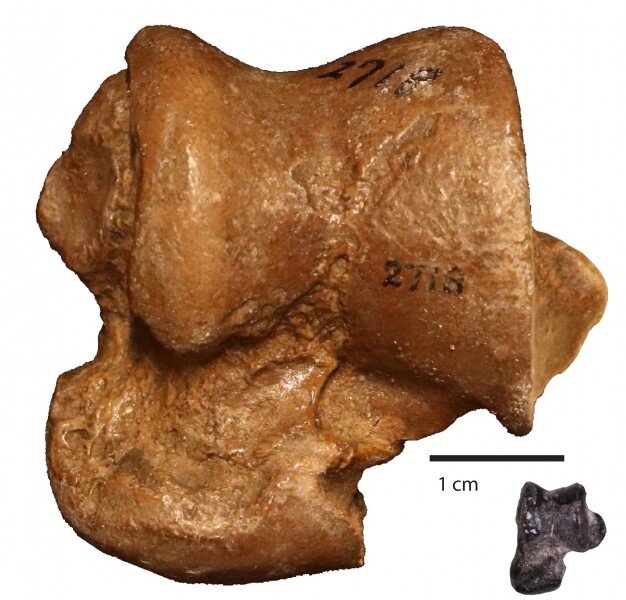 Comparison of the ankles of a giant beaver and the recently identified species Microtheriomys articulaquaticus at the same scale.
Photo: Jonathan Kalede
After performing a computational analysis of the data, the scientistdeveloped a new hypothesis for the evolution of amphibian beavers. The biologist suggested that they began to swim as a result of exaptation - the adaptation of the existing anatomy to external conditions, which in this case led to a new way of life. Fossils of fish and frogs, as well as the nature of the rocks in which Microtheriomys articulaquaticus was found, suggest that the species lived in an aquatic environment, and confirm the hypothesis.
In addition, the assessment showed that the age of the bonesfrom Montana is approximately 30 million years old. Before this, the oldest amphibian beaver was considered to be a species that lived on the territory of modern France 23 million years ago.
Read more:
The largest migration in the history of the Earth will affect all living organisms on the planet
Astrophotographers have collected a detailed photo of the Moon from 200 thousand images
Nearly half of cancer cases linked to preventable risk factors
</ p>