Using multispectral analysis, the researchers found that the Christian manuscript was written
Back in 2012, researchers from the CambridgeUniversity found on parchment stored in the monastery of St. Catherine, excerpts from the ancient Greek text, which was attributed to Eratosthenes, astronomer and chief librarian of the Library of Alexandria, the largest book depository of the ancient world.
Multispectral scanning of the document revealedon the parchment there are traces of an ancient text that was erased and over which a Christian treatise was written. Further research showed that the ancient text is a description of the stellar coordinates, length and width of the constellations. In this case, terminology characteristic of ancient Greek authors is used.
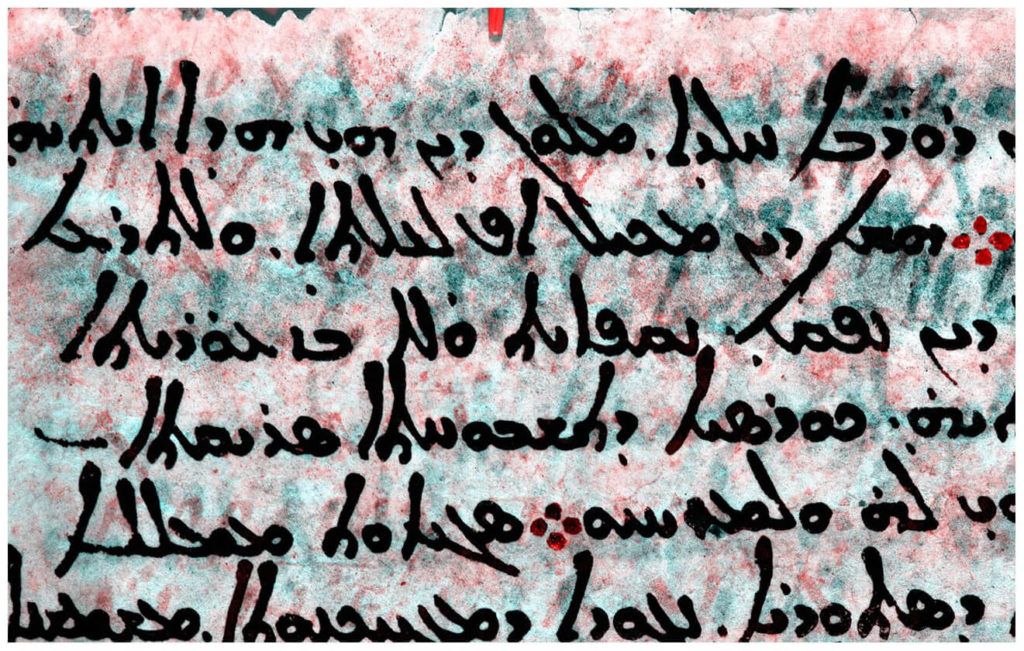
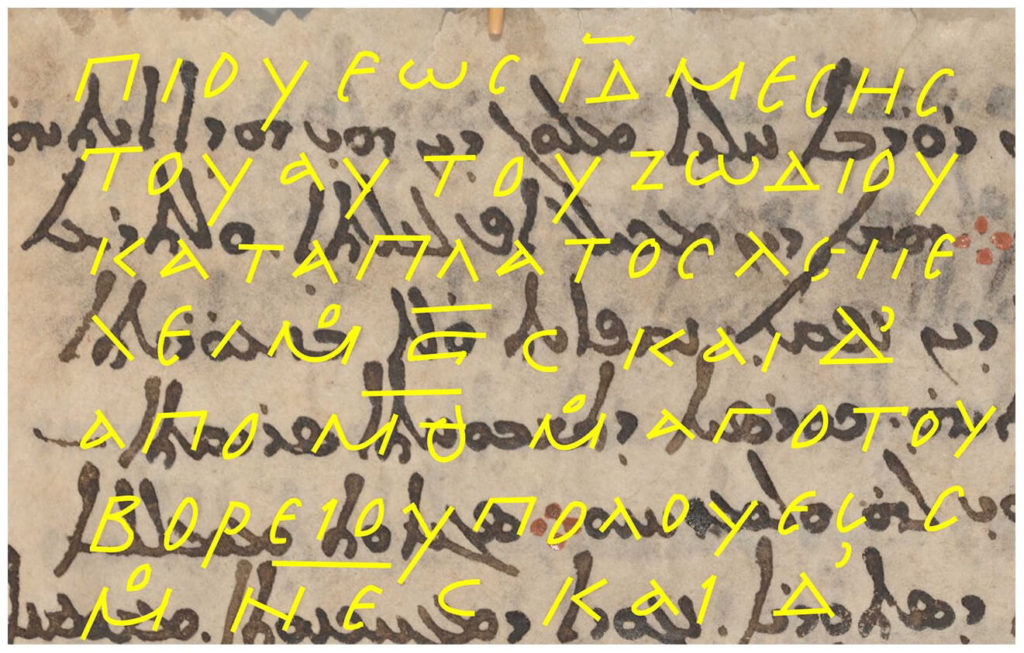
Traces of an ancient manuscript (left) and a reconstructed image of an ancient Greek text (right). Image: Victor Gysembergh et al., Journal for the History of Astronomy
Analyzing the precession of the Earth (changing the axisrotation with time), scientists came to the conclusion that the coordinates indicated in the treatise correspond to the position of the stars around 129 BC. Scholars cannot confirm Hipparchus' authorship, but it is known that the Greek astronomer worked on a star catalog of the sky of the Western world between 162 and 127 BC.
It is believed that Hipparchus, who is most famousas the founder of trigonometry, created the first detailed description of the starry sky. Although the original manuscript has been lost, references to it have survived in later texts.
Read more:
NASA revealed the origin of Haumea - the most mysterious planet in the solar system
Living organisms have made Mars uninhabitable
The liver can work for more than 100 years: scientists told how this is possible