A group of researchers from Germany and Great Britain discovered the DNA of the plague bacterium Yersinia pestis, which caused Black Death.
Plague first hit the Mediterranean in 1347year through merchant ships transporting goods from the territories of the Golden Horde to the Black Sea, scientists explain. The disease quickly spread throughout Europe, killing up to 60% of the population. This outbreak, dubbed the Black Death, was the second known plague pandemic. The pandemic peaked between 1346 and 1353, but repeated outbreaks continued until the 19th century.
Despite the widespread spread of the disease,and the widespread demographic and economic impact of the pandemic, its origins have long remained unclear. The most popular version was that the disease originated in East Asia, probably from China.
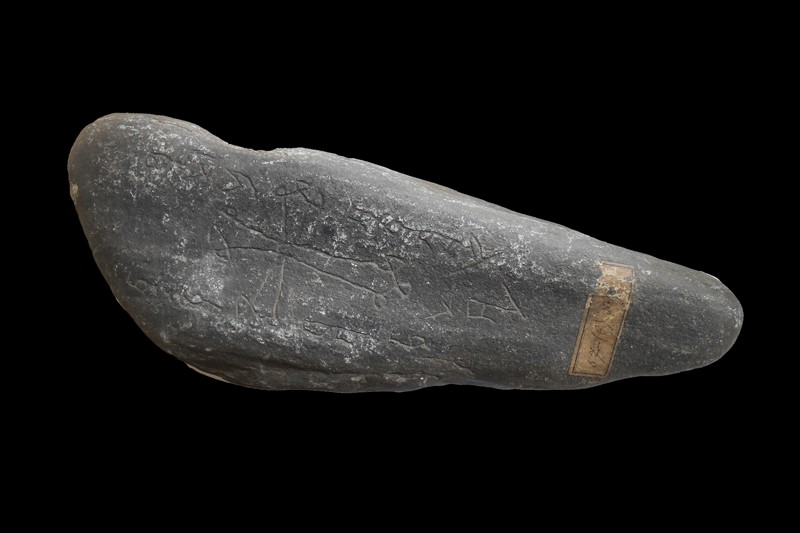 Gravestone of a man who died from the Black Death at the Kara-Dzhigach cemetery in present-day Kyrgyzstan. Source: P.-G. Borbone, M. A. Spyrou et al./Nature
At the same time, archaeological researchnear Lake Issyk-Kul, located on the territory of Kyrgyzstan, showed that the local trading community in 1338 and 1339 suffered from an epidemic similar to the Black Death. For example, excavations carried out some 140 years ago unearthed tombstones indicating that the inhabitants were dying from an unknown epidemic or "plague".
 Plague inscription from the Chu Valley region in Kyrgyzstan.The inscription is translated as follows: “In the Year 1649 [= 1338 AD], and it was the Year of the Tiger, in Turkic Bars. This is the tomb of the believer Sanmak. [He] died of the plague." Image: A. S. Leybin, August 1886
In his study, the results of whichpublished in the journal Nature, scientists confirmed that the epidemic indicated on the tombstones was indeed caused by the plague. Researchers analyzed ancient human remains found in these burials and discovered DNA from the bacterium Yersinia pestis.
Researchers note that the beginning of the Black Deathassociated with the massive diversification of plague strains, the so-called “Big Bang” event. In their work, scientists showed that two reconstructed genomes of the plague bacterium found in Kyrgyzstan are the closest common ancestor of all strains formed as a result of diversification.
We found that ancient strains from Kyrgyzstanlocated exactly at the node of this large-scale diversification event. In other words, we have found the original strain of the Black Death and even know its exact date.
Maria Spirow, researcher at the University of Tübingen and co-author of the paper
In addition, scientists have found that modernthe strains most closely related to the ancient one are found in plague reservoirs around the Tien Shan mountains, very close to where the ancient strain was found. This discovery confirms the local origin of the ancient ancestor that caused the Black Death.
Read more
The Japanese dumped a giant turbine into the ocean to get endless energy from the current.
Astronomers from Japan have found an unknown structure in the galaxy
Researchers filmed a 'hidden' ecosystem in an Antarctic river