Researchers from the Royal Melbourne Institute of Technology (RMIT) have upgraded the technology
Electrode materials used in electrolysis,suffer from the accumulation of gaseous hydrogen and oxygen. They form a gas layer that reduces the activity of the electrodes and their performance, the scientists explain. In their work, the engineers used high-frequency vibrations to suppress the formation of bubbles on the electrodes and quickly remove them.
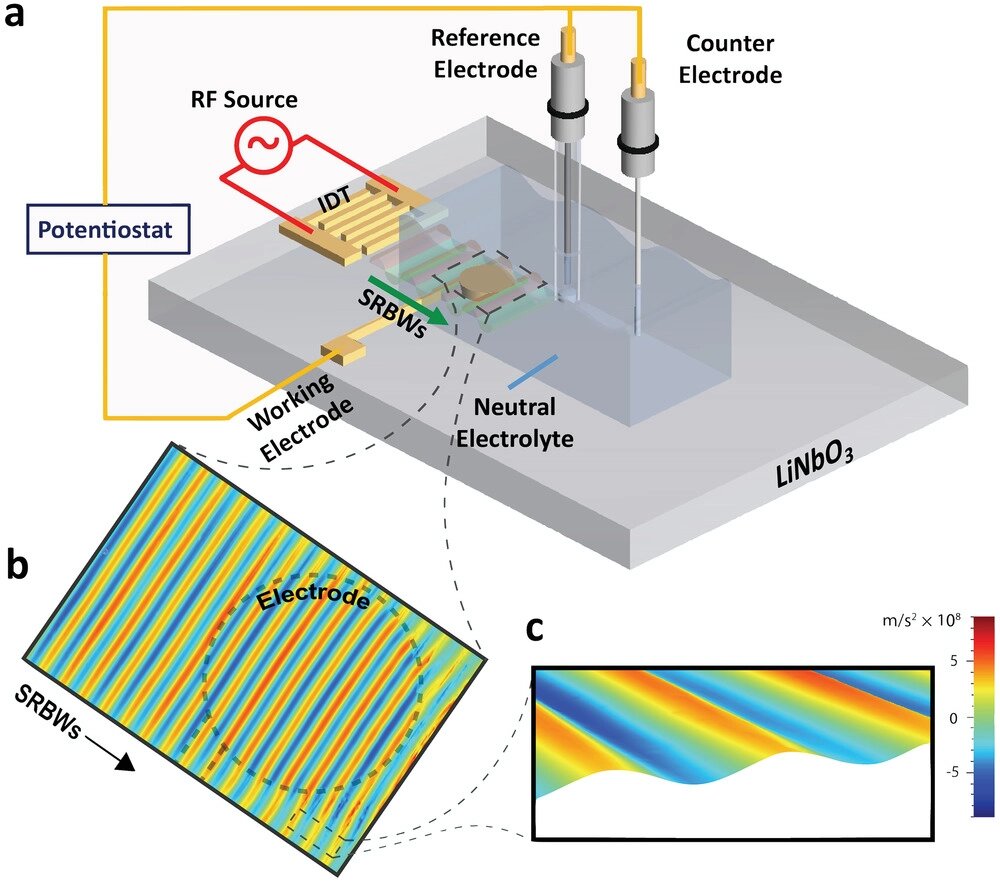 Scheme of installation for electrolysis. Image: Yemima Ehrnst et al., Advanced Energy Materials
The researchers also note that whenUsing acoustic exposure, you can abandon expensive electrode materials such as platinum or iridium and replace them with cheaper silver. This significantly reduces the cost of producing green fuel, the authors add.
In a series of experiments, the engineers showed thatthe use of new technology increases the electrical power of electrolysis by 14 times compared to the traditional approach. At the same time, energy costs for production are reduced by 27%.
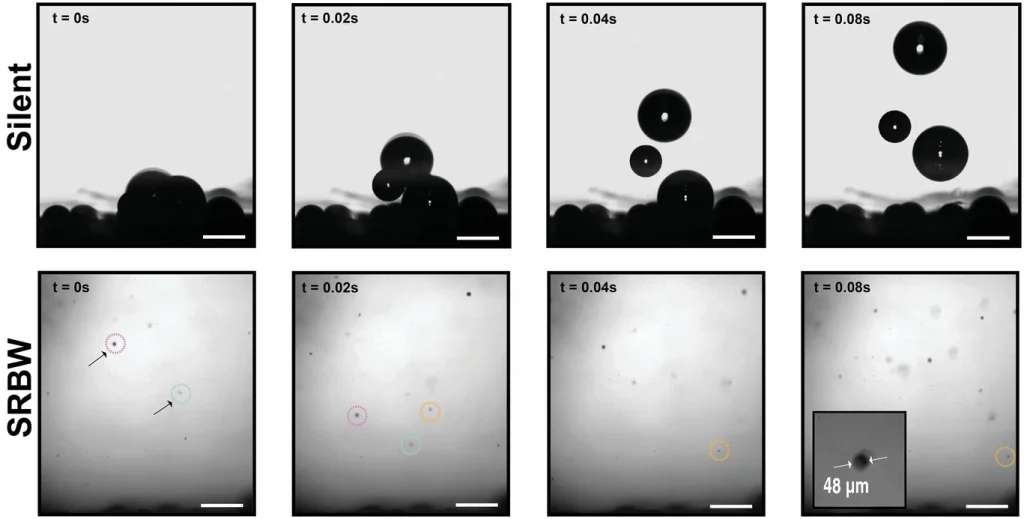 Bubble formation on electrodes in conventional electrolysis (top) and when using acoustic waves (bottom). Image: Yemima Ehrnst et al., Advanced Energy Materials
The researchers believe that the new technologycreates an opportunity for the production of cheap and environmentally friendly hydrogen fuel. The scientists are now working on integrating their acoustic system with existing commercial electrolysis instruments on the market.
Read more:
Scientists from the permafrost zone: how they develop smart clothes and a cancer vaccine
Scientists "cheated" time and sent a photon into the past: how this breakthrough will change physics
10 scientific facts that turned out to be fakes. Cards