The researchers compiled a database of 200 million protein structures. They achieved this with the help of the AlphaFold program,
Paradox proteins
Proteins are the building blocks of life.They are produced by a variety of organisms, from bacteria to plants and animals, and when they are produced, they fold together in milliseconds. Formed from chains of amino acids folded into complex shapes, their three-dimensional structure largely determines their function. Once you figure out how a protein folds, you can understand how it works and change its behavior.
Although DNA provides instructions for creatingchains of amino acids, predicting how they interact to form a three-dimensional shape has been very difficult. Until recently, scientists had deciphered only a fraction of the 200 million proteins known to science. The problem is that their structure is so complex that trying to guess what form they will take is almost impossible.
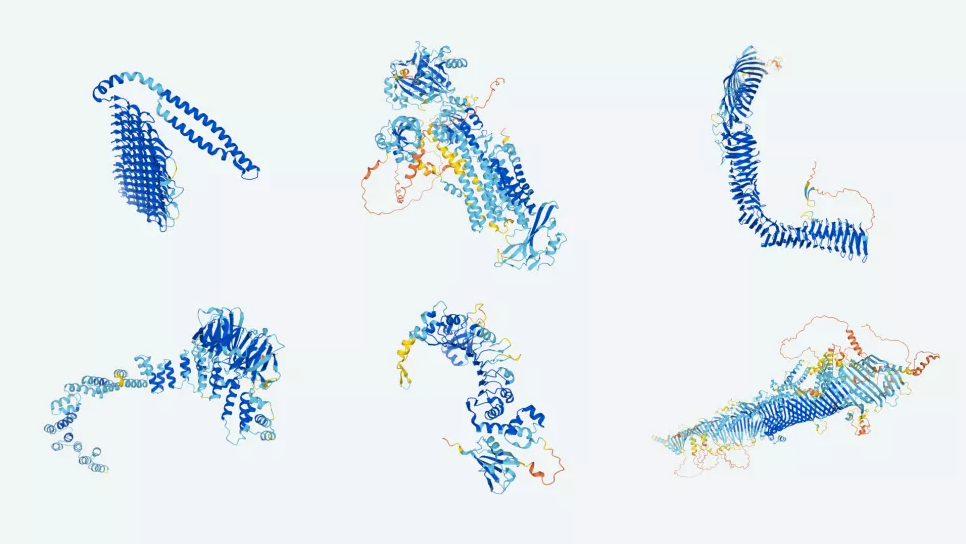 AlphaFold by DeepMind has created 3D images of protein structures. Image courtesy of DeepMind
Cyrus Levinthal, American molecularbiologist, wrote in a 1969 paper about the paradox: despite the enormous number of possible configurations, proteins fold quickly and accurately. Moreover, each protein can take from 10^300 possible final forms.
Thus, Levinthal wrote, if one tried to find the correct form of a protein by trying each configuration one after the other, it would take longer than the universe existed.
Attempts of scientists
Scientists have ways to visualize proteinsand analyze their structure, but this is too slow and difficult work. According to the journal Nature, X-ray crystallography is most often used to image proteins. In this method, X-rays are aimed at solid protein crystals and measured how they refract. The goal is to determine how the protein is structured. According to DeepMind, this experimental work has determined the shape of about 190,000 proteins.
New method
In November 2020, the DeepMind group engaged inartificial intelligence, announced the development of a program called AlphaFold that can quickly predict this information using an algorithm. Since then, he has been studying the genetic codes of every organism whose genome has been sequenced and predicting the structures of the hundreds of millions of proteins they together contain.
AlphaFold works by accumulating knowledgeabout amino acid sequences and interactions, trying to interpret protein structures. As a result, the algorithm learned to predict the shapes of proteins in a matter of minutes with accuracy down to the atomic level.
Last year DeepMind publishedThe open protein structure database contains 20 species, including almost all 20,000 proteins expressed by humans. He has now completed the work and released predicted structures for more than 200 million proteins.
How is the technology applied?
Researchers are already using the fruits of their laborAlphaFold. According to The Guardian, the program allowed scientists to definitively characterize a key protein in the malaria parasite that had not been amenable to X-ray crystallography. This will ultimately improve the vaccine against the disease.
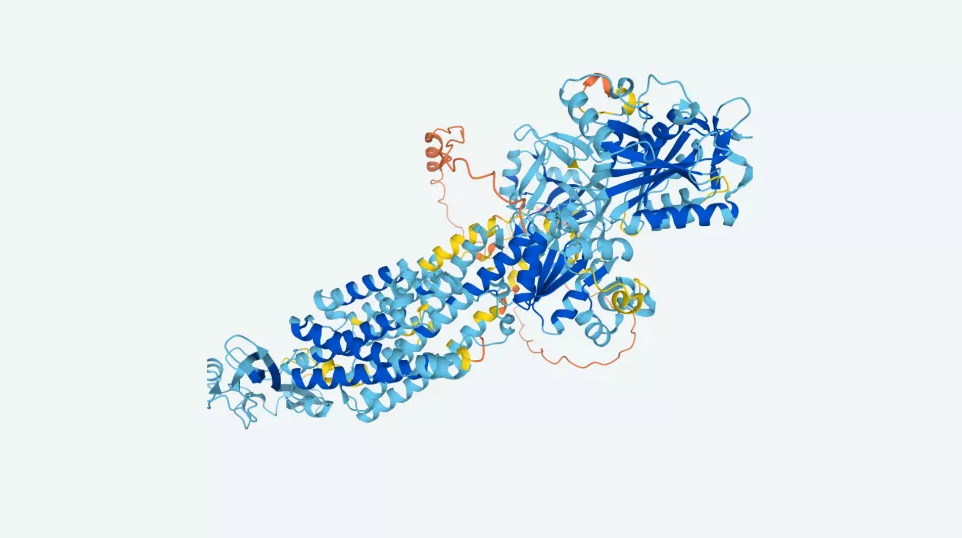 3D image of malaria protein. Image courtesy of Deepmind
Honeybee researcher Wilde Leipartfrom the Norwegian University of Life Sciences used AlphaFold to reveal the structure of vitellogenin. It is a reproductive and immune protein that is produced by all egg-laying animals. The discovery will help develop new ways to protect, for example, honey bees and fish from diseases. This is important, because these animals are important for feeding humanity.
The program also informs about the search for newpharmaceuticals, Rosana Kapeller, CEO of ROME Therapeutics, said in a DeepMind statement. “AlphaFold's speed and precision accelerate the drug development process. We are just beginning to understand its impact on the development of pharmaceuticals,” she concluded.
Also AlphaFold models are also used by scientistsfrom the University of Portsmouth's Center for Enzyme Innovation to identify enzymes from the natural world that can be tailored to process plastics.
Read more:
Soon a solar storm will hit the Earth: the material flies at a speed of 800 km / s
Scientists filmed a strange creature with tentacles, which they mistook for a flower
Russia leaves the ISS: what will happen now and why the maintenance of the station is under threat