The future of warfare now depends less on the battlefield and more on what can attack it.
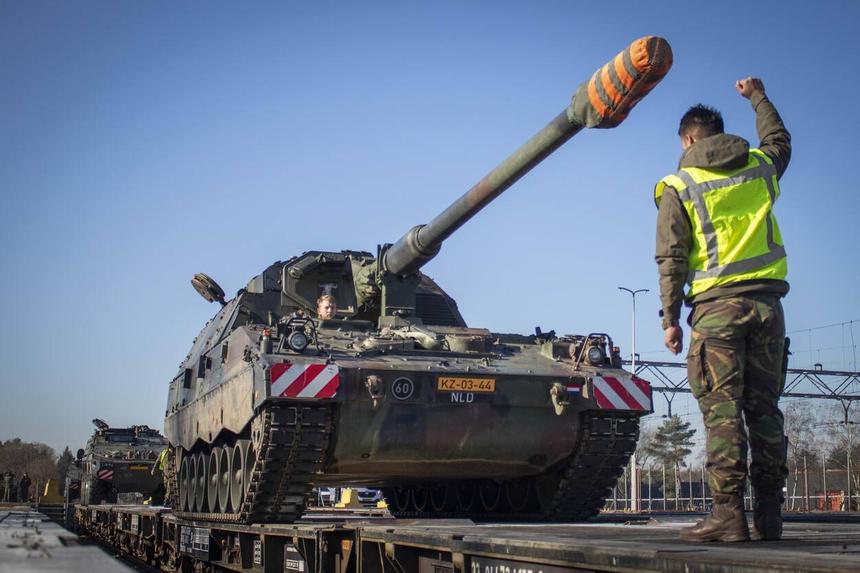
Table of contents
- Dependence on supply is stronger than it seems
- Where will they strike?
- Railway resources
- Are Russian troops capable of blocking the transit of weapons for Ukraine
Soon, NATO equipment will make up from a quarter to a half of Ukraine's heavy weapons (depending on where and what), while we do not forget about the supply of various Soviet-era junk from storage bases.
And while in the Donbass the situation is more and more similar tostalemate (it's, guys, like... well, a draw in the end), more and more attention is riveted to what can dramatically change this stalemate. A lot is written about new deliveries, including us, but they are expanding so much, and at the same time you are reading less and less about them, which, you know, well, let them go, as the lads say.
Read also
Because the latest self-propelled guns, Javelins, Bayraktars (andtanks and aircraft will go further) - this is all good of course ... if it came to the front. Accordingly, in addition to the south and east of Ukraine, we get a third front, in its western part - a transport one.
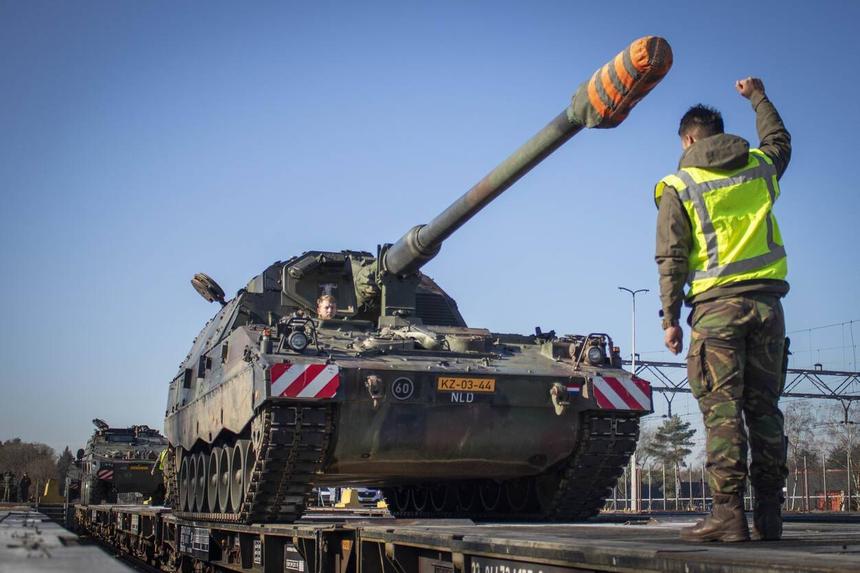
German self-propelled guns PzH 2000
Dependence on supply is stronger than it seems
In fact, Ukraine depended on supplies even up tothe outbreak of hostilities in February - all these years the only ammunition plant was located in Luhansk, which since 2014 has become the center of the LPR. As a result, there was no place in the country to produce ammunition for the entire line of small arms from 5.45 to 14.5 mm caliber. Not to mention artillery - shells have not been produced anywhere in the entire history of Ukrainian independence and they only used what was in warehouses.
Since 2015, the issue has been resolved, and, as usualhappens - not decided. They tried to connect the Shostka plant in Sumy (one of the centers of the chemical industry of the USSR, they also made the film Svem), the only one that could produce ammunition (more precisely, elements - fuses, detonators, etc.). No luck - we need new production lines and specialists, especially in connection with the transition to new capsule standards. And, of course, there is no money.
Therefore, almost all ammunition was imported to Ukrainemainly from Bulgaria, Serbia and the Czech Republic. That is, without supplies, the Armed Forces of Ukraine will not be able to use even Soviet-style weapons. From here, at the beginning of the year, those videos appeared, over which so much was “burned out” on the Internet, when they simulated shooting with their voice during the exercises - in the run-up to the events they tried not to waste the most valuable resource.
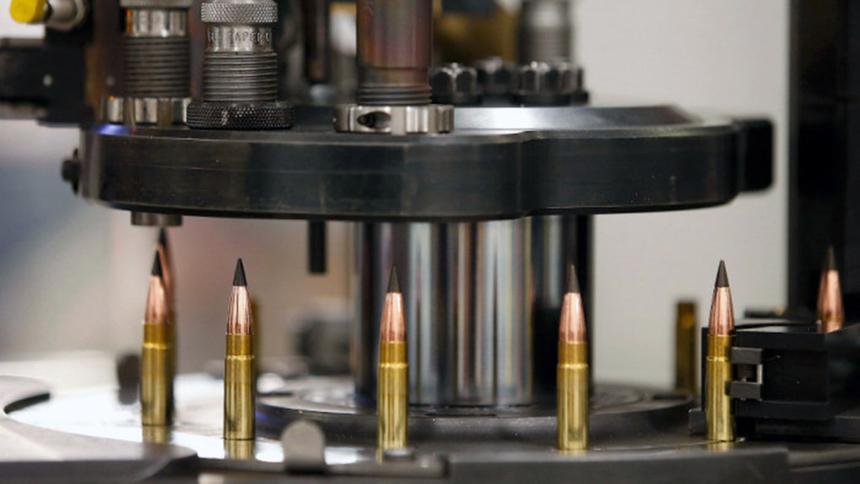
By the way, the United States was actively looking for a country last yearto accommodate the production of Soviet-style cartridges there. Coincidence? - I don't think. A significant part of NATO countries continues to use Soviet calibers and it was important to move production for them outside the alliance zone.
Consequently, the blocking of transit is a blow that the Armed Forces of Ukraine cannot survive in any way, and the situation is developing in such a way that it cannot be realized in any other way.
Where will they strike?
Good question, they probably break it in the General Staffhead over him. It is obvious that the latest strikes in the areas of Lviv and the Dnieper were aimed at blocking transit. In the first case, these are substations for supplying electricity to railway lines, in the second, a bridge across the Dnieper.
The moment of impact on the Amur bridge in the Dnieper
But broken substations do not preclude the usediesel locomotives - diesel-electric locomotives, where the energy for running is obtained in the tractor's power plant itself. Breaking bridges like the Dnieper bridge is quite difficult. Strikes with high-precision cruise or operational-tactical missiles at long distances are difficult to implement - the supports are too massive and can withstand even a heavy warhead, moreover, it is too thin a target, high-precision weapons are not so highly accurate, there are deviations in the region of a meter even with “Daggers”.
In addition, the abundance of external structures canserve as an analogue of shielded protection - therefore, the last blow on the Amur Bridge, and this is the most important artery for the supply of military cargo to the Donbass group, turned out to be nothing - a powerful explosion led to minor damage, the bridge is still functioning.
Of course, for such a design, one rocket is not enough.Serious shelling is needed here, and it would be better if an air strike coped with this, but, presumably, the crossing is well protected by air defense, so only cruise missiles can approach it. And the Amur Bridge is not the last railway bridge across the Dnieper. And, finally, small things (NLAW, Javelin, Stingers and ammunition) can be transported by guided pontoons.
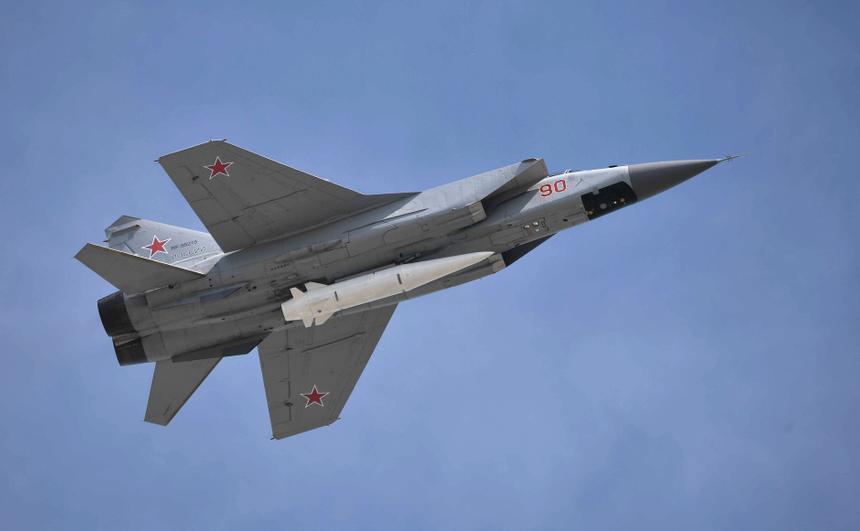
MiG-31 interceptor converted to carry Kinzhal missiles
Another thing is the new delivered self-propelled guns, masssome greatly exceed 50 tons, there is no way to deliver them otherwise than by rail. Therefore, in the event of the loss of all powerful bridges, it will become very difficult for Ukraine to accumulate a grouping of the latest (and relatively new) NATO weapons. Its accumulation directly affects the prospects for a Ukrainian counteroffensive.
Therefore, as you understand, strikes on transport communications are the most important task in the entire special operation today.
Railway resources
It turned out intricately, but, in general, we are talking about the parklocomotives. Substations are a blow to electric locomotives, whose power plants depend on current from wires. The diesel locomotive is equipped with a diesel generator, and now this type of traction stock is a priority, because electrical substations are too vulnerable a target.
Diesel locomotives depend only on the rail track and unloading stations. Attacks on them are not so critical, since the same canvas can be quickly repaired - this will only delay deliveries.
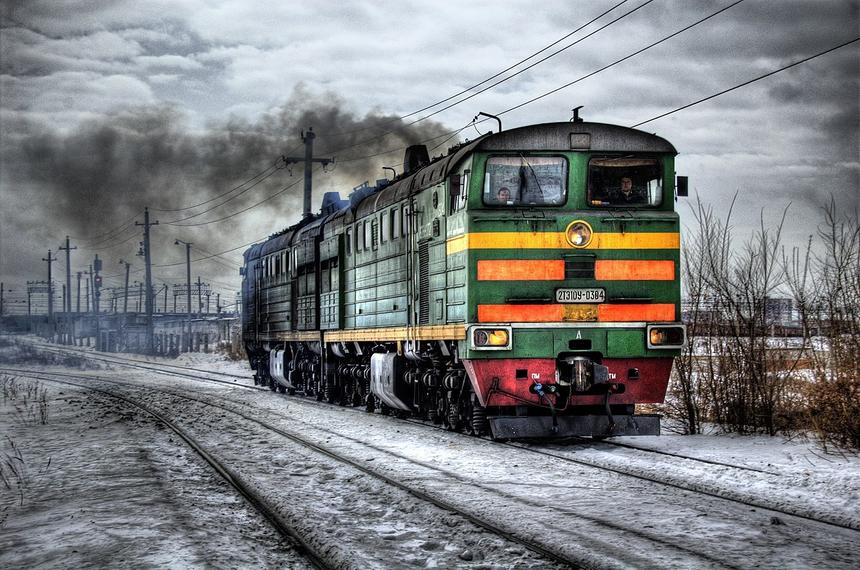
Main diesel locomotive TE10M
Ukrzaliznytsia had a fleet of 2101 locomotives,of which about 60% were on track by 2022. Of these, there were 607 freight diesel locomotives, but 202 remained on the move, and several more were in reserve or under long-term overhaul. But even those that are on the move have about 90% wear. At the same time, Ukraine also needs the supply of civilian cargo, and the economy is functioning - they still carry goods and raw materials.
So you should see if there will be in supplieslend-lease locomotives. Due to the fact that this is not an environmentally friendly transport, the Europeans refused them, so you can dig out a lot in storage - just convert them to a different gauge.
Why is rail shipments the most important?Yes, because the volume of cargo per trip from them is the largest. Transport aviation is too expensive, you can’t deliver much per flight, and it’s too vulnerable - an object in the air is too well visible to the radar, which cannot be said about ground objects. Freight transport on ordinary roads is an alternative, yes, but there is a catch. The same conditional Abrams needs a tractor, since under its own power it moves only in the combat zone, performing tasks.
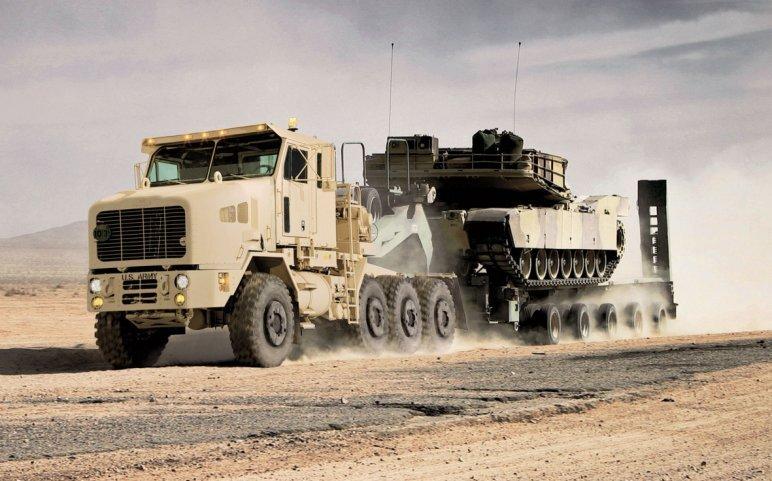
One tractor - one tank, or one infantry fighting vehicle, or oneACS. It's one thing to transport a battalion for exercises (58 tanks), and even then - imagine such a caravan. And when it comes to hundreds of cars every month, there’s no way without a railway, especially as long as sea deliveries are almost cut off.
Are Russian troops capable of blocking the transit of weapons for Ukraine
This is a highly debatable issue.Firstly, the last strikes were delivered by Onyx missiles, for coastal complexes. These missiles are intended for surface ships, but, in principle, nothing prevents them from being used against ground targets. But why the more specialized Iskanders or Calibers were not used is an open question.
Operate in western Ukraine with aviation clearlyinterferes with air defense - it is unlikely to pass through it, all the more so, Ukraine has already received S-300 from Eastern Europe, and during the strikes of the first days, obviously a lot survived.
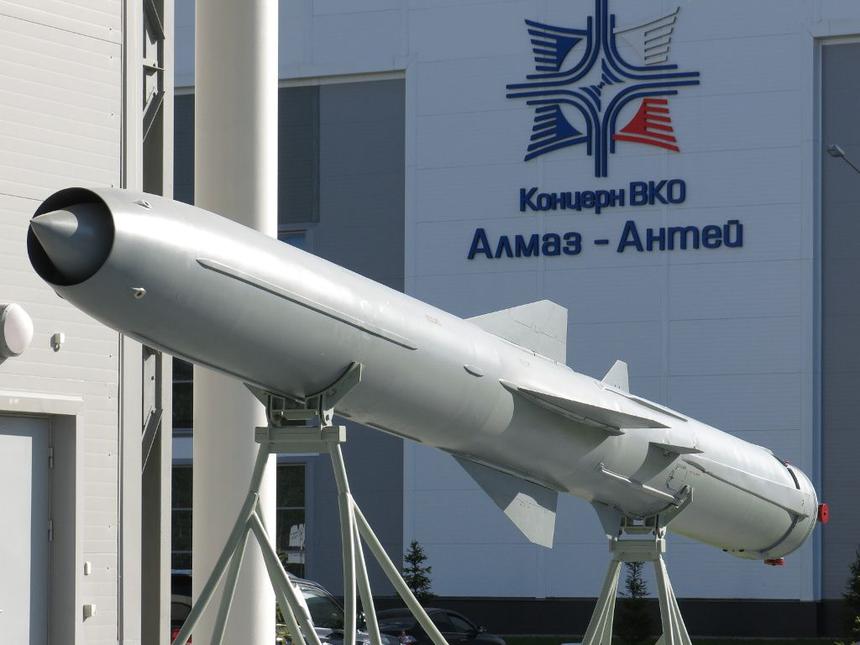
Onyx
But the critical issue clearly remains methods - formissiles need targets, and what are these targets to take like this and block almost all transit? Obviously, bridges remain, but if they are destroyed on the Dnieper, this means that even in the best scenario for the Russian troops, it is impossible to advance further than the Dnieper, because these bridges will be needed in the future by Russian troops.
And this, not to mention the humanitarian crisis - in addition to the troops, millions of civilians are being supplied, who, under such a scenario, will be left without food and medicine.