What is the reason for the breakthrough of the APU? What tactics help the Ukrainians, and who invented it. Discuss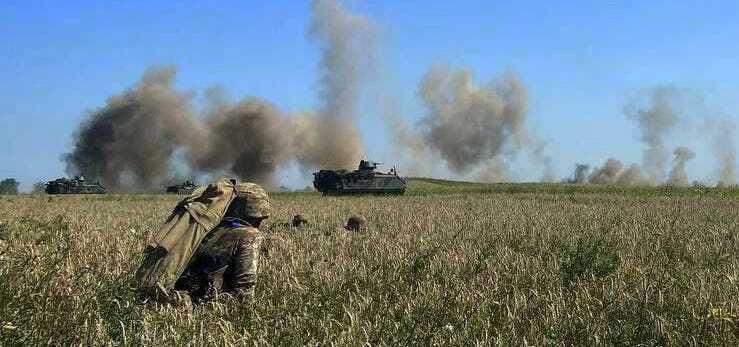
Table of contents
- What
this is a raid
- Examples of raid operations
- Raid, direct action, Infiltration tactics, Hit-and-run tactics
- Raid in modern wars
- What is there in Ukraine?
Reading about modern armies, new methodsthe use of armed forces, you are increasingly running into such a term as "raid" or "raid actions". It’s not that it was something new, but you must admit that before it was not so hackneyed among the armchair military and other analytics.
In connection with the latest events, you know where, the word raid has become even more popular, so we will not be lazy and dedicate a separate article to this - apparently, it's time.
We will also touch on Ukraine at the end, so do notthink that we sewed it into the headline for a red word and off topic. It's just that once you're familiar with the origins, it becomes a little clearer what's going on in the last days.
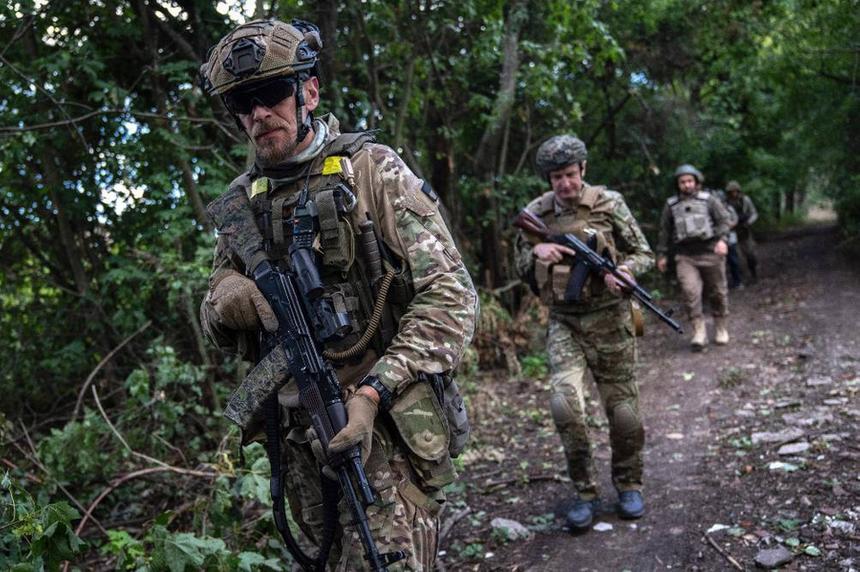
Special Forces of the Armed Forces of Ukraine
What is a raid
As you may have noticed from the media and other briefings,the concept of "raid" today is tightly associated with the concept of "sabotage" or "offensive", sometimes to the point of complete confusion. There is no gross mistake in this, but the very essence of distinguishing a raid as a special type of warfare is lost.
And this type of military action itself is not completely new - sometimes even whole wars were fought in raids:
-
Mongol and Arab conquests
-
Protracted wars of medieval Europe - the ruin of settlements as an undermining of the economic base of the enemy
-
Light cavalry in the wars of modern times: all these hussars and other Cossacks. Rear raid is one of their main profiles.
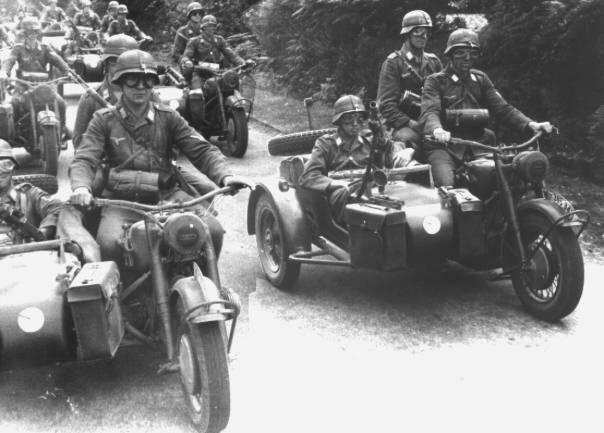
The masses of motorcyclists are one of the symbols of the German Blitzkrieg, but the most incomprehensible. It will soon become clearer why they were needed
Summarizing the experience of the twentieth century with the new technical base of the war, we can formulate most clearly:
Raid - highly mobile, rapid action onterritory controlled by the enemy, usually at a tactical depth, in order to disrupt the functioning of rear and headquarters structures, destroy important facilities and communications, sow panic and confusion in his ranks. The last words will be perhaps the most important next.
Raid differs from sabotageI swing:it is typically carried out by a large group of several hundred or even thousands of people, often with a wide range of different combat vehicles. The target of the raid are multiple objects scattered over a large area, and sometimes the targets can be just variable when the main goal is disturbing actions.
Raid differs from offensive actionsthat the offensive presupposes displacementthe enemy from large territories, the encirclement and defeat of large groups, it involves large tactical and operational forces (divisions, corps, armies). The raid is often an integral part of the offensive, but it can also be used defensively, and even in a positional stalemate.
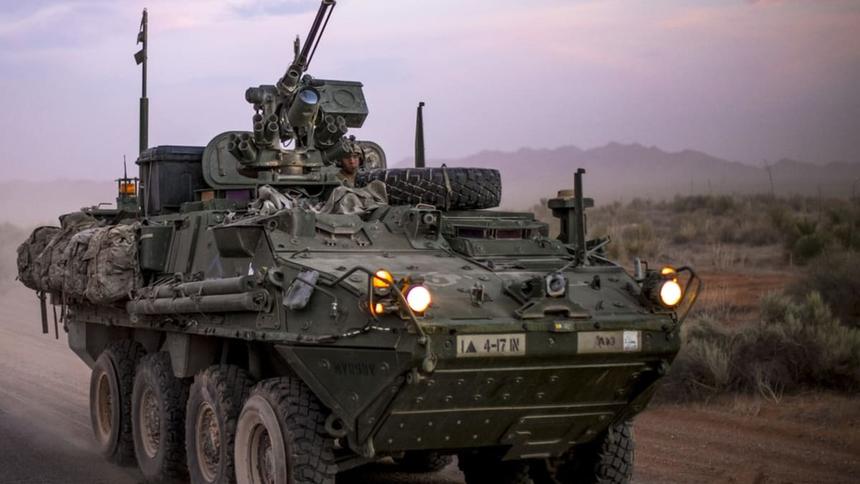
"Heavy" light armored vehicles are an important component of raid operations
The raid does not necessarily set the task of capturing and holding territories; often its end is associated with the return of the raid group to the order of its own troops.
That is, we can define it as somethingmiddle ground between sabotage and offensive. In a fight, this can be described as a "dirty move" - something like a blow to the stomach. The rapidity of the raid involves a very light technique: it is more difficult for the enemy to take action against this, since it is often impossible to understand exactly where the enemy is and what he wants, due to strong dispersion and fast movements.
Examples of raid operations
In the global meaning of the definition of a raidvary, hence the frequent confusion with the actions of partisans and irregular formations, as well as major sabotage. There are many examples, but here are the most significant ones:
- Cavalry raids in the "Battle for Moscow" in 1941- Generals Belov, Dovator and Pliev are generally straightforwardassociated with this form of warfare. First, they organized a narrow breakthrough in a weak point of the German defense, and then the cavalry corps, like medicine from a syringe, crawled into the depths of the enemy’s formations.
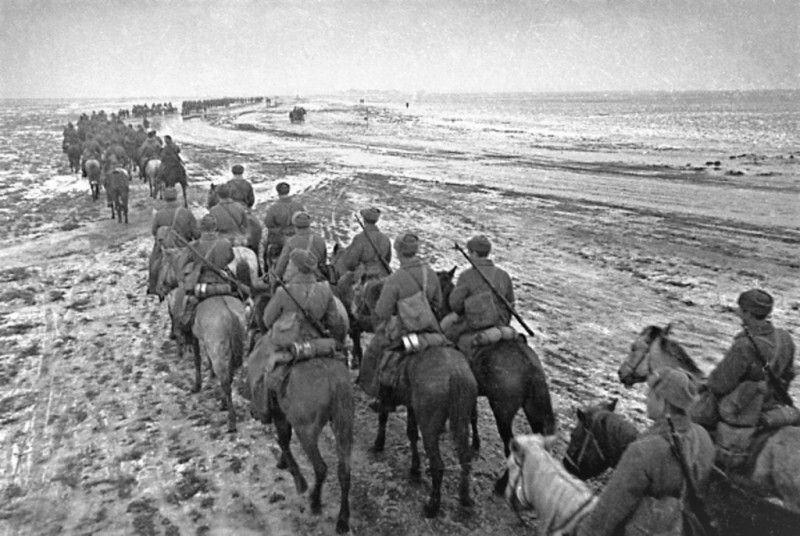
The cavalry of the Red Army was not such a useless branch of the army, as some believe
The formal tasks included the defeat of headquarters,warehouses, communication centers, undermining the railway track. But the general task was to bring confusion - the headquarters received scattered information about the actions of the Russians in the rear. What's this? Offensive? If the Russians are so deep, then the front is broken through? What are their tasks, where to throw reserves to stop a breakthrough?
And there is nothing to say about ordinary soldiers -panic begins, because the rear does not have serious weapons. Often this is a conscription contingent of "not the first category", limited fit or elderly soldiers with mediocre combat training, or with a non-combat specialty - security, signalmen, repairmen, staff, drivers and just builders or "loaders". And now, right now, a crowd of evil Cossacks can suddenly run into them.
- Allied raids in World War II- the British, developing the ideas of special forces and airborne forces, created unitscommandos, from the memory of the Anglo-Boer War (commando -Boer raiding parties). Combining small naval and airborne assault forces, they raided German infrastructure facilities in all theaters of operations - France, Norway, the Netherlands.
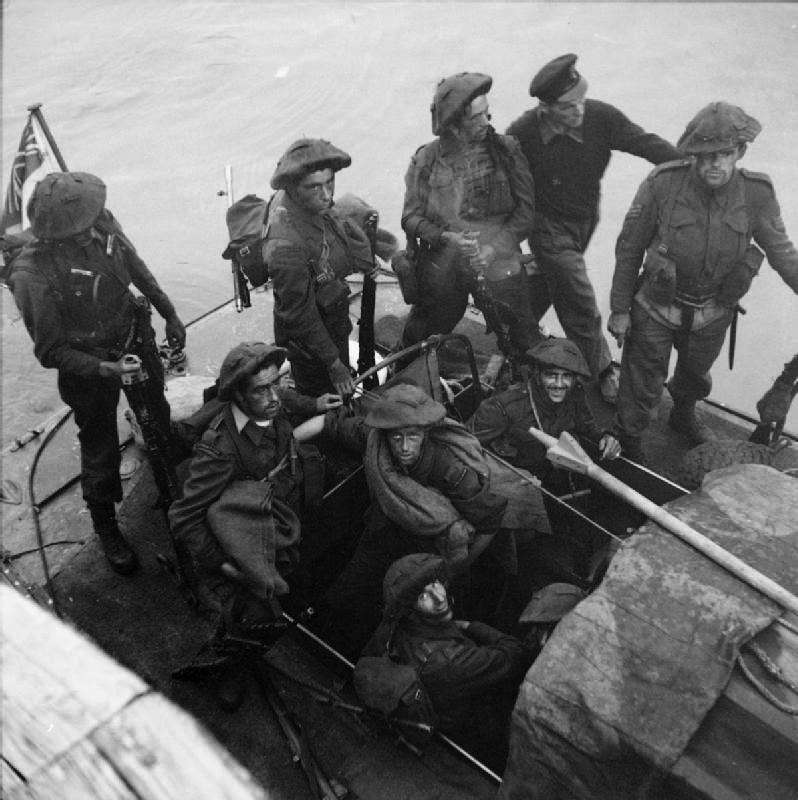
Commandos before a raid in northern France, summer 1944
Blowing up radar stations, fuel depots, destroying airfields, blowing up bridges… The Americans, imitating their allies, came up with their own units -rangers(based on the memory of similar raiding parties during the War of Independence).
And then the attentive reader will notice - this is sabotage! Yes, indeed, in Western sources, the raid is more closely associated with sabotage - such is the synonym for large-scale sabotage.
But more about terms later.Often such raids involved the capture and retention of settlements, the destruction of air defense groups, and the disruption of ports. Hundreds of fighters participated in them (for example, Operation Archery in Norway involved 570 commandos).
Yes, I’m crucifying - you yourself played all this in Kollofduty and Medalofhonor.
The fighters themselves received specific tasks - somethingblow up, sink something, cut out the garrison, but in reality it was not so much necessary to do all this as it was necessary to disturb the Germans and force them to increase the security of communications. Raids in Norway, at critical moments, held back the transfer of forces near Murmansk at a time when the Germans were trying to cut the Murmansk railway and cut off the USSR from the northern Lend-Lease convoys.
So these handfuls of guys influenced the course of World War II, the outcome of huge operations with millions of soldiers, thousands of tanks and airplanes.
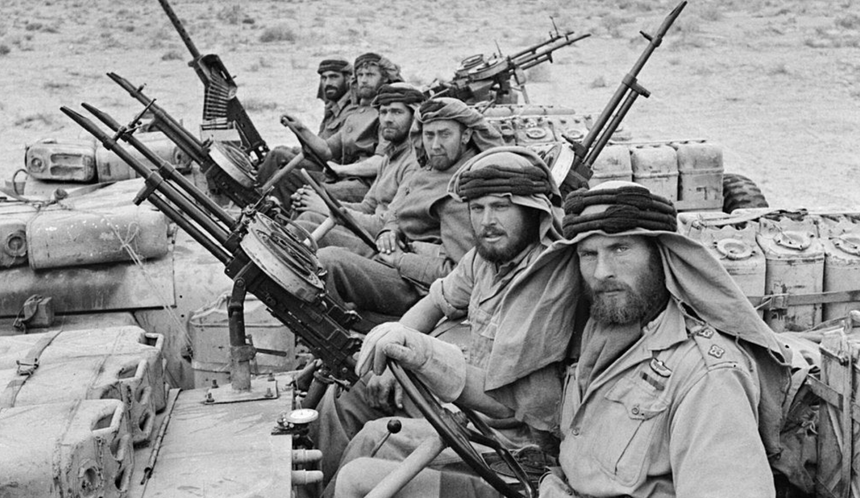
The first SAS before the raid
- ISIS offensive (a very banned organization in the Russian Federation) on northern Iraq in 2014- yes, that’s such a jump in time. But we will dilute this for a reason, especially since many already remember these events not from historical reports, but from the present.
Maneuvering groups who have taken it do not understand wherevicious jihadists attacked roadblocks with Iraqi police, mainly using pickup trucks (they also became the main feature of those events), and quickly moved into the depths of the districts. Some of the formations were fettered by military groups, and some went further.
All this was combined with terrorist attacks againstpeaceful and military facilities - in whole series to sow panic. The captured prisoners were brutally executed on camera, and the entire Internet was immediately flooded with these frames in order to further increase the panic.
Motorized groups used pickup trucks,which performed the functions of armored personnel carriers (carried infantry) and infantry fighting vehicles (KPV or anti-aircraft guns ZU-23-2 were knitted into the body). Starting the attack in the dark and suddenly, the groups infiltrated tens of kilometers by morning, bypassing well-defended areas, avoiding an assault (or imitating it in order to pin down the military).
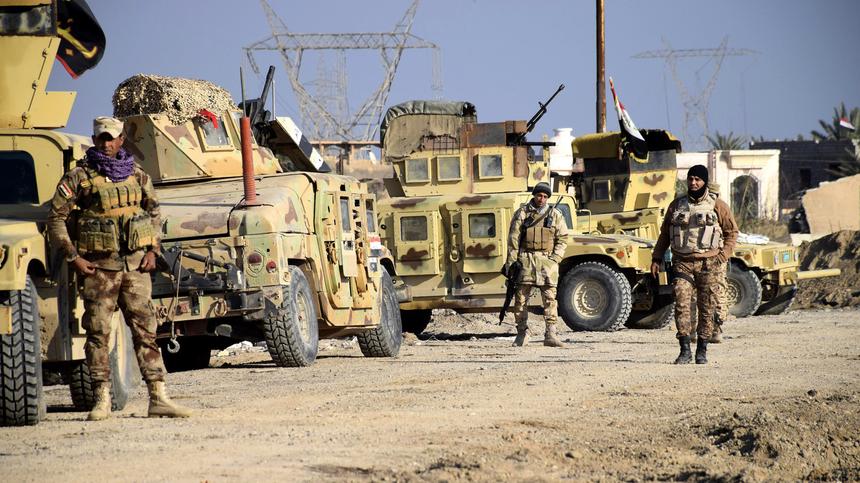
In the fight against the army of terrorists, mobile groups are needed. Iraqi army.
Uncredited AP
So what happened to the Iraqi military?- Sudden terrorist attacks and militants scurrying everywhere do not understand where. On the Internet, they see brutal reprisals against prisoners and destroyed checkpoints with the corpses of their comrades. At night there was an attack, and in the morning the enemy was in the rear, and it is not known how many of them, and what they really took control of.
The result is panic.The region, saturated with troops, turned out to be defenseless, the soldiers rebelled and stopped listening to the orders of the commanders, deserting en masse and running away wherever they looked on the first transport that came across. The commanders could not stop the soldiers mad with fear, and sometimes they joined the panic themselves.
With great difficulty, the Iraqi army managed to stop this, and the command finally figured out what had happened and brought the situation back under control.
In fact, the examples are selective, but you just have to understand the general principle and tune in the right way - you saw the general grain. Not all of course, but many.
The notorious German motorcyclists with a machine gun ina wheelchair is the clearest example (many probably wondered why such equipment was needed and in such quantity?) - using country and dirt roads, they secretly went tens of kilometers inland, shocking the rear and sowing panic, which in the summer of 1941 was over the roof.
Raid, direct action, Infiltration tactics, Hit-and-run tactics
“What kind of Basurman scribbles?” You ask. Well, in general, these are tactics or forms that are related to the raid, but are not, again, to remove confusion.
- Infiltration tactics- we call it infiltration or simplyseepage. Appeared in the First World War by 1916, closely related to the concept of “assault infantry”, when the positional crisis showed that avalanches from rifle chains were useful only for fertilizing the fields of Flanders.
But compact groups of the most frostbittena soldier is a much more difficult target. Using the folds of the terrain, they could get close to the trenches and fortifications, bombard them with grenades, and a little later wedged deeper into the defense, paralyzing it for the main infantry attack.
After the Second World War and until today, this tacticremained not very common - it is not specially taught, but it is studied and can be used by light infantry, or as an element of "reconnaissance in force". The battle groups bypass the strongholds and go deeper to isolate them. Or they start a fight in order to assess the firepower, the number and configuration of the fortifications.

The Armed Forces of Ukraine are working on something - it is quite possible that the tactics of infiltration. At least, Tsargrad assures us of this.
Such a raid, but at the forefront of defense.
- direct action- “direct actions”, the Russian analogues of thisNo. This tactic is purely for special forces, and, in general, these are small, maneuverable offensive actions - something between sabotage and a raid. The SEALs, the 75th Ranger Regiment or the SAS - this is their main job.
Actions of this kind are based on surprise, and independing on the scale, units can be reinforced with equipment - anti-aircraft, anti-tank, fire reinforcement systems based on vehicles such as Humvee or Stryker. Targets are destroyed and captured at a shallow operational depth, often referred to as "small offensive operations."
But in general, they can include almost the entire spectrumspecial forces tasks, they can even be combined with tactical airborne assault. To suddenly attack the headquarters of the terrorists, to quickly overthrow the local king, to go through the caches of weapons of the partisans - from the same opera. The operation that we see in the movie "Black Hawk Down" fits perfectly into the definition of direct actions. Our well-known analogue can be considered the “storming of Amin’s palace” by the special forces of the KGB of the USSR in 1979.
Falling black well you get the idea
- Hit-and-run- hit and run. Well, everything is clear here.This is part of the unconventional actions for regular forces, and also the domain of special forces, and in a broader sense it is guerrilla tactics. For special forces, this is usually part of the preparation for an offensive and classic reconnaissance in force.
Guerrillas or irregular units oftenthey use this to pin down large enemy forces, in order to divert these forces - as a rule, this is a whole series of such attacks against the backdrop of one main operation in order to mislead the enemy. It does not pursue its task of destruction and capture, often the enemy after that does not understand at all what it was. Vietnam, Afghanistan, and ISIS (a terrorist organization banned on the territory of the Russian Federation) - they very often used this tactic.
Raid in modern wars
In the preparation of modern infantry raid or raidaction is an increasingly prominent component. The main thing that influences this is the abundance of experience in local and asymmetric wars, when the Cold War doctrines that settled down in the years after the Second World War began to burst at the seams in Vietnam, Afghanistan and partly in Iraq (we also have in Chechnya).

The operations of the Second Chechen War, in many respects, also took place in the spirit of raids
The enormous power of the ground forces turned out to be almost helpless, it required an increase in special forces units, and then the birth of full-fledged light infantry and specific equipment for it.
Many criticized past articles about armored personnel carriers, wheeledtanks or the new American light tank. There were so many comments (especially in Zen) from a narrow-minded audience, they say: “An armored personnel carrier is for delivering infantry, why does it need so many weapons?”, “Even with such protection, an armored personnel carrier is easy to knock out, but our BTR-82 is many times cheaper and we have there are millions of them!"
Read also
Or about wheeled tanks - “Yes, they will get stuck wherewhatever", "What are these tanks that are almost without armor?". Well, in the light tanks of the MPF project there were constant comparisons with our amphibious tank destroyer Sprut, without understanding the difference in concepts.
Read also
Modern light combat vehicles make it heavierin the doctrine of mobile warfare, where raids are given increased attention. The former armored personnel carriers as an infantry taxi are no longer relevant, as the defense has become more flexible and maneuverable - no one, like an idiot, will sit still and wait for high-precision strikes on themselves, so instead of "front line" we often hear "contact line".
Read also
Tanks are a more difficult topic, as they are alsoare used in raid operations, but modern MBTs are too heavy and noticeable, in raid operations their protection is sometimes excessive, since in maneuvering collisions one should not expect main strikes only on the protected forehead, and the sides cannot be made as protected.
And finally, fuel - raid groups cannotafford large rear areas, most of them are given over to ammunition, therefore, less voracious combat vehicles are needed. Therefore, attention began to be paid to light alternatives - armored personnel carriers with increased armor, autocannons and anti-tank systems. And including wheeled tanks, so that the raid groups have high firepower, and, finally, light tanks that consume less fuel and slip through bridges that are not the most prepared, or cross fords well.

A typical heavy armored personnel carrier for raid operations allows the infantry to be much more independent
The raid used to be an integral part of offensives -raid detachments sometimes received tasks simply to go as deep as possible behind the front line, their mere appearance caused panic and false rumors about the breakthrough of the front among the rear and civilians, confusing commands and filling it with unreliable information.
But today the raid practically merges withan offensive using modern means of satellite reconnaissance and UAVs, as well as the increased power of small tactical groups (Russian armored personnel carriers were also created for such tactics). Like an explosive bullet that pierces the body as a whole, and collapses inside, hitting the maximum volume of the body.
At the same time, raid groups also have supportheavy artillery, and tactical missiles, which, again, thanks to drones and secure communications, most accurately hit targets obtained for them, without fear of hitting their own. And they easily maneuver with fire even within distances that can vary from 30 to 80 km.

Armored vehicles are the most important part of the reconnaissance of raid groups
MO RF
Raid groups with constantly updatedintelligence information, they react very quickly to any surprises, and with the help of secure digital communication channels they coordinate with other groups and the central command. In the old doctrine, the offensive involved "pincers" - the coverage of groupings with the goal of encirclements and boilers - which made the actions of the advancing enemy quite predictable or calculated.
"Raid" offensive for the defenderlooks more chaotic: it is more difficult to determine the main objectives of the enemy, which allows him to go deep into the defense, having full initiative. There is no main direction of attack against which all forces can be gathered, the strikes are multiple and very swift, splitting the defense.
After a certain time, this situation causesreaching a psychological limit, and the defender risks falling into a panic state. This is why raiding and raiding has become such an important tactical form in modern warfare.
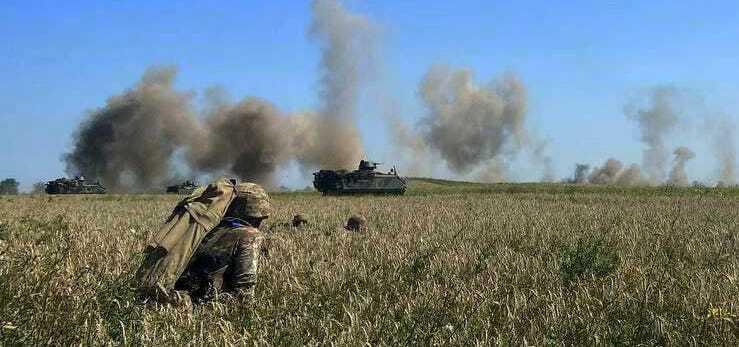
Ukrainian grenade launcher against the background of the Dutch armored personnel carrier M113 (XM765)
VIA SOCIAL MEDIA
What is there in Ukraine?
Regarding current events in Ukraine, yes, the Armed Forces of Ukraine andother forces use tactics that are closest to raiding, as indicated by many signs that we will not point to because it is impossible, but you already know. The Russian army has not been able to fully adapt to the new formats of war, but we can pay attention to one pattern.
The counteroffensive began in the South "near Kherson",and develops in the east "near Kharkov". At the same time, which began so loudly and was expected in the southern direction, it quickly and ingloriously died out - today the successes there are relatively modest. But in the eastern direction, the progress is very significant.
Of course, many will say that it was a consciousa trick - they say, the Ukrainians near Kherson depicted an offensive in order to pull forces there, and then suddenly hit near Kharkov. That's how it is, but after all, for the "Kharkov" offensive, it was necessary to assemble a large grouping and create infrastructure for it - you won't say that the command of the RF Armed Forces did not see this.
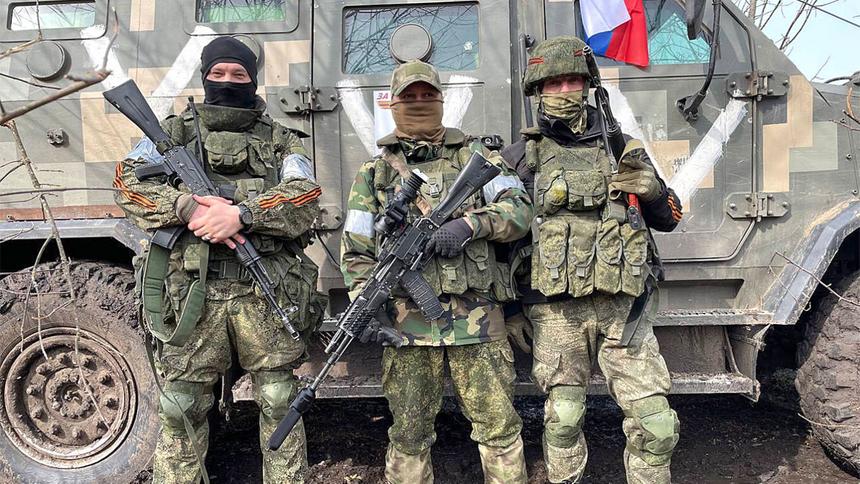
Somewhere
Moreover, it would be much more preferable for the Ukrainians to return Kherson, and it is very close - that would be news and a moral blow to the Russian Federation. It is much more difficult to capture the regional centers in the east.
The best way to counter raids ismaneuverable defense, and it was in the south that more experienced units were concentrated, especially the Airborne Forces, to whom this format of war is ideologically close and understandable, which made it more difficult to implement the plan - the Russian defense quickly recovered and today is still in control of the situation.