Caltech recently received a $100 million donation to
The project's researchers aim to developtechnology that will be able to receive solar energy from space 24/7. They are building advanced ultra-lightweight structures that can collect and then transmit energy to Earth from orbit.
Collecting solar energy in space is very convenient.Access to light is 24 hours a day, the atmosphere and weather conditions do not interfere. The energy potential in space is about eight times better per square meter of solar panel than here on Earth. The problem is that the costs of launching, assembling and maintaining equipment are astronomical.
However, employees of the CalifornianInstitute of Technology (Caltech) has been working on a space solar energy project for almost 10 years. During this time, they collected millions of dollars in donations and created functional prototypes of “tiles” with an area of about 10 cm. They not only capture solar energy, but are also responsible for converting it into radio frequencies and wireless transmission.
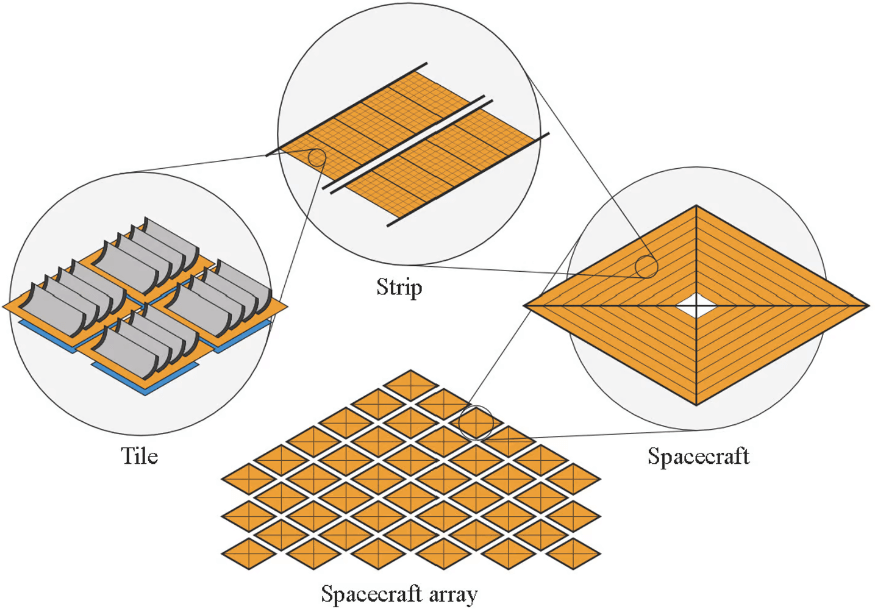
Highly integrated, highly flexible tiles, weighless than 2.8 g each. They are designed to be foldable to a configuration with virtually zero wasted space. This means that they can easily fit on a launch vehicle and are easier to send into orbit, where they will deploy themselves. A prototype tile that collects light and transmits energy to a receiver is shown in the video below.
Thus, the entire space solar arraydesigned as an ultra-modular assembly. The tiles are designed to be incorporated into strips that are 2 m wide and up to 60 m long. These strips will be combined into modules measuring approximately 60 x 60 m.
In December of this year, the prototype will be tested in space. It's unclear exactly how much money will be spent on the project.
Read more:
NASA revealed the origin of Haumea - the most mysterious planet in the solar system
Living organisms have made Mars uninhabitable
The liver can work for more than 100 years: scientists told how this is possible