In most reconstructions (from feature films to scientific publications) of Tyrannosaurus rex
To reach this conclusion, researchersstudied museum exhibits of various theropods, predatory lizard-hipped dinosaurs, which include tyrannosaurs. In particular, they studied wear patterns on the enamel of the teeth of dinosaurs and crocodiles, the closest living relatives of theropods.
The enamel that covers the teeth must remainmoistened, otherwise it undergoes cracking, the scientists explain. In crocodiles, it is thick and stays hydrated because they live in water. Nevertheless, traces of cracks are found on the outer surface of the teeth of these reptiles. On the teeth of theropods, in contrast, no damage was found. This indicates that they have lips that protect their teeth and keep them moist with saliva while their mouths are closed.
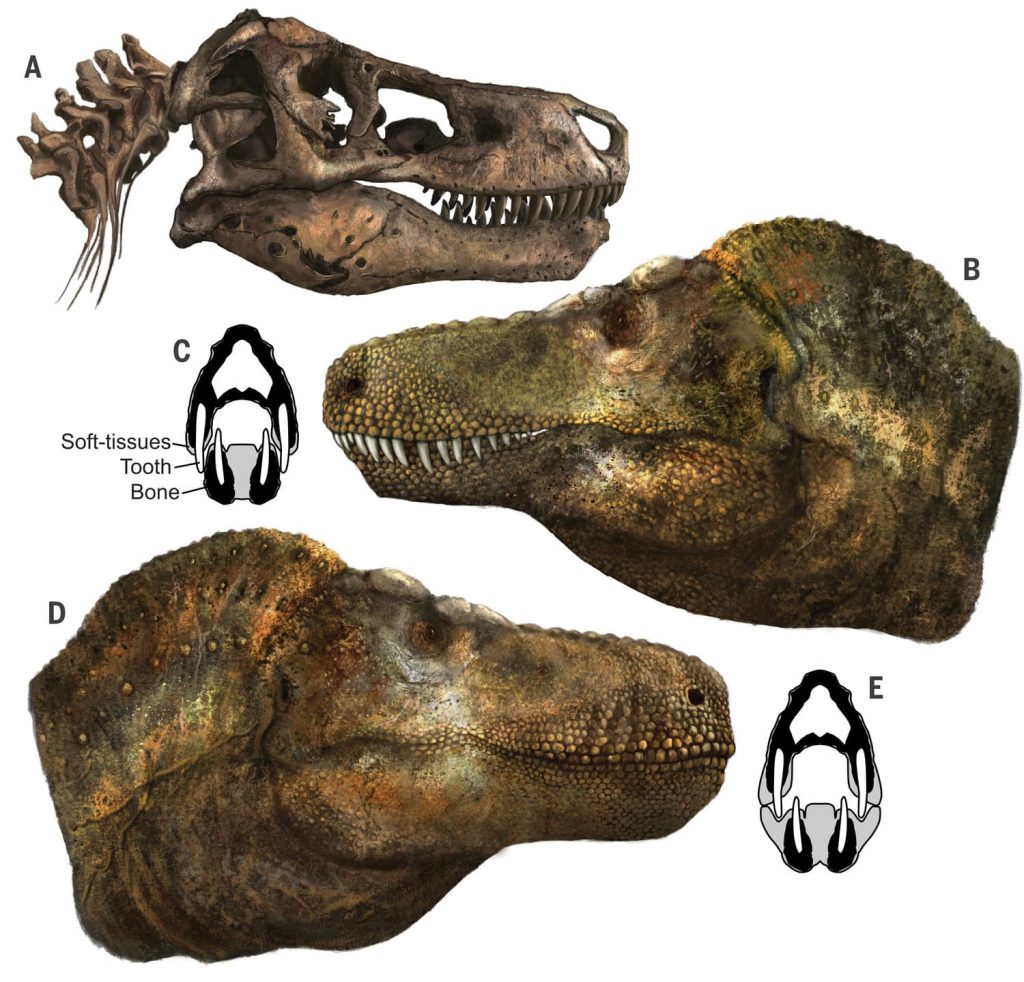 A fossil jaw (top) and two reconstructed dinosaur images: with open (center) and closed (bottom) teeth. Image: Thomas M. Cullen et al., Science
To understand if such giant teeth couldThe researchers compared the theropods to the Komodo monitor lizards (Varanus komodoensis). This is one of the few surviving species whose teeth look like predatory giant dinosaurs. Research has shown that some of these animals have proportionately large teeth held in place by fleshy gums and hidden behind scaly lips.
Although it is difficult to completely reconstruct the appearanceTyrannosaurus rex until a preserved mummy with soft tissues is found, the results of the study say that outwardly the muzzle of these giant predators resembles monitor lizards more than the grinning mouth of crocodiles.
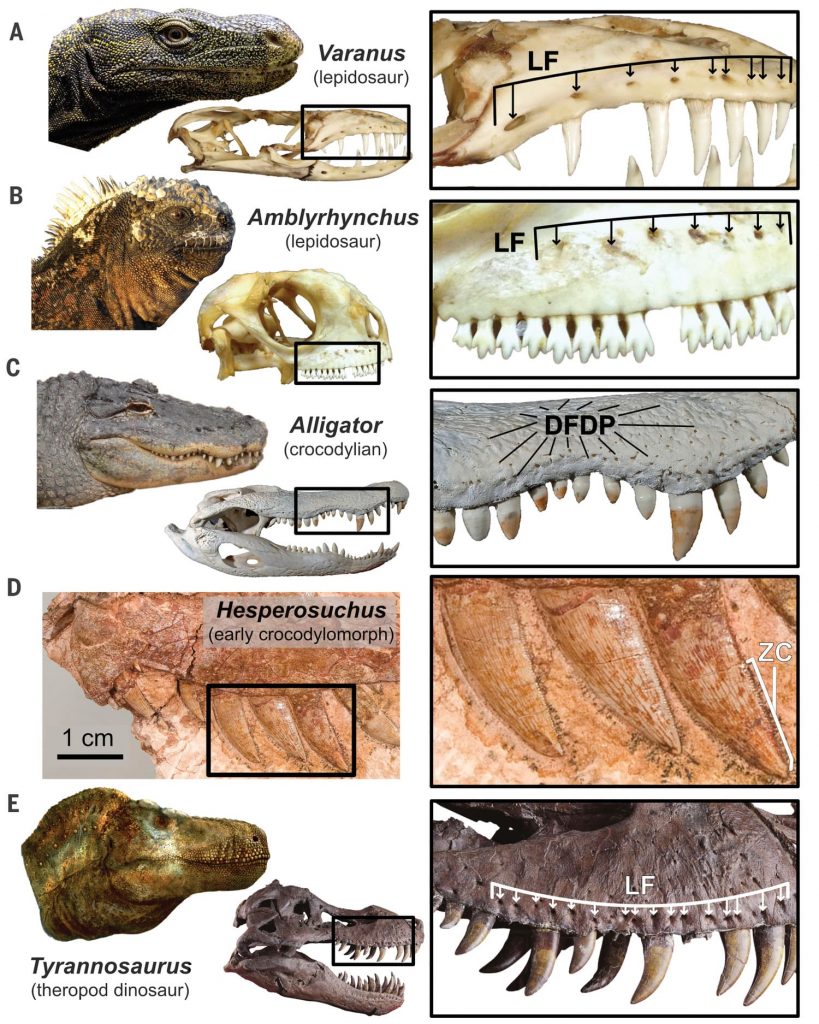 The structure of the jaw in modern and fossil reptiles. Image: Thomas M. Cullen et al., Science
Read more:
It turned out that photosynthesis does not work the way scientists thought. Now they want to hack it
Distant radio galaxy turned out to be a black hole, which is directed directly at Earth
Experts have predicted how many people will live on Earth by 2100