The US space agency's Solar Dynamics Observatory captured images of a powerful solar
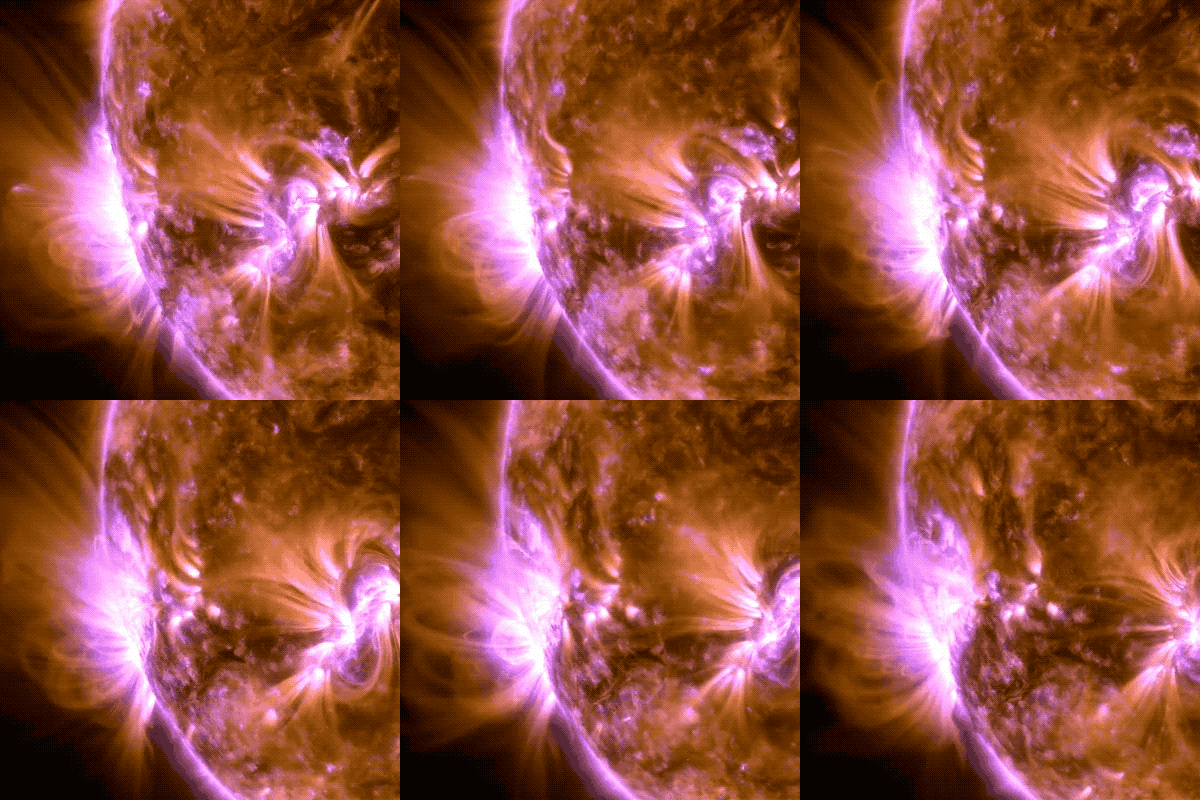 Solar flare X1.2. Video: NASA, SDO
The source of a powerful flash was a sunspotAR3182. It formed recently, but has already managed to cause several powerful outbreaks, according to Spaceweather.com. According to researchers, this spot has almost doubled in size over the past day and is now directed towards the Earth. The US National Oceanic and Atmospheric Administration (NOAA) estimates the likelihood of an X-class flare on January 7 at 20%.
Solar flares are powerful bursts of energy.Flares and solar eruptions can affect radio communications, electrical networks, navigation signals and pose a danger to spacecraft and astronauts. Solar flares are classified by size into letter groups, with the X-class being the most powerful. Within each class, numbers from 1 to 10 (and higher for X-class flares) indicate the relative strength of the flare.
 Solar flare X1.2. Photo: NASA, SDO
In addition to the flare, sunspot AR3182 on January 3caused a coronal mass ejection. A giant cloud of accelerated particles flew into space. At that moment, the spot was on the far side of the Sun, so the ejection did not affect the Earth. An outbreak on the morning of January 6 caused a shortwave radio blackout in the South Pacific.
Read more:
See the most powerful volcanic eruption on Jupiter's moon
A new kind of quantum entanglement has been discovered: photons "remember" the structure of atoms
The metallicity of the Sun turned out to be higher than it was thought: what astrophysicists learned