Maya Gatlin, a research engineer at the Georgia Institute of Technology, came up with a way to use
According to the project, a non-invasive sensorwith a microphone can detect cholera in the intestines using machine learning. This is the most non-invasive way possible - AI detects an infection without the need to undergo examination at a medical facility to collect additional data.
The technology is based on the fact that different types of excretion differ in sound. Each sound from the different types of discharge was converted into a spectrogram, which essentially captures the sound into an image.
Spectrogram images were used asinput data for machine learning. The performance of the algorithm was then tested on data with and without background noise. The goal is to ensure that it receives the information to interpret sounds through the sensor, regardless of the environment.
As a result, the sensor successfully recognized diarrhea(the main symptom of cholera). However, exactly how the microphone differs from the hearing and sensations of an ordinary person who can recognize diarrhea himself is not specified in the report of the Acoustical Society of America.
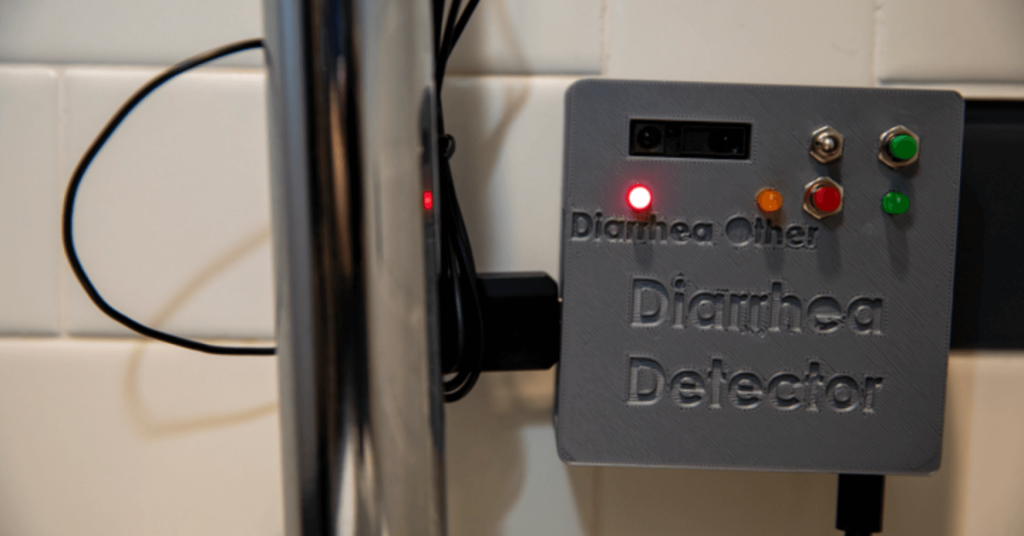 The sensor from the study is used above a toilet. Maya Gatlin/Acoustical Society of America
An engineer wants to use an AI sensor in places wherewhere intestinal infections such as cholera are common. “It takes up little space and is non-invasive in its approach. The technology can be deployed in areas where cholera outbreaks pose a constant risk,” she explains. This will ultimately save people's lives.
There are many diseases that can potentially bediscovered by analyzing human waste. One such infection is cholera. This bacterial disease causes diarrhea and affects millions of people. Around 150,000 people die from cholera each year worldwide. The infection spreads through contaminated food and water. Sometimes the bacterium is transmitted through undercooked shellfish and other seafood-associated infections.
The sensor can also be used in natural disaster zonesdisasters where water contamination leads to the spread of waterborne pathogens. And also in nursing facilities for automatic monitoring of patients' bowel movements. In the future, a toilet with a microphone will be useful in homes so that people can check their well-being through defecation, the engineer is sure.
Read more:
The egg was dropped from space: look what happened to it
Brain-eating amoeba is spreading in the US: is there a danger to Russia
See what a woman Thora looks like. She lived 800 years ago