NASA's Solar Dynamics Observatory and the European SOHO Observatory faced the same problem: already
Extreme UV Filtersmade from aluminium. Such surfaces are usually coated with an oxide layer that occurs when oxygen atoms bond with aluminum atoms. UV light increases the rate of oxidation, causing additional oxide layers to form. As the amount of oxidized metal increases, the filter fogs up and stops transmitting the light waves it is supposed to track.
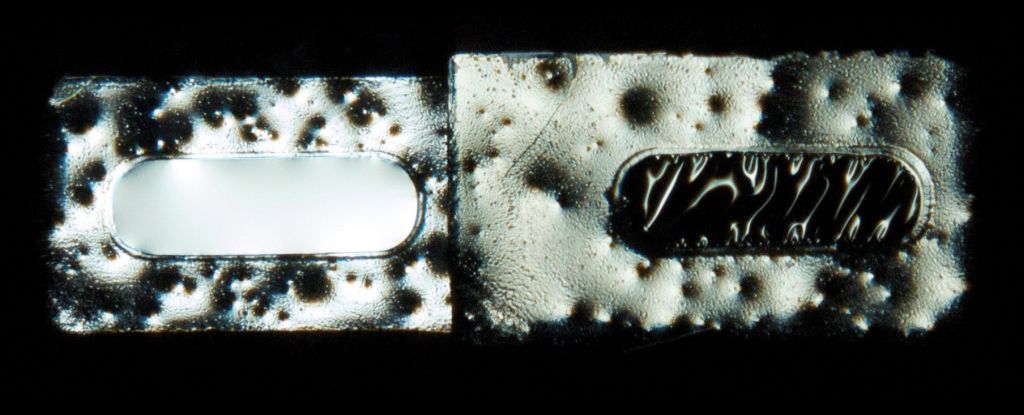 Degradation of extreme ultraviolet filters used in space. Image: Andrew Jones/LASP
In space, there is virtually no freeoxygen, so when designing space observatories, researchers did not take oxidation into account. Nevertheless, a series of experiments showed that the presence of water vapor on the surface plays the same role: with constant exposure to ultraviolet light, water molecules break down, and oxygen atoms bind to aluminum.
The researchers also found that water enterson telescopes along with heat-shielding materials that protect individual components of spacecraft from extremely low temperatures. They are made from layers of thin polyethylene terephthalate (PET) sheet coated with a reflective metal.
This plastic absorbs and retains water fromatmosphere during manufacture and use on Earth. In orbit, when solar heat hits it, it begins to evaporate water, drops of which settle on aluminum surfaces, causing their destruction. The researchers believe that the discovery of the destruction process will help extend the life of the instruments of future space missions.
Read more:
Named a vitamin that protects the brain from dementia
See how the Earth has changed over 100 million years on the most detailed map
It turned out which men are the most fertile: their sperm is 50% better than the rest
On the cover: an illustration of the SOHO observatory. Image: Alex Lutkus, ESA