NASA satellites have shown the movement of the world's largest iceberg, A-76A. He entered the Drake Passage, which
The most stormy place on Earth: why Drake Passage is the most dangerous route to Antarctica
The length of the giant ice slab A-76A isabout 135 km and a width of 26 km. This is the largest fragment of the world's previous largest iceberg, A-76. It broke off from the western side of the Antarctic Ronne Ice Shelf in May 2021, and then split into three more parts: A-76A, A-76B. and A-76S.
On October 31, NASA's Terra satellite captured the image.A-76A, which floats at the mouth of the Drake Passage. This deep sea route connects the Pacific and Atlantic oceans between Cape Horn in South Africa and the South Shetland Islands north of the Antarctic Peninsula.
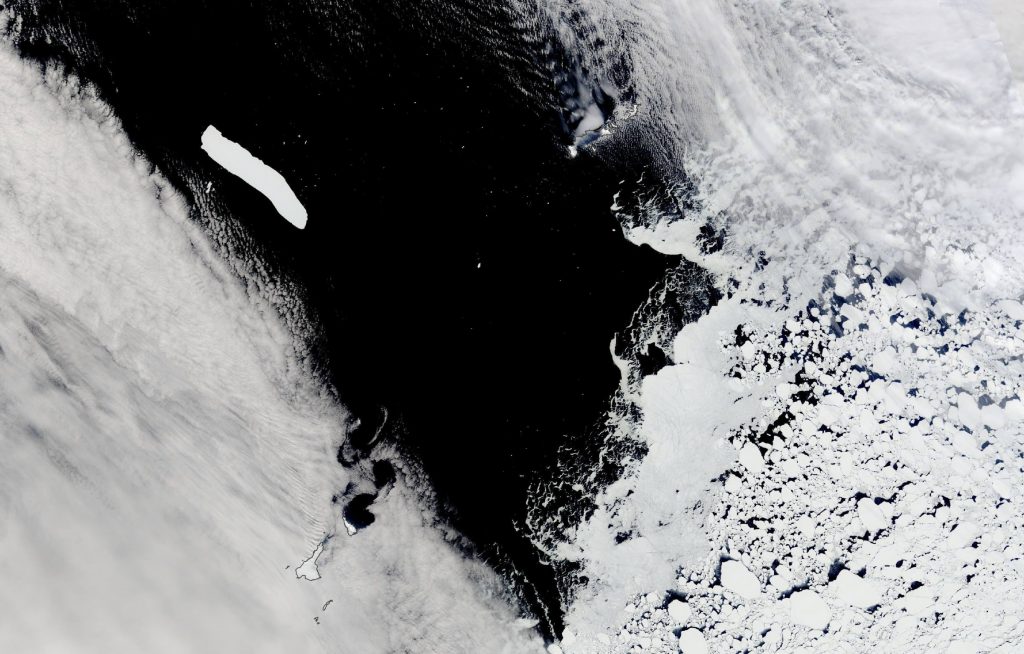 View in high resolution at earthobservatory.nasa.gov
The image shows that the glacier is now locatedbetween Elephant Island and the South Orkney Islands (both obscured by clouds in the image) at the southern end of the passage. However, its trajectory hints that it will head further north in the coming weeks.
Typically, when icebergs drift into the Drake Passage, strong ocean currents quickly carry them east and then north into warmer waters. There they “die”.
Read more:
Scientists Confirm Alternative Gravity Theory: Why It Changes Physics
A massive impact from a space object triggered the Earth's magnetic field
Pig heart beats slower after transplant to human