A team of researchers from the Terasaki Institute of Biomedical Innovation has developed a smart flexible
Existing wound treatment methods include variousdressings, the use of growth factor and anti-inflammatory drugs, as well as debridement and ultrasound treatment. But even under the best conditions, the average time for complete wound closure with such therapy is 12 weeks.
There is also an alternative - stimulationelectric field (EF). This method speeds up wound healing by activating the migration of skin cells and other granulation cells, inducing the formation of blood vessels and controlling excessive inflammation. The problem is that wearable EP stimulation devices are equipped with very bulky and inflexible electrodes. This leads to conformational incompatibility with the wound, which increases the likelihood of inflammation and prolonged healing. The manufacture of these electrodes also requires special technologies.
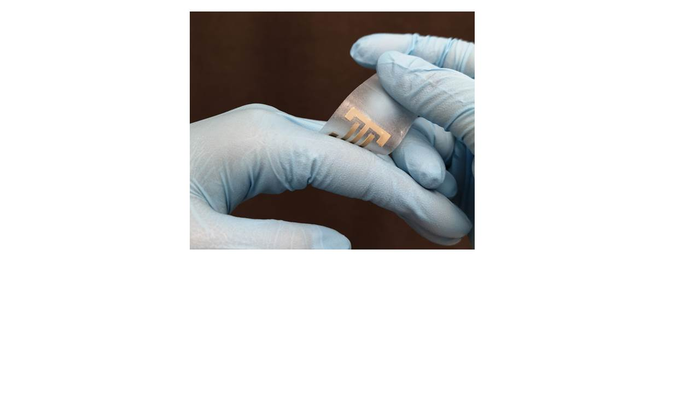 CREDIT: TERASAKI INSTITUTE FOR BIOMEDICAL INNOVATION (TIBI)
Scientists have solved the problem by creating a flexible patch,which provides EP stimulation. Its versatility is reminiscent of technology “from the future.” The authors used silver nanowires as electrodes, which not only have antibacterial properties, but also provide high conductivity under load. They were embedded in alginate, a gel-like substance that maintains good moisture levels and biocompatibility and is now used in absorbent surgical dressings.
By chemically modifying the alginate and addingcalcium, they obtained a material that increased the stability and functionality of the electrode. By changing the ratio of silver nanowires and modified alginate, the scientists obtained a flexible and printable gel, or bioink. In addition, calcium added to the mixture induced cell proliferation and migration to the wound site, which in turn promoted the formation of blood vessels.
Read more
Is the standard model of physics no longer relevant? The main thing about the new work of scientists at the collider
Scientists 'resurrect' an ancient enzyme to feed 9 billion people by 2050
Found traces of the strongest earthquake in the history of mankind